

France’s World Cup Secret: Kounde’s Tactical Brilliance
Discover how Jules Kounde's understated brilliance propelled France to a quiet 1-0 World Cup victory. Learn the true value of strategic stability in elite football.

POLICY WIRE — Doha, Qatar — There’s a particular kind of win in global football that rarely makes the highlight reels, doesn’t generate viral memes, and certainly won’t have schoolchildren replicating it in their backyards. Yet, it’s these unspectacular, almost deliberately muted victories that frequently propel nations through the treacherous waters of a FIFA World Cup knockout stage. It’s the triumph of the grind, the quiet assertion of control over flamboyant flair—a lesson France, ever the pragmatists when it matters, just imparted to Paraguay in their 1-0 Round-of-16 tussle.
No one’s denying the éclat of a Kylian Mbappé masterclass. But that’s only one facet of success, isn’t it? As the tournament marches on, games get tighter, margins thinner. Morocco, in an earlier fixture, dispatched co-hosts Canada 3-0—a scoreline that flattered the winners, hiding Canada’s spirited but ultimately unclinical dominance. This isn’t ballet; it’s a cage fight in cleats. And France, perennial contenders, understand that instinctually. They weren’t looking to dazzle. They were looking to dismantle, slowly, patiently, methodically. Paraguayan defenders tried every dark art in the rulebook, only to walk away—bafflingly—without a single caution.
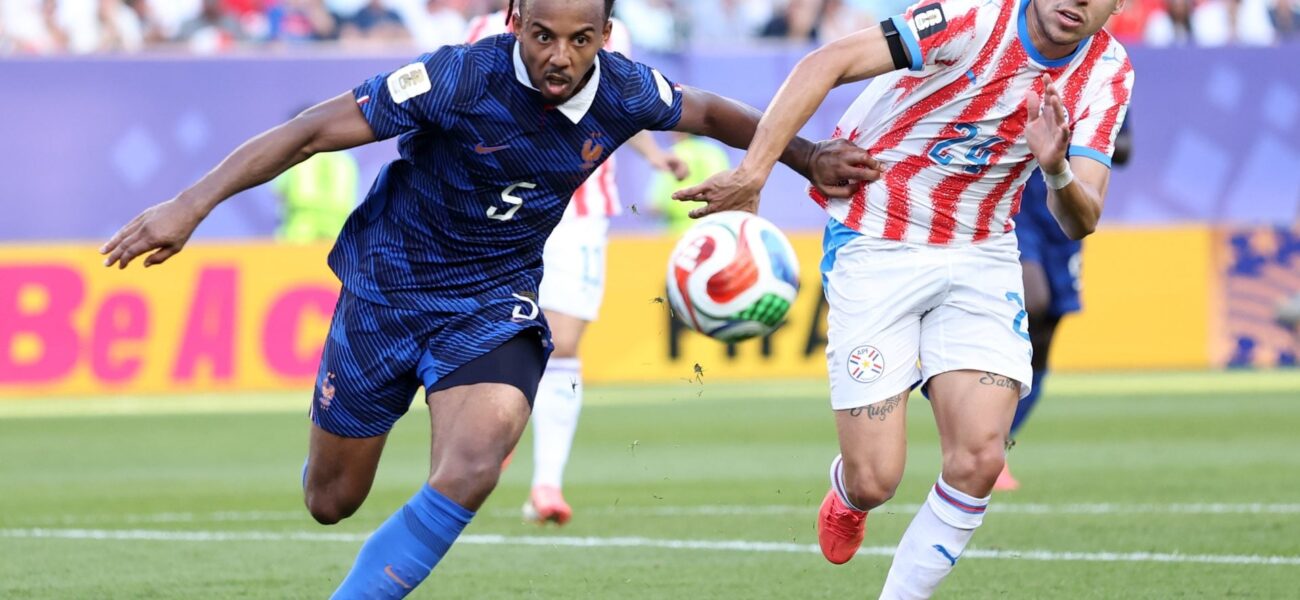
That particular brand of resilient performance points a finger squarely at players like Jules Kounde. He’s not scoring the goals, he’s not providing the ‘hockey assists.’ What he’s doing, though, is providing the often-unseen scaffolding that allows the glitterati to shine. His role last night was less about individual glory — and more about systemic stability. Playing primarily as a right-back, he was instrumental in stifling Paraguayan ambitions, pushing high up the pitch alongside former Barcelona teammate Lucas Digne. Together, they logged a formidable nine tackles — and ten duels won, effectively pinning Paraguay in their own half. Because when your side dictates play with an almost monopolistic grip, racking up 568 passes to Paraguay’s mere 183—statistics verified by FIFA match reports—every defender becomes a de facto midfielder, risking it all on one wrong move.
“These aren’t the games for showboating,” French manager Didier Deschamps, ever the realist, likely grumbled post-match. “We needed solidity, intelligence, — and guys who don’t just react but anticipate. Jules embodied that. He’s matured beyond simple technique; he grasps the bigger picture.” It’s that unglamorous professionalism that Kounde brings, a quality Barcelona’s brass surely notes, especially after an ‘indifferent’ club season where questions were floated about his optimal position. Well, consider them answered. Here, he’s been virtually unplayable.
And it’s a testament to football’s truly globalized nature that such intricate strategic battles are observed with fervent passion not just in Paris or Madrid, but across continents. Take Pakistan, for instance, a nation often stereotyped as cricket-obsessed. Football, fueled by easier access to global leagues and players like France’s diverse squad, is increasingly captivating younger demographics there. World Cups serve as crucial cultural bridges, beaming images of Kounde’s cool, calculated defense into homes far removed from Europe’s traditional footballing hubs. It demonstrates how these sporting narratives resonate far beyond the pitch, often informing discussions about aspiration, representation, and the collective pursuit of excellence. “The World Cup isn’t just about trophies; it’s a cultural dialogue that redefines what success means for millions,” noted Dr. Zahid Qazi, a prominent Karachi-based sociologist specializing in sport’s soft power. “For many, it’s about seeing faces like theirs, skills forged through struggle, on the biggest stage. Kounde represents that understated strength.”
📄 POLICY WIRE WHITEPAPER PUBLISHED: PAKISTAN'S NATIONAL SECURITY POLICY PRIORITIES
👉 READ BY CLICKING HEREWhat Kounde showed wasn’t flashy, but it was fundamental. He contained, he recovered, he built from the back. That 1-0 result? It wasn’t pretty. But it was definitive. And often, that’s precisely what champions are made of.
What This Means
The quiet heroics of players like Jules Kounde point to an evolving valuation system in top-tier football. Gone are the days when only goal-scorers or flamboyant wingers commanded exorbitant fees — and unwavering adoration. In modern tactical setups, particularly within dominant, possession-based teams, the defender’s role has expanded dramatically. They aren’t just thwarting attacks; they’re initiating them, maintaining intricate passing networks, and, crucially, managing spatial integrity under immense pressure. This elevates the ‘functional specialist’ to an indispensable asset.
For clubs like Barcelona, or any team investing millions, this signifies a paradigm shift in scouting — and recruitment. It’s less about raw athletic spectacle and more about cerebral control, adaptability, and the ability to operate effectively within complex tactical frameworks. The economic implication is that players who can consistently execute these multi-faceted, often invisible, defensive-midfield duties will see their market value soar, possibly even outstripping some traditionally more ‘exciting’ attacking roles. It’s a pragmatic embrace of systemic value over individual dazzle, aligning perfectly with the brutal economic realities and high-stakes environment of global club football. But then, isn’t it always about who delivers under the crunch, no matter how unexciting the delivery seems?