


Mexico’s World Cup Stunt Fails to Rattle England
Mexican fans tried a noisy psy-op on England's World Cup team. It failed. Explore how modern football's globalized nature makes such passionate tactics ineffective.

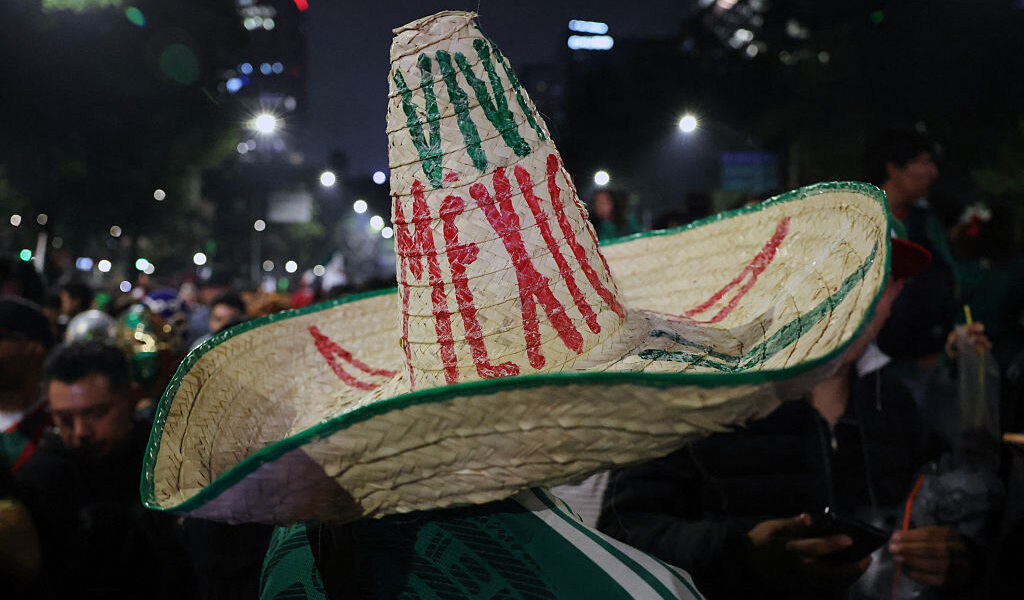
POLICY WIRE — Mexico City, Mexico — Midnight, the thrum of fireworks, and the syncopated roar of drums: the spectacle was undeniably potent, a sonic assault designed to fracture the sleep of England’s footballing elite. Outside a nondescript hotel in Mexico City, a phalanx of fervent Mexican fans, operating with almost military precision in their clamor, attempted a rather audacious act of psychological warfare against the Three Lions ahead of their crucial World Cup round of 16 clash. It didn’t work. The grand gesture, apparently, landed with the muted thud of a missed penalty.
It was a scene reminiscent of ancient sieges, albeit one where the weapons were pyrotechnics and amplified percussion rather than catapults. Hundreds gathered, revving engines, chanting, making enough noise to wake the dead, or so they hoped. But sources close to the English camp, and later echoed in Britain’s notoriously understated press (they aren’t prone to hyperbole, you know), suggested Harry Kane and Jude Bellingham – titans of the turf, each reportedly worth more than many developing nations’ annual budget – slept soundly. Indeed, some were apparently more ‘amused’ than perturbed, perhaps dreaming of lucrative endorsements rather than the cacophony outside. Police, ever the arbiters of calm in a chaotic world, eventually dispersed the enthusiasts, ending a brief, noisy interlude that said more about perceived national pride than actual tactical advantage.
And that’s where the intrigue really begins, isn’t it? Because this wasn’t just about football; it’s a peculiar little vignette on nationalism, communication breakdowns, and the strange, performative theatre of international sport. Mexico, hosting a World Cup, is trying to assert itself, to claim every possible home advantage. This was less about winning the match on the field and more about staking a claim to the atmosphere, to the very air its rivals breathe. It’s an echo of soft power, but in this case, less a persuasive charm offensive — and more a blunt, sonic sledgehammer. A futile one, as it turned out. “We showed them our spirit, our heart!” proclaimed Pedro Ramírez, a leading figure in Mexico’s official Supporters’ Club, just hours after the police intervention. “They might laugh, but they’ll remember Mexican passion.” One wonders, Pedro, if they’ll remember anything beyond a fleeting annoyance.
But consider the global ramifications of such public displays. In many parts of the world, especially the South Asian and Muslim regions, such spontaneous, organized clamor could be misconstrued, or worse, stifled. Imagine this scene replicated outside a team hotel in, say, Qatar or Pakistan. The lines between zealous support — and public disturbance become razor-thin. While Pakistan might revel in the passionate fanfare for its cricket teams, public demonstrations involving fireworks and sustained noise often operate within tighter, government-controlled parameters. There’s a palpable difference between an expression of collective exuberance and one that borders on calculated harassment—one is permitted, the other, not so much. And the capacity for official pushback? Far more robust.
Because ultimately, these spectacles, these flashes of collective identity, often occur in a vacuum of misunderstanding. Admiral Sir Roderick Ainsworth, retired British diplomat, known for his acerbic wit and long-held distaste for anything uncivilized, reportedly commented from his Chelsea club, “Good heavens, old chaps. Rather poor show, what? One would expect a bit more finesse than glorified ballyhoo and a petrol addiction.” Ainsworth, naturally, hasn’t watched a football match since 1966, but his point about ‘finesse’ hits differently. Football has become less about local antics — and more about cold, hard commercial logic and a globalized brand. The sheer reach of this industry means trivial ‘disruptions’ are mostly brushed aside, becoming merely quaint footnotes rather than genuine threats to athletic performance.
📄 POLICY WIRE WHITEPAPER PUBLISHED: PAKISTAN'S NATIONAL SECURITY POLICY PRIORITIES
👉 READ BY CLICKING HEREThe global audience for the 2022 World Cup reportedly surpassed 5 billion people, according to FIFA’s official metrics, a statistic that frankly dwarfs any localized efforts to swing momentum. The game’s truly big players, these days, aren’t just athletes; they’re corporate entities, cushioned by layers of PR, sports science, and personal comfort. Their hotel rooms, it’s fair to say, aren’t exactly thin-walled. You don’t rattle that kind of infrastructure with a few fireworks — and car horns.
What This Means
The Mexican fan contingent’s attempted nocturnal assault offers a micro-snapshot of how certain forms of nationalist fervor collide with the realities of globalized sport. On one hand, it speaks to a deep, unbridled passion, an earnest desire to influence events through sheer willpower and noise. But on the other, it highlights the increasingly impenetrable bubble surrounding elite athletes and major international competitions. They’re often too well-protected, too detached, — and too well-remunerated to be significantly affected by such tactics. It represents a disconnect: the local, emotional engagement versus the sleek, professionalized, and often emotion-immune machinery of top-tier football. And because this brand of patriotism now frequently expresses itself in ways that governments cannot fully control or channel, it’s also a mild diplomatic headache for hosts. How do you welcome passionate fans while simultaneously protecting your guests from that same passion? It’s a balance no amount of fireworks can solve, just like the internal challenges faced by a club grappling with poor financial oversight, as chronicled in stories like Lazio’s Ruin: A Cautionary Tale of Football Governance. Or the harsh realities behind talent acquisition, a narrative explored in Market Imperatives: Arsenal’s Stalled Bid.