


Jerusalem’s Latest Gambit: Antiquities Bill Stirs an Ancient Tangle of Law and Identity
POLICY WIRE — Jerusalem — The silent, millennia-old stones of the West Bank and Gaza — relics whispering stories of empires long vanished — now find themselves pawns in a very contemporary political...

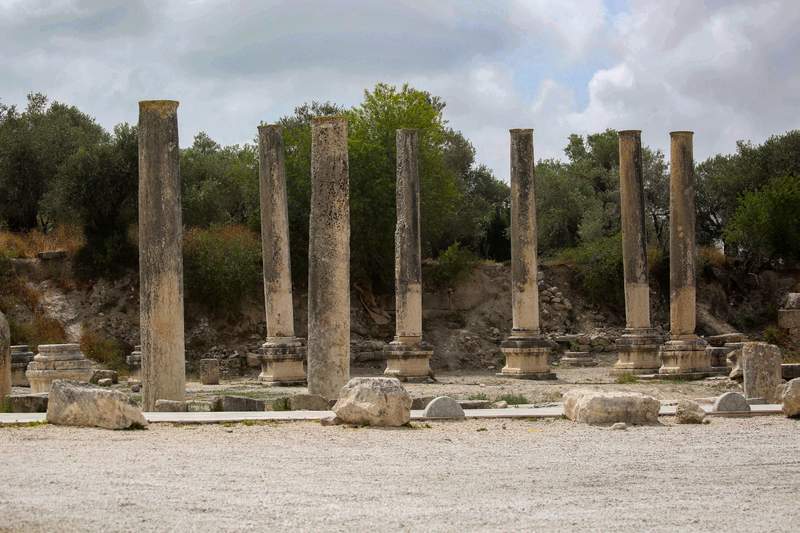
POLICY WIRE — Jerusalem — The silent, millennia-old stones of the West Bank and Gaza — relics whispering stories of empires long vanished — now find themselves pawns in a very contemporary political skirmish. A new bill winding its way through Israel’s Knesset isn’t about peace treaties or defense budgets; it’s about dusty fragments, ancient pottery, and the very ground beneath them. But make no mistake, this legislation, seeking to assert Israeli administrative authority over cultural heritage in these territories, carries an explosive geopolitical charge, threatening to upend international legal norms and reignite deeply entrenched identity battles.
It’s a peculiar kind of conquest, isn’t it? Not territory by brute force, but history itself, claimed via parliamentary decree. The bill, in essence, seeks to integrate the West Bank’s Antiquities Unit into the Israeli Antiquities Authority (IAA), a move Israel’s own legal adviser to the Knesset’s Foreign Affairs and Defense Committee, Dr. Rotem Levinson, reportedly cautioned would clash hard with international law. We’re talking specifically about the 1954 Hague Convention for the Protection of Cultural Property in the Event of Armed Conflict, and its 1977 protocol, which firmly states an occupying power can’t export cultural property from occupied territory, nor can it assert sovereign ownership. These aren’t suggestions; they’re legal bedrock.
Because, from the international community’s viewpoint, the West Bank — and Gaza are occupied territories. Israel views the West Bank differently, labeling it ‘disputed,’ an area where the final status is yet to be determined. But semantics don’t typically sway the UN or the International Criminal Court, and this latest legislative push feels, to many observers, like another deliberate annexation by installment — one archaeological dig at a time. It’s about laying claim not just to land, but to narrative, to who gets to tell the story of the past. And that’s powerful.
“This bill isn’t just an administrative tidying-up exercise,” stated Nabil Abu Rudeineh, Spokesperson for the Palestinian Presidency, in a sharp critique provided to Policy Wire. “It’s an overt act of annexation, an attempt to erase our history — and culture. These antiquities belong to the Palestinian people, they’re our heritage, not something to be legislated away by an occupying power. The world must not stand by.” His words underscore the deeply emotive and nationalistic aspects intertwined with cultural artifacts in this volatile region.
On the flip side, we’ve heard voices like that of Likud MK Ariel Kallner, a known proponent of increased Israeli presence in Judea and Samaria (the Israeli term for the West Bank). “For too long, invaluable historical artifacts in Judea and Samaria have been neglected, even looted, by those who seek to deny our connection to this land,” Kallner explained to Policy Wire, defending the bill. “Our goal is simply to safeguard these treasures for all humanity, and for future generations of Israelis, whose heritage they’re.” This framing, as usual, wraps nationalistic claims in the veneer of benevolent stewardship, sidestepping the inconvenient truths of international jurisdiction.
📄 POLICY WIRE WHITEPAPER PUBLISHED: PAKISTAN'S NATIONAL SECURITY POLICY PRIORITIES
👉 READ BY CLICKING HERELet’s consider the sheer scope here: experts estimate there are over 5,000 identified archaeological sites across the West Bank and Gaza (source: Palestinian Ministry of Tourism and Antiquities records, compiled from various archaeological surveys). Thousands. These aren’t just ruins; they’re layers upon layers of Canaanite, Israelite, Roman, Byzantine, Islamic, and Ottoman history. Managing this rich, complex patrimony has always been fraught, — and now, it’s becoming a legislative flashpoint. And what about the practicalities? Integrating a distinct administrative unit, with different records, languages, and personnel, into a national body under contested sovereignty? It’s messy, deliberately so perhaps.
The echoes of this debate resonate far beyond the Levant. Across the Muslim world, and particularly in places like Pakistan, such actions are routinely viewed through a post-colonial lens – a continuation of perceived attempts by occupying powers to appropriate and redefine indigenous heritage. For Islamabad, a staunch defender of Palestinian rights, moves like this bill represent not just a legal infringement but a cultural insult, further fueling solidarity with Palestinian brethren. You see this concern reflected in diplomatic dispatches and, indeed, in narratives like the recent strategic engagement discussed in Field Marshal Asim Munir’s Tehran Visit and Islamabad’s Expanding Peace Role, where regional stability is often tied to these broader injustices.
What This Means
This bill isn’t just about ancient potsherds; it’s a potent symbol of competing claims to nationhood — and history. Politically, its passage would deepen the chasm between Israel and the international legal consensus, offering fodder for anti-Israel advocacy in global forums. Don’t expect quiet acceptance from UNESCO, or indeed, from most European capitals, where respect for international law remains, nominally anyway, a core tenet. It’ll just fuel more resolutions and condemnations—a familiar cycle, let’s be honest. Economically, while antiquities tourism could be a boon, turning it into another tool for asserting contested sovereignty will likely deter international archaeological missions and responsible heritage investment, making it difficult to access the deeper pockets required for true preservation. More broadly, it raises the unsettling prospect of other nations eyeing historical artifacts in disputed zones. Because if Israel can effectively annex cultural heritage, what’s to stop others?
📖 GET YOUR FREE COPY NOW OF POLICY WIRE DIGITAL MAGAZINE JULY 2026 EDITION
👉 READ & DOWNLOAD FREE MAGAZINE