


Ghosts in the Machine: Trump DOJ’s Digital Eradication Sparks Fears Over Institutional Memory
POLICY WIRE — Washington, D.C. — History, they say, is written by the victors. But what happens when the vanquished try to erase it, even digitally? That’s the unsettling question swirling...

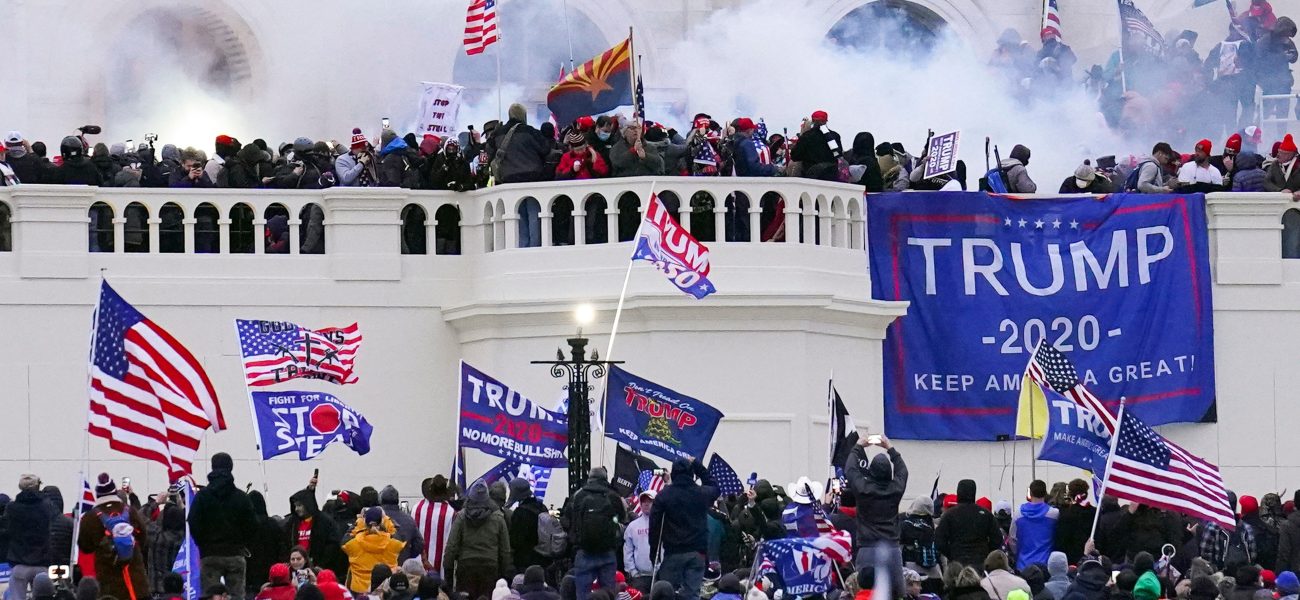
POLICY WIRE — Washington, D.C. — History, they say, is written by the victors. But what happens when the vanquished try to erase it, even digitally? That’s the unsettling question swirling through the corridors of Washington after revelations that the Trump administration’s Justice Department methodically scrubbed its public website of news releases detailing charges and convictions stemming from the Jan. 6 Capitol breach. Not a wholesale obliteration, mind you, but a selective, surgical removal that hints at a troubling campaign to reshape narrative, well after the fact.
It wasn’t a glitch. It wasn’t accidental. It was a conscious, bureaucratic effort to make certain pieces of inconvenient information less visible, less accessible. Imagine that—government agencies acting like internet archivists with a political agenda. The Justice Department, America’s chief law enforcement body, deciding which threads of its own story get easier clicks and which recede into the digital abyss. It’s a maneuver that leaves transparency advocates shaking their heads, wondering aloud about the integrity of official records in the age of rapid-fire web updates. For an institution supposedly dedicated to justice, it feels less like an oversight and more like an organized exercise in historical curation, undertaken with a very specific kind of future in mind.
“Look, the prior administration was focused on moving forward, not dwelling on politically motivated prosecutions,” said Bethany Carter, former Deputy Assistant Attorney General for Public Affairs under the Trump administration, speaking anonymously due to current contractual obligations. “There was so much noise, so much targeting. Our priority wasn’t playing librarian for the opposition’s narrative. We were busy ensuring national security and lawful government operations, not chasing every online rumor.” It’s a sentiment that certainly aligns with the Trump-era disdain for media scrutiny and a penchant for alternative facts.
But the public has a right to the complete record. And Rep. Jamie Raskin (D-MD), a leading voice on the House January 6th Committee, didn’t mince words. “Any attempt to disappear inconvenient facts from the historical ledger undermines transparency and the very foundations of public trust,” Raskin stated emphatically. “This isn’t just about January 6; it’s about the fundamental principle of government accountability, plain — and simple. We need to be able to follow the breadcrumbs of justice, wherever they lead.”
And those breadcrumbs are numerous. The sheer scale of the January 6th investigation is immense: according to publicly available data from the U.S. Attorney’s Office for the District of Columbia, over 1,200 individuals have been charged in connection with the Capitol breach as of this past January, with convictions mounting steadily. Each one of those cases represents a point of fact, a piece of legal history that now requires an extra layer of digital archeology to unearth if one relies solely on the primary source, the Department of Justice’s own website.
📄 POLICY WIRE WHITEPAPER PUBLISHED: PAKISTAN'S NATIONAL SECURITY POLICY PRIORITIES
👉 READ BY CLICKING HEREThis kind of selective disappearance has broad implications, particularly when viewed through an international lens. In many nations, where state control over information is less an anomaly and more a modus operandi, such actions are routine. Think about governments in parts of the Muslim world—say, Pakistan or other nations across South Asia—where historical narratives are routinely massaged to suit the prevailing political wind. News archives become fluid entities, facts bend, — and inconvenient truths vanish faster than you can click refresh. When an American institution, one often lauded globally as a bulwark of democratic transparency, engages in similar tactics, it certainly doesn’t help burnish the nation’s image. In fact, it provides potent ammunition for critics abroad eager to dismiss Western democratic processes as hypocritical or equally susceptible to information manipulation. For those in countries already grappling with the complexities of digital warfare and state-sponsored disinformation, America’s actions offer a stark reminder that even the strongest democracies aren’t immune to weaponized data. It’s a bad look.
What This Means
This isn’t just some administrative hiccup. It represents a subtle, yet deeply concerning, precedent for how future administrations might seek to control the historical record. Politically, it signals a desire to sanitize certain events from public memory, especially those that cast an unflattering light on a particular presidency or its supporters. It tells us that digital transparency, often celebrated as an advancement, can just as easily become a tool for sophisticated censorship, making facts harder to verify, narratives easier to twist. What’s deleted, or simply made hard to find, speaks volumes about what a power structure deems undesirable.
Economically, this action itself doesn’t have immediate market implications, but it does feed into a broader climate of uncertainty regarding institutional integrity. If government information can be so easily made to disappear, what does that say about the reliability of other government data, policies, or even legal precedents? It can erode public trust in official sources—a trust already under severe strain in an age of rampant misinformation. That erosion makes decision-making tougher for businesses, for international partners, and certainly for the average citizen just trying to figure out what’s real. In the long run, such acts chip away at the democratic infrastructure, leaving cracks that are difficult—and expensive—to repair. It’s a slippery slope, you know? And it leaves you wondering what else might quietly vanish next.
📖 GET YOUR FREE COPY NOW OF POLICY WIRE DIGITAL MAGAZINE JULY 2026 EDITION
👉 READ & DOWNLOAD FREE MAGAZINE