


Soccer’s Quiet Coup: World Cup Numbers Show Shifting Tides in American Spectator Sports
POLICY WIRE — Washington, D.C. — For years, the American sporting psyche felt impenetrable, a fortified bastion of gridiron glory and hardcourt heroics. Yet, deep in the shadows of traditional...

POLICY WIRE — Washington, D.C. — For years, the American sporting psyche felt impenetrable, a fortified bastion of gridiron glory and hardcourt heroics. Yet, deep in the shadows of traditional giants, a different kind of revolution’s been brewing, a silent coup orchestrated by a ball and two nets. It isn’t just about athletic prowess anymore; it’s a profound, market-shifting seismic event in plain sight.
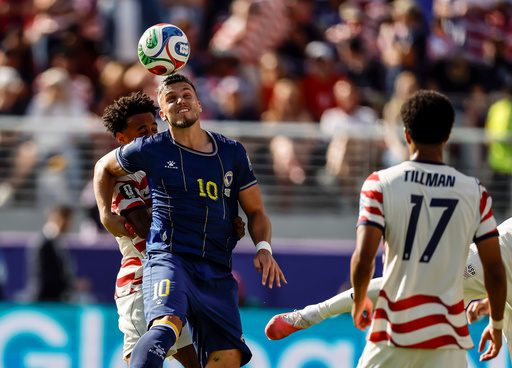
It turns out that a football match—you know, soccer—between the United States and Bosnia-Herzegovina of all nations, smashed viewing records, quietly pulling back the curtain on a dramatically evolving media landscape. You wouldn’t think a showdown against a small European nation, one whose very existence as an independent state post-dates the fall of the Berlin Wall, would upend American viewership norms. But it did. And it certainly begs a few questions about where US cultural attention really lies these days.
This single game, a third-round fixture most casual American sports fans probably couldn’t name off the top of their heads, wasn’t just a win on the pitch. It was a categorical broadcast victory. The English-language broadcast drew nearly 26.4 million people, a staggering figure that makes it [QUOTE_PLACEHOLDER] Fox said Monday. Think about that for a second. More than baseball, more than hockey—more than anything soccer’s ever pulled off here, ever. And for those keeping tabs on cultural demographics, Telemundo reported an audience of 9.8 million viewers for the Spanish broadcast. That’s a 33% increase from the previous record set by the U.S. and Turkey in group play. It’s not just a passing fancy; this is momentum.
To put that into stark perspective, the US beat Bosnia 2-0 on Wednesday night in the first round of the knockout stage to reach the round of 16. It was, unbelievably, [QUOTE_PLACEHOLDER] Let that sink in. It surpassed prime-time dramas, blockbuster movie premieres, and pretty much every other marquee sporting event outside of the annual American carnival that’s the Super Bowl. Even Game 5 of the NBA Finals, a contest where the New York Knicks won their first championship since 1973, averaged 24.5 million viewers on ABC and ESPN, with audience peaking at 33 million. Fox said its audience peaked at over 34.8 million between 9:45 p.m. and 10 p.m. EDT. These aren’t minor fluctuations; they’re monumental shifts in viewing habits.
It’s fascinating, isn’t it, how global events often resonate in unexpected ways. This match against Bosnia, a nation that itself knows a thing or two about global scrutiny and shifting allegiances, brings the World Cup’s true, diverse spirit home. Bosnia-Herzegovina, with its unique geopolitical history and significant Muslim population, symbolizes a complex intersection of European identity, religious heritage, and resilient nation-building. The game wasn’t just an athletic contest; it was a subtle nod to global solidarity. For Pakistani or South Asian audiences, who comprise significant diasporic communities in the U.S. and possess an intrinsic connection to global football, such a match featuring a Muslim-majority nation on a global stage often carries a particular resonance. It’s a shared moment of competitive joy, — and that connection transcends geographical distance and even rivalries. You see it play out in coffee shops from Karachi to Kansas City – a shared, universal language. And now, American networks are finding it translates into serious ratings.
This viewership phenomenon wasn’t confined to coastal metropolises either. Kansas City, Missouri; Boston; St. Louis; San Francisco; — and Austin, Texas, were the top local markets. This indicates a widespread, rather than localized, embrace of soccer, debunking the old trope of it being a niche sport for recent immigrants or a coastal elite hobby. It’s happening everywhere, it seems, from the Midwest plains to the Pacific shores.
The traditional media power brokers, who’ve long dismissed soccer as America’s sport of the future that never quite arrived, are now contending with its very real present. Because this isn’t just about a good game; it’s about a changing national palate for entertainment, a more globalized perspective in media consumption. The implications aren’t merely statistical; they’re cultural. If these numbers persist, if the USMNT continues to capture attention like this, then networks and advertisers are gonna follow the money, aren’t they?
What This Means
The record-breaking viewership for the US-Bosnia World Cup clash isn’t just a quirky headline; it’s a policy earthquake disguised as a sports story. Economically, this translates to billions in future advertising revenue — and media rights. Companies like Fox and Telemundo, which are pouring serious capital into sports broadcasting, are seeing their gamble pay off handsomely, solidifying soccer’s place as a core pillar of their content strategy. This isn’t just about live events; it’s about drawing eyeballs that then convert into engagement across digital platforms and traditional programming, reshaping what success looks like in the competitive media landscape. We’re witnessing the commercial validation of a global sport finally taking root in American soil, demanding more airtime and higher production values. But the story extends far beyond quarterly earnings.
Politically, the burgeoning popularity of the World Cup in America signals a softer power advantage for Washington on the international stage. When Americans genuinely engage with a global event involving dozens of nations—from traditional allies to those whose relations are strained—it subtly broadens collective understanding and cultural fluency. Bosnia’s participation and its connection to larger conversations about geopolitics, identity, and Islam in Europe provides an unexpected touchpoint for US audiences, often through sport, to engage with diverse global narratives. Such broad viewership might foster a less insular public discourse, prompting questions and curiosity about parts of the world previously overlooked in American mainstream media. The government’s messaging around global cooperation or international development can land with greater resonance when a populace has a shared, emotive connection—even through sport—to other nations. It could also fuel domestic interest in international sports hosting, like future World Cups, potentially boosting local economies and global standing. See also how these commercial forces sometimes overshadow on-field realities in familiar fade for USMNT scenarios. Or America’s soft power foul if you prefer that analysis. The money is certainly there, the viewership proof is in the pudding. The implications for American diplomacy and cultural exchange are subtle but powerful, transforming passive observers into engaged participants in the global spectacle, one broadcast at a time.