

Silent Descent: Civilian Crash Casts Eerie Calm Over Fractured Northern Israel Skies
POLICY WIRE — TEL AVIV, Israel — It wasn’t the usual sirens, the familiar thrum of air defenses, or the gut-punch of another missile intercept. This time, the silence that followed was...

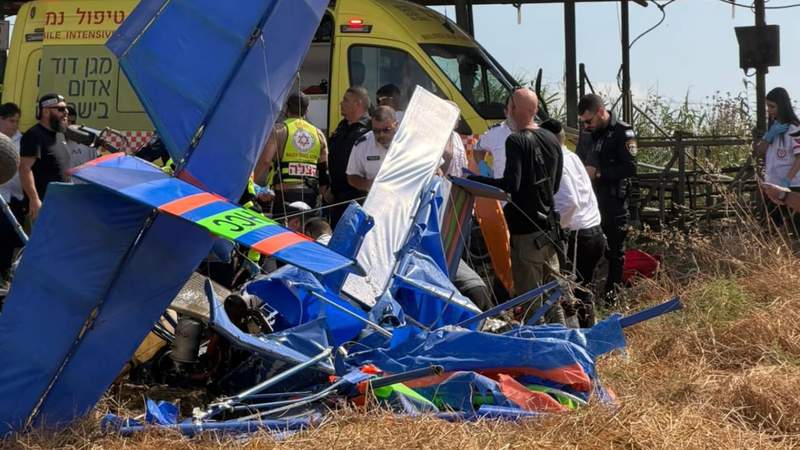
POLICY WIRE — TEL AVIV, Israel — It wasn’t the usual sirens, the familiar thrum of air defenses, or the gut-punch of another missile intercept. This time, the silence that followed was unsettlingly different. A civilian aircraft—a small, propeller-driven thing, no doubt humming along a picturesque route—fell from the sky over northern Israel yesterday, snuffing out two lives and leaving behind little more than crumpled metal and uncomfortable questions. No explosions. No international incidents. Just a plain, tragic mishap, an unscripted moment of vulnerability in a region accustomed to threats of a much grander, geopolitical scale.
The incident occurred near Migdal HaEmek, transforming what should’ve been an ordinary day into a scene of stark investigation. Rescue services were on site quickly, finding what they’d dreaded: no survivors. Details remain sparse, naturally, with investigators sifting through the wreckage for clues—a tell-tale flicker on a instrument panel, a faint cry from the black box, if such a small craft even carried one. We don’t get these stories on the front page much, do we? Not when there’s bigger, flashier havoc perpetually brewing.
Transportation Minister Meir Shamir, usually tight-lipped on security matters, offered a somber note. “Our skies must remain safe for all, civilians and military alike,” he stated, his voice gravitas-heavy through official channels. “We’ll leave no stone unturned in finding out what went wrong here. Every accident, regardless of size, serves as a harsh lesson.” It’s a line we’ve heard before, certainly, but it holds a particular weight when uttered against a backdrop of perennial instability. It’s as if even mundane disasters carry the specter of something more.
But the grim fact remains: small plane crashes aren’t isolated to battlegrounds or conflict zones; they’re an unfortunate global reality. According to the Aviation Safety Network, while commercial air travel reached record safety levels in 2023 with only 14 fatal accidents globally for scheduled passenger flights, general aviation – the world of private planes, flight schools, and regional hops – tells a far different tale, often with hundreds of incidents annually. They’re statistically riskier, though rarely grab international headlines unless a celebrity is involved. And sometimes, you just don’t hear about ’em at all.
This incident, away from the military flight paths and border skirmishes, reminds you of the quieter anxieties, the everyday risks people choose to take. Pilots, recreational flyers, they’re not thinking about Hamas or Hezbollah when they run their pre-flight checks, but they’re still part of a complicated airspace, an increasingly congested, sometimes perilous one. But it’s an economic reality too: there’s an active—if often overlooked—civilian aviation sector here, training pilots and running charter flights.
📄 POLICY WIRE WHITEPAPER PUBLISHED: PAKISTAN'S NATIONAL SECURITY POLICY PRIORITIES
👉 READ BY CLICKING HEREAnd these little tragedies? They prompt wider discussions, even beyond Israel’s borders. Ambassador Rina Hassan, formerly Pakistan’s envoy to a regional aviation body and a long-time observer of air safety protocols across Asia, weighed in. “These incidents, wherever they happen, remind us that the skies above us demand absolute vigilance. A hiccup in one nation’s air controls—or manufacturing—can have silent echoes across borders. We’ve certainly had our own lessons, haven’t we? It’s a shared infrastructure, even if the politics on the ground aren’t.” It’s true, you know, every pilot everywhere needs reliable intel, maintenance standards that don’t cut corners. It’s a network.
Because ultimately, for all the headlines about the Middle East’s perennial conflicts, daily life for many unfolds in routines that look, on the surface, like any other developed nation. There are flight schools, agricultural spraying operations, weekend excursions. It’s a veneer, sure, but a necessary one, especially when you’ve got an economy that keeps pushing forward, despite the friction. These crashes aren’t politically motivated; they’re human failures or mechanical woes, but in this specific part of the world, they’re still scrutinized through a particular lens. They just are.
It’s not about what you’d call ‘normal’ here; that’s a luxury many don’t get. It’s about adapting. Finding your routine amidst the unpredictable. Sometimes it’s a plane crash, sometimes it’s something else entirely. It simply proves that the unpredictability of life doesn’t always wear a uniform, does it? There’s plenty of peril from just… physics.
What This Means
This civilian air crash, while seemingly minor in the grand tapestry of Middle Eastern headlines, actually whispers volumes about several understated realities. Economically, even a single incident can momentarily chill the small-but-growing private aviation market within Israel, possibly increasing insurance premiums or intensifying regulatory scrutiny on flight schools and small charter companies. It forces an immediate, sharp focus on internal safety protocols, potentially prompting reviews of air traffic control procedures for low-altitude flights or maintenance standards for private craft—a quieter, less dramatic form of national security but vital all the same. Public perception of safety, especially when there’s little control over variables like small plane accidents, adds to the general anxiety, often in ways that don’t make it to formal intelligence briefings but reside in the collective subconscious. For a region grappling with digital warfare’s reach and existential threats, even a basic mechanical failure can feel like another tear in an already frayed fabric. These incidents, while non-military, subtly remind governments and citizens that oversight and infrastructure resilience apply equally to the mundane as they do to the martial. They also remind us that the media, including Policy Wire, sometimes has to zoom out from the expected conflict narrative to capture the full, complex picture of a nation’s challenges. In a country constantly weighing its defenses, sometimes the biggest chinks appear in the most unexpected places. It’s an inconvenient truth, isn’t it?
📖 GET YOUR FREE COPY NOW OF POLICY WIRE DIGITAL MAGAZINE JULY 2026 EDITION
👉 READ & DOWNLOAD FREE MAGAZINE