


From Gridiron Glory to Cage Carnage: The Murky Business of Celebrity Combat Sports
POLICY WIRE — Las Vegas, Nevada — The glittering lights of the Las Vegas Strip, usually reserved for spectacles of a slightly more dignified nature—cirque du soleil, high-stakes poker, or perhaps...

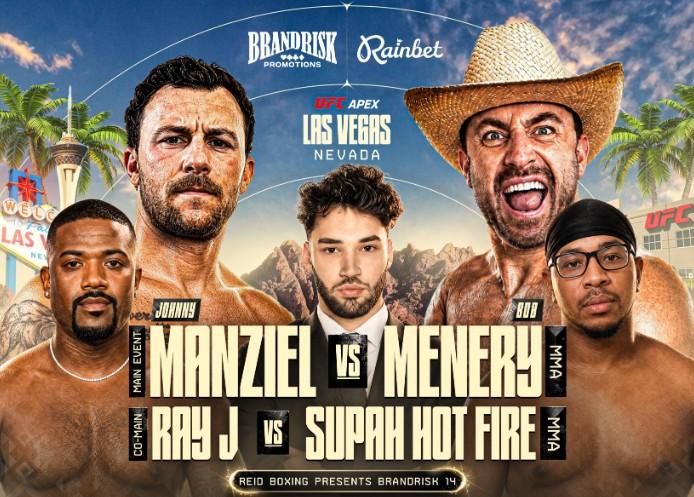
POLICY WIRE — Las Vegas, Nevada — The glittering lights of the Las Vegas Strip, usually reserved for spectacles of a slightly more dignified nature—cirque du soleil, high-stakes poker, or perhaps even a professional boxing match with actual stakes—played host this weekend to a different sort of circus. We saw a parade of past-their-prime athletes and social media personalities, all clambering into an MMA cage or a boxing ring, seeking to capitalize on fading fame, or frankly, no fame at all beyond their digital echo chambers. Johnny Manziel, that one-time college football wunderkind — and NFL washout, traded helmet for gloves. And for what, exactly? A skirmish against a podcast personality.
It’s a peculiar phenomenon, isn’t it? The BrandRisk 14 event, orchestrated by digital impresario Adin Ross, wasn’t about athletic prowess. Nobody genuinely expects gold medal-level performance from these guys. It’s about engagement. Raw, unadulterated, often-gawking engagement. Forget pay-per-view; this one played out live and free on YouTube and Kick. You don’t get much more accessible than that, do you? They’ve turned a combat sport into a participatory reality show. Viewers aren’t just watching, they’re part of the economy of attention. It’s a very different kind of revenue stream. Michael Beasley — and Lance Stephenson, former NBA pros, squared off. Ray J, an R&B singer whose primary claim to public consciousness now stems from an infamous home video, made his MMA debut. It’s performance art, if we’re being charitable. It’s certainly not traditional sport.
“We’re witnessing the logical extreme of the attention economy,” observed Dr. Anya Sharma, a cultural studies professor at Georgetown University. “When virality trumps virtue, and notoriety replaces genuine accomplishment, spectacles like BrandRisk become almost inevitable. It’s cheap, it’s compelling, — and it requires no significant intellectual investment. Frankly, it’s brilliant—if unsettling—marketing.” Her point isn’t lost on anyone who’s spent a minute scrolling online.
The card itself felt less like a championship event and more like a carefully curated social experiment in manufactured drama. Beyond the headlining Manziel-Menery clash, bouts like “Island Boy Flyy Soulja vs. Jeremy Smith” and “No Neck Jay vs. Shane Chance” populated the lineup. Even Gabriel Silva, son of the MMA legend Anderson Silva, stepped in. The event didn’t just push the envelope; it seemed to set a new precedent for how one can monetize fleeting digital renown, or even obscure digital infamy. Alvin Varmall Jr. knocking out Britton Norwood in the second round—that was one of the few actual, professional-level moments in a night otherwise dedicated to the oddity of it all.
This whole spectacle speaks volumes about the democratization—or perhaps, the debasement—of fame in the digital age. Anyone can get famous for anything, for fifteen minutes, for fifteen seconds. And they will always, always find a way to cash in on it. It used to be just endorsements, book deals, maybe a reality show. Now, it’s glorified brawling on streaming platforms, broadcast globally. Because the algorithms don’t discriminate. An analyst for Statista reported just this year that global revenue from influencer marketing is projected to reach approximately $24.1 billion in 2024, a testament to how these digital-first events fit into a much larger economic picture.
And these events, free and easily shareable, bypass traditional gatekeepers of media, finding audiences wherever an internet connection can reach. Think about a young person in Lahore, Pakistan, accessing these feeds, seeing these once-mythic American figures throwing haymakers. For them, the narrative of the fading NFL star or the troubled NBA player might be irrelevant; what resonates is the sheer spectacle, the global digital campfire where everyone watches the same peculiar flickers. It’s a different kind of shadowboxing under the pyramids—an equally captivating, if less ancient, form of spectacle.
📄 POLICY WIRE WHITEPAPER PUBLISHED: PAKISTAN'S NATIONAL SECURITY POLICY PRIORITIES
👉 READ BY CLICKING HERE“These events aren’t really about sports; they’re about content production at scale,” remarked Silas Vance, CEO of Vantage Marketing Group, a firm specializing in influencer monetization. “You’ve got a massive, captive audience hungry for authenticity, or at least, the appearance of it. And when traditional sports leagues are constrained by professionalism, these upstart promotions step into the void with the raw, the unpredictable. It’s genius, economically. It’s disrupting traditional entertainment models, plain — and simple.” He doesn’t mince words.
It’s all a stark reminder: in an age where content is currency, everything is transactional. Fame, notoriety, even a history of athletic achievement—they’re just assets waiting to be monetized. It’s a harsh world out there.
What This Means
The BrandRisk 14 event isn’t just a quirky blip on the entertainment radar; it’s a stark indicator of several accelerating geopolitical and economic shifts. Firstly, it spotlights the evolving monetization strategies within the creator economy. Traditional sports franchises struggle with declining viewership for established events, but here, events built entirely on influencer personas and low production costs are pulling in massive, global audiences—free. This model, driven by advertising revenue from platforms like YouTube and Kick, directly challenges the pay-per-view paradigms that have long governed combat sports. We’re witnessing a financial democratisation of broadcast entertainment, even if the ‘talent’ remains highly centralized around specific digital celebrities.
Secondly, it reflects a growing global appetite for ‘raw’ or ‘authentic’ content, regardless of traditional production values. This trend transcends borders, reaching audiences in emerging markets like Pakistan, where digital platforms are rapidly becoming the primary source of entertainment, bypassing state-controlled or traditional media outlets. This has subtle political implications: as public discourse fragments and consolidates around specific content creators, rather than established news sources, the potential for manipulation, misinformation, and the propagation of specific — and often unsophisticated — narratives increases. The spectacle itself becomes the message, a form of bread and circuses for the digital age, distracting from deeper societal anxieties or even legitimate policy debates. It’s not just a fight; it’s a symptom of a much larger shift in how we consume — and process our world.
📖 GET YOUR FREE COPY NOW OF POLICY WIRE DIGITAL MAGAZINE JULY 2026 EDITION
👉 READ & DOWNLOAD FREE MAGAZINE