

Hollywood Hardwood: Star Power Drowns Out Playoff Grit in Cleveland
POLICY WIRE — Cleveland, USA — When the cameras swung from the thundering dunks to the celebrity box seats this past weekend, it wasn’t just a pivot in broadcast focus. It was a mirror held up...

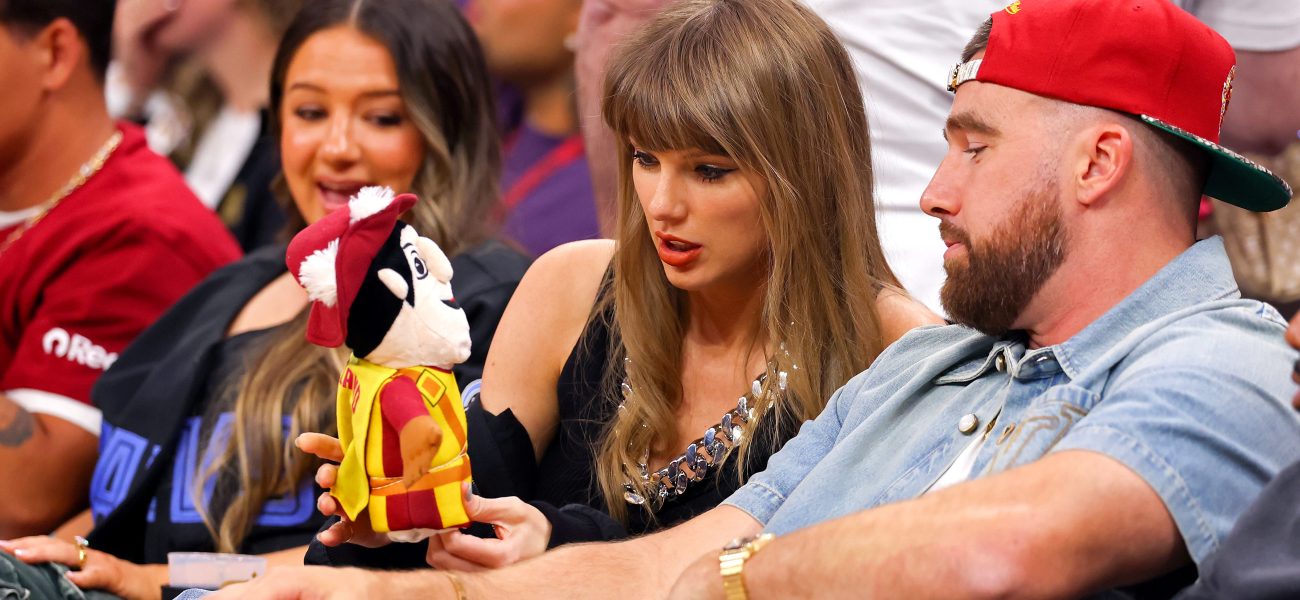
POLICY WIRE — Cleveland, USA — When the cameras swung from the thundering dunks to the celebrity box seats this past weekend, it wasn’t just a pivot in broadcast focus. It was a mirror held up to modern spectator sports, a telling glance at what, precisely, captivates a global audience now. Never mind the grim, desperate fight for playoff survival on the hardwood; the true spectacle, it seems, was Taylor Swift and Travis Kelce gracing Game 3 of the Knicks-Cavaliers series. They arrived, they sat, they cheered—and in doing so, they managed to vacuum up a startling percentage of the event’s actual airtime.
It’s become almost routine, hasn’t it? These titans of popular culture, strategically deployed, becoming narrative drivers in arenas far beyond their professional scope. The actual contest, Cleveland’s desperate struggle to claw back from an 0-2 deficit, nearly became a sidebar to their visible, grinning enthusiasm. A sports fixture, yes, but primarily a cultural moment manufactured for maximum online consumption. Because in the attention economy, a genuine athletic clash simply doesn’t pack the same punch as a meticulously curated celebrity sighting. But what does this say about the integrity of the game? About our collective priorities?
Cleveland, battling New York after two losses at Madison Square Garden, needed focus. Raw, unadulterated, hoop-centric focus. Instead, they got an unasked-for, glitter-bombed media event. The Kansas City Chiefs’ tight end, Kelce, roots for the Cavaliers, apparently a homage to his Ohio upbringing. Swift, by extension, became an honorary fan, her reactions instantly meme-worthy. It’s a formula designed to electrify social media, not necessarily to celebrate basketball’s finer points. You’d almost think the league brass views the game as merely the backdrop for an influencer festival.
“Our players were certainly aware of the star power in the building, but ultimately, our job’s about securing wins,” observed Cavaliers General Manager Koby Altman, his voice tight with a mixture of practiced professionalism and what sounded like quiet resignation. “Distractions, big or small, are just part of the professional landscape now. We focus on the court, on the coaching. Everything else? Well, that’s external noise, isn’t it?”
And noise it was. A cacophony. Every replay, every commentator interjection, every cutaway shot felt like a subtle nudge: forget the intricate pick-and-rolls, forget the contested threes. Look over there! Look at *them*. It creates a strange dynamic where the athletic performance risks being secondary to the sheer presence of fame. Not exactly what the purists sign up for. But then again, are there any purists left when a Taylor Swift effect can bend reality this much?
This isn’t an isolated incident, either. It’s part of a broader, well-oiled machinery. The integration of celebrity and sports now serves as a high-octane marketing blitz, pulling in demographics traditionally uninterested in free throws or defensive rotations. NBA Commissioner Adam Silver, typically keen on the league’s global expansion, might argue this is precisely the point. “These moments, they transcend sport in the traditional sense. They put basketball in conversations from London to Lahore, making our game accessible to a newer, wider audience,” Silver reportedly stated during a recent media briefing, his comments likely crafted to echo the league’s growth ambitions rather than its athletic purity.
📄 POLICY WIRE WHITEPAPER PUBLISHED: PAKISTAN'S NATIONAL SECURITY POLICY PRIORITIES
👉 READ BY CLICKING HEREThe reach of this celebrity machine is truly global. Consider the resonance even in regions far removed from North American professional sports, places like Pakistan, where Western celebrity culture already holds a complex, sometimes contradictory sway. There, local media outlets, despite grappling with urgent national policy debates or regional political complexities, still dedicate significant airtime to Western pop culture sensations. This isn’t just about entertainment; it’s about aspirational economics, about what young people are consuming, about the global village’s evolving, rather unsettling, common denominators.
What This Means
The very public romance between Swift and Kelce, played out against the backdrop of an NBA playoff, reveals a fundamental shift in the economics of attention. For major sports leagues, traditional viewership isn’t enough; raw eyeballs, however acquired, drive advertising revenue and merchandise sales. Their presence wasn’t merely a casual outing; it was an activation, whether intentionally planned by public relations mavens or organically amplified by a media ravenous for anything trending. This has economic implications stretching far beyond ticket sales.
For instance, Taylor Swift’s “Eras Tour” generated an estimated $4.6 billion for the U.S. economy, as per research from the Commonwealth Foundation in August 2023. That staggering figure illustrates the sheer financial leverage these cultural icons possess. Their mere attendance at an event can inflate its perceived value, attracting a transient audience whose loyalty rests not with the sport, but with the celebrity. It also underscores a subtle erosion of focus. When the spectacle overtakes the substance, serious policy discussions, or even intense athletic endeavors, can get drowned out by the glitz. It’s a calculated gamble on behalf of the sports world, trading long-term engagement for short-term viral splashes. This kind of celebrity super-stardom, while creating enormous commercial opportunities, also sets a precedent where serious subjects, from geopolitics to local governance, find themselves competing against an increasingly distracting, visually potent cultural landscape. One can’t help but wonder if the actual outcome of the game became irrelevant that night, much like how the grinding realities of Kyiv’s gruelling dawn often fade against the incessant buzz of digital chatter.