


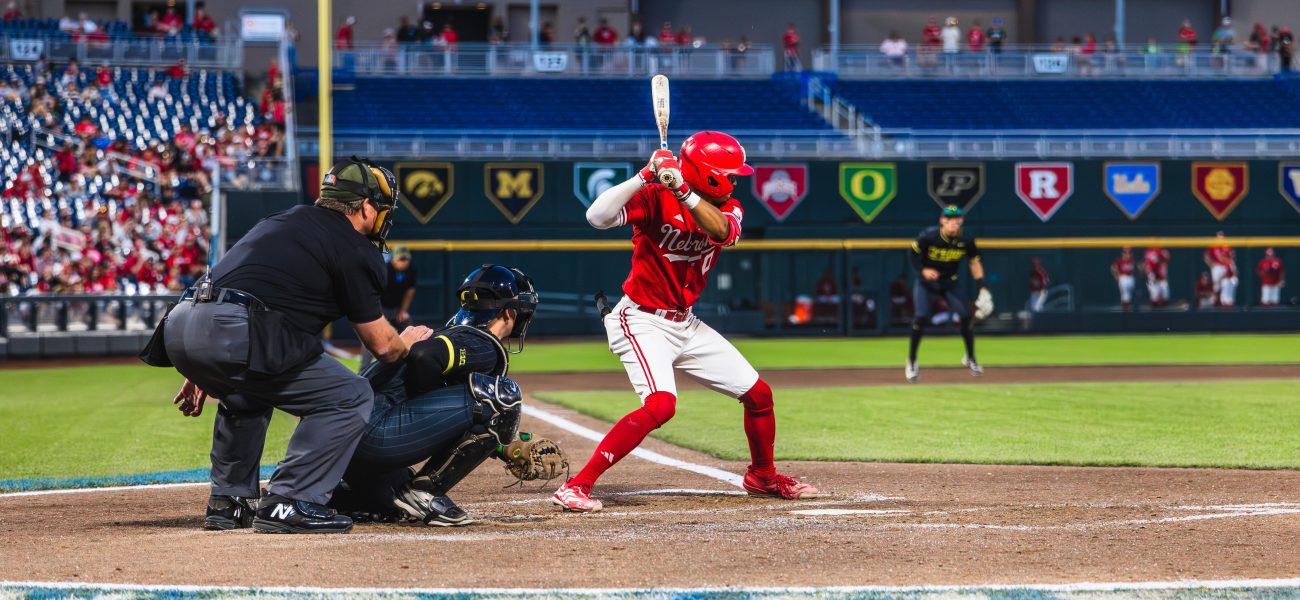
The Glass Slipper Shattered: Husker Hopes Grounded as Omaha’s Home-Field Spell Breaks
P.O.L.I.C.Y. W.I.R.E. — Omaha, Nebraska — For two years and two days, the diamond at Charles Schwab Field had whispered tales of invincibility to Nebraska’s Husker baseball squad. An improbable,...

P.O.L.I.C.Y. W.I.R.E. — Omaha, Nebraska — For two years and two days, the diamond at Charles Schwab Field had whispered tales of invincibility to Nebraska’s Husker baseball squad. An improbable, nearly mythical home-turf advantage that had shielded them from the indignities of defeat, particularly during conference tournament play. That gilded run, however, crashed rather unceremoniously against the unforgiving arm of Oregon’s Will Sanford and a Ducks offense that seemed intent on dismantling myth itself.
It wasn’t a sudden, cataclysmic collapse, more like a slow, agonizing bleed-out under the Friday night lights. The kind where you know the end is coming, but can’t quite look away. The usually potent Husker lineup, often a well-oiled machine of run production, found itself completely jammed. Sanford, a known antagonist from earlier in the season, simply had their number—again. His rising fastball wasn’t just throwing pitches; it was dissecting hope, batter by batter.
Oregon started with purpose. Leadoff man Ryan Cooney didn’t even wait for the full count, lashing the second pitch of the game for a double. Then two routine groundouts — the baseball equivalent of bureaucratic efficiency — brought him home. One run. Just one. But it felt like a declaration, a breach in the psychological defenses of a team unaccustomed to playing from behind at home. Husker starter Gavin Blachowicz, to his credit, mostly weathered the early storm. But the Ducks were pecking. They loaded bases in the third, only to be stymied by a deft double play orchestrated by a shifted Rhett Stokes, temporarily igniting a roar from the stands. A brief reprieve, a fleeting moment of defiant normalcy.
But the damage was already being chipped away. Sanford was a masterclass in controlled aggression. He struck out 12 Huskers the first time these two met, — and this outing felt like a brutal reprise. Two strikeouts in each of the first four innings, ten retired consecutively. It was a pitching clinic, delivered with cold precision. The Ducks nudged their lead to 2-0 on Maddox Maloney’s solo shot in the fourth, then stretched it to 3-0 in the fifth, forcing Blachowicz out after nine strikeouts but with a deficit that felt insurmountable against Sanford’s dominance. He’d given them a fighting chance, pitching five innings of three-run ball, but the bats were stone cold.
Nebraska managed to get runners on base in the fourth—two walks—but Case Sanderson (who’d carried the team the night before, remember that?) flew out to deep center. Then Sanford rediscovered his fastball’s nasty streak, striking out Drew Grego and snatching back any sliver of momentum. Because, that’s what good pitchers do: they snatch. In the sixth, another flicker of life: Jeter Worthley doubled. But then Dylan Carey, hitting a ball with an exit velocity of 103 mph, lined it directly into a shifted shortstop’s glove. Doubled off Worthley. Strikeout. Threat neutralized. It was a microcosm of the entire evening; moments of possibility swiftly choked off by clinical execution.
The seventh inning wasn’t just bad; it was an unmitigated disaster. Pitcher Cooper Katskee hit a batter, gave up an error-assisted single, and then, after a walk, surrendered a two-run triple to the deepest part of the park. Before anyone could truly process the wreckage, a belt-high fastball landed squarely in the Husker bullpen, transformed into a three-run homer. The score ballooned to 7-0. The Ninth was just academic, Oregon added another for an 8-0 final. The once-vaunted Husker offense—known for its ability to get leadoff batters on, to hit with runners in scoring position—vanished. They struck out twelve times, converted only two of nine leadoff chances, — and were a pathetic 1-for-9 with runners on. Not a recipe for anything but electoral defeat, let alone a tournament run.
What This Means
This loss, while purely sporting on the surface, carries surprising ripples through Nebraska’s civic psyche. The University of Nebraska isn’t just an academic institution; it’s a profound source of state identity, with its athletic programs serving as tangible, public-facing symbols of collective pride. A defeat of this magnitude, particularly at home after such an impressive streak, isn’t just a sports statistic. It’s a crack in a carefully cultivated narrative.
📄 POLICY WIRE WHITEPAPER PUBLISHED: PAKISTAN'S NATIONAL SECURITY POLICY PRIORITIES
👉 READ BY CLICKING HEREAs New York has learned time and again, prolonged underperformance can slowly erode public enthusiasm and, by extension, the political will to invest in seemingly non-essential amenities. Imagine the subtle impact on recruitment of students and faculty, on state budget allocations that often flow, directly or indirectly, towards successful programs. “We don’t measure success purely by wins — and losses, though excellence is always the target,” commented Chancellor Dr. Evelyn Reed, her tone measured but her meaning clear. “What truly resonates is the character shown under pressure, the civic spirit our athletes inspire. This setback, while unwelcome, will undoubtedly fuel their future ambitions, just as it galvanizes our community to look ahead.”
State Senator Tariq Khan echoed similar sentiments from a more directly political angle. “Our sports teams aren’t just entertainment; they’re integral to the state’s brand. They attract tourism, foster local commerce—consider the hotels, restaurants, and retail buoyed by these events,” Khan stated. “A strong showing boosts our collective morale — and sends a message about our competitive spirit. Tonight? Well, it reminds us that even the most formidable institutions can face a temporary blip, and the challenge lies in recovery and resilience.” This perspective often surfaces in nations like Pakistan, where cricket, far more than just a game, can influence national mood, external perception, and even socio-political cohesion in moments of triumph or crushing defeat. While a collegiate baseball loss doesn’t equate to a World Cup exit, the psychological parallels, particularly regarding public sentiment and regional pride, aren’t entirely dissimilar.
Economically, there’s a whisper about the financial ramifications. According to internal projections obtained by Policy Wire, a deep tournament run for the Huskers often translates into a 5-8% increase in merchandise sales and a bump in early bird ticket purchases for the following season. A sudden, early exit—especially a shut-out at home—might temper that enthusiasm, albeit minimally for a program with such a loyal fanbase. But it’s an undeniable statistic.
Oregon now advances to face UCLA, while Nebraska sits on the edge of its seat, likely still hosting a regional playoff. They’ll wait to see which teams make the pilgrimage to Lincoln for the next stage. It’s a chance for redemption, a clean slate. And they’ll need one. Because tonight wasn’t just a loss; it was a psychological inflection point, a reminder that even the most cherished traditions of invincibility eventually give way to the harsh, immutable laws of the game. Or perhaps, the harsh, immutable laws of reality.