


Behind the Glitter: Football’s Perennial Hunt for Transient Gold in a Shifting Market
POLICY WIRE — London, UK — The summer ritual is upon us once more. It’s a multi-billion dollar economic ballet disguised as sport, where global entities known as football clubs — often laden with...

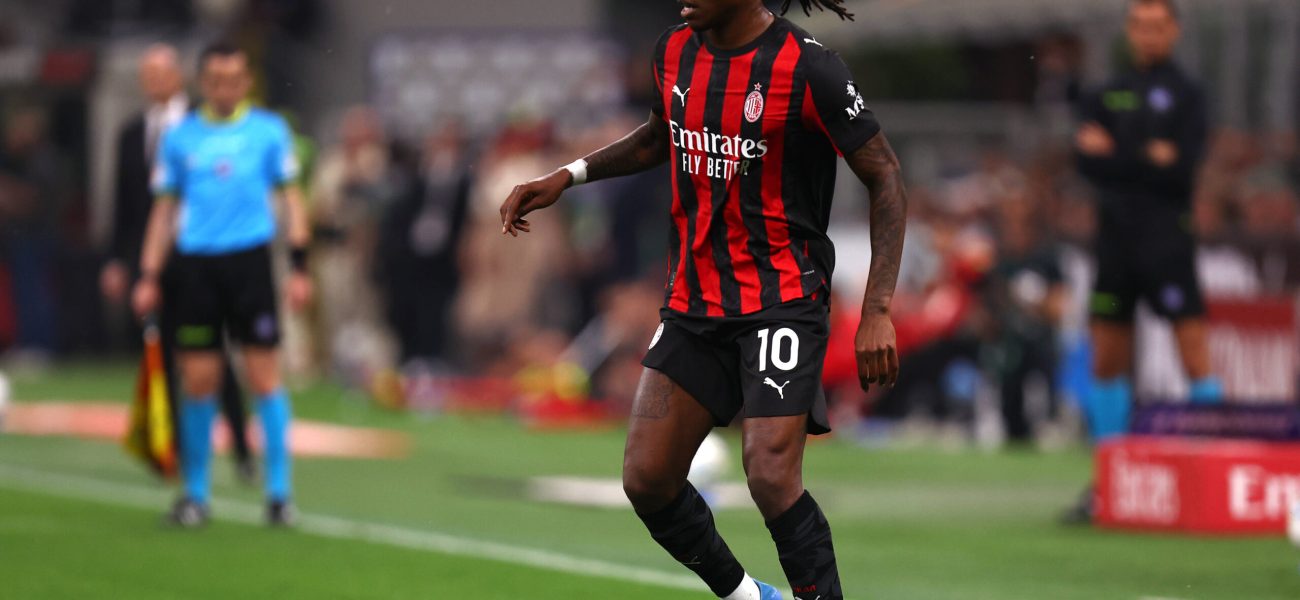
POLICY WIRE — London, UK — The summer ritual is upon us once more. It’s a multi-billion dollar economic ballet disguised as sport, where global entities known as football clubs — often laden with debt, fueled by ambition, and owned by sovereign wealth or private equity — enter a frenetic marketplace to buy and sell human assets. Manchester United’s latest alleged ‘sniffing’ around AC Milan’s Rafa Leao isn’t just a rumor; it’s a bellwether for the ongoing financialization of the game, a perpetual state of flux where player valuations shift like sand dunes.
Because, for clubs like Manchester United, currently wrestling with inconsistency and a craving for their storied past, every transfer window becomes a referendum on competence. But it’s also a public relations exercise. Fans want dynamism. And Leao, with his flashes of brilliance — and undeniable raw talent, embodies precisely that.
Gazzetta dello Sport, an Italian sports bible, lit the fuse, reporting that Milan aren’t averse to a sale, provided the ‘tone of the offers’ is right. A €50 million to €60 million price tag is being floated for the Portuguese winger. For a player whose name already carries significant weight, whose image rights are undoubtedly a tangled web of potential earnings, that figure feels almost quaint in today’s hyper-inflated ecosystem. Yet, it’s still serious money, representing a substantial investment for any European club looking to bolster their attacking options.
It’s all a delicate dance. On one side, Milan — a club with a proud history, yes, but also one keenly aware of balance sheets and Financial Fair Play regulations. “We prioritize the financial health and long-term sustainability of the club,” stated Giorgio Furlani, CEO of AC Milan, in a past interview echoing their corporate strategy. “While we value talent, every asset has its market value, and we operate accordingly.” They’re not going to give him away, not with the stakes so high. Not with rival teams constantly looking for any sign of weakness.
On the other, Manchester United, currently attempting to reconstruct their squad under new sporting directives and part-ownership. They’re a global brand, yes, but one that has struggled for genuine impact on the field. Their fanbase, sprawling from the pubs of Salford to the burgeoning markets of Karachi, demands success, demands the kind of thrilling football once synonymous with the Old Trafford name. “Our objective isn’t merely acquisition; it’s the strategic integration of game-changing talent that aligns with our club’s ambitious vision for silverware,” a United spokesperson, perhaps their newly appointed technical director, might contend, articulating the lofty goals that accompany such price tags.
And then there’s the player himself. Leao has been a mercurial force at San Siro, capable of jaw-dropping individual moments but also prone to periods of drift. Reports suggest a frayed relationship with sections of the Milan faithful, a wound to the ego of a player who thrives on confidence. Professional athletes are, ultimately, businesses unto themselves, often advised by formidable agents—Jorge Mendes, in this instance, a man whose influence spans continents and deals. When that crucial bond with supporters frays, well, a change of scenery becomes rather tempting, doesn’t it?
📄 POLICY WIRE WHITEPAPER PUBLISHED: PAKISTAN'S NATIONAL SECURITY POLICY PRIORITIES
👉 READ BY CLICKING HEREThis market activity doesn’t happen in a vacuum. It reverberates across football’s interconnected financial web. According to a recent report by Deloitte’s Football Money League, the top twenty revenue-generating clubs amassed a staggering €10.5 billion in the 2022/23 season. That’s a sum larger than the GDP of some small nations. This illustrates the monumental capital flowing through the sport, a significant portion of which is recycled into player acquisitions like the potential Leao transfer. But it also means pressure. Tremendous pressure.
For fans in places like Bangladesh and Pakistan, where European football enjoys immense popularity—sometimes eclipsing local sports—these transfer sagas are more than mere headlines. They’re cultural touchstones, discussions that consume entire communities. It’s not just about who kicks a ball; it’s about global brand allegiance, the triumph of aspiration, and the dreams projected onto these players.
What This Means
This prospective transfer isn’t just about Man Utd gaining a winger. It’s a snapshot of the relentless commercialization that now defines elite football. From an economic standpoint, Milan’s willingness to consider offers for a marquee player, even one integral to their recent Scudetto triumph, signals a pragmatic shift: talent, however brilliant, is an asset to be leveraged, bought low (ideally) and sold high when opportune. It reflects the constant financial pressures on European clubs to balance their books, compete with state-backed behemoths, and extract maximum value from their human capital. The reported €50-60 million valuation for Leao—a figure that would’ve seemed outlandish just a decade ago—underscores the escalating stakes in this particular economy.
Politically, such transfers solidify football’s role as a potent instrument of soft power and a driver of global consumerism. Clubs like Manchester United are not just sporting entities; they’re global brands, influencing tastes and garnering loyalty from disparate populations worldwide, including significant followings across the Muslim world. The movement of such a high-profile player can ignite economic activity through merchandise sales, increased broadcast viewership, and enhanced brand value—all factors that policymakers, often keen on national branding and economic uplift through ‘creative industries’, are increasingly mindful of.
This type of transaction demonstrates the ongoing concentration of wealth and power within a handful of European super clubs, while simultaneously showcasing the increasingly fluid nature of the talent market, as agents and players wield more leverage than ever before. It’s a system of both incredible opportunity and considerable risk—a game of financial football, played for staggering sums with a human touch.
📖 GET YOUR FREE COPY NOW OF POLICY WIRE DIGITAL MAGAZINE JULY 2026 EDITION
👉 READ & DOWNLOAD FREE MAGAZINE