

75 Years of Pak-China Diplomatic Friendship
The move by Pakistan to release a commemorative PKR 75 coin in honor of seventy five years of diplomatic relations between the two countries (China and Pakistan) is not just a token gesture. It...

The move by Pakistan to release a commemorative PKR 75 coin in honor of seventy five years of diplomatic relations between the two countries (China and Pakistan) is not just a token gesture. It represents a figurative echo of one of the longest-lasting and strategically important bilateral relations introduced into the world of international politics. With the world in the midst of a period where alliances all over the world are prone to change under economic competition, regional instability and geopolitical realignments, the relationship between the Pakistani and Chinese representatives has a history of its consistency, depth and long-term strategic clarity.
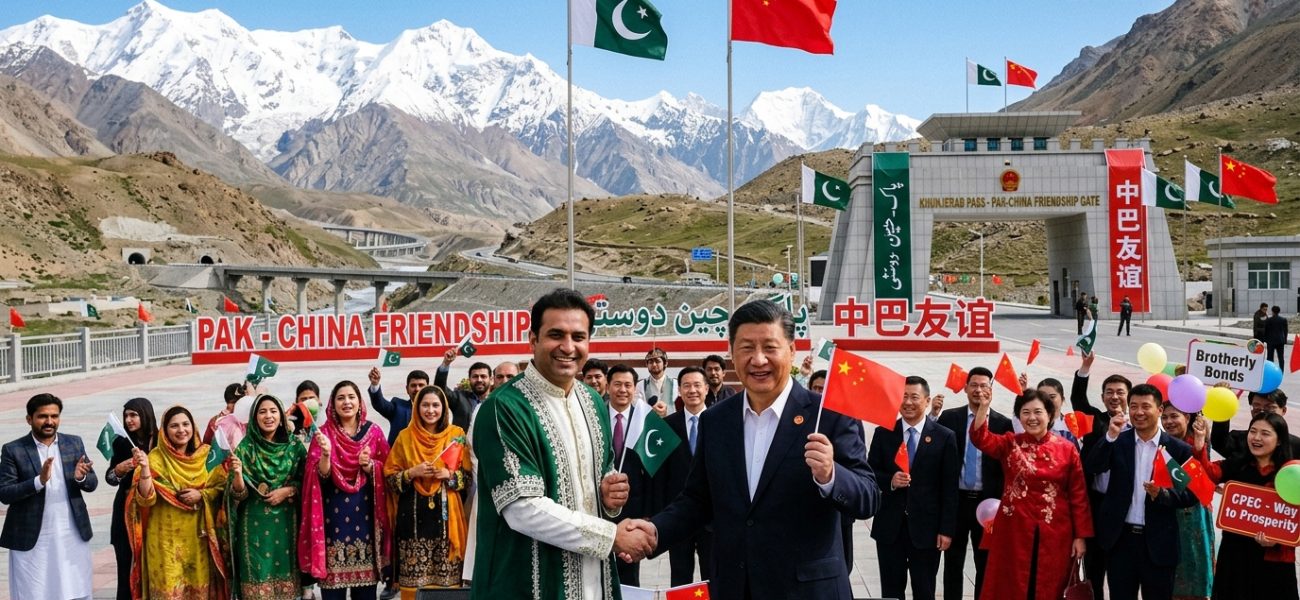
It has historical significance as the announcement was made in grand official anniversary celebrations of Islamabad last week. Pakistan and China officially recognized each other as diplomatic allies as far back as 21 May 1951 and Pakistan was the first Muslim-majority nation to acknowledge and develop formal diplomatic relations with Peoples Republic of China. It was to be the initial step in one of the longest lasting relationships in Asian history- relationships that would scale up over the years in political, defense, trade, infrastructure, technology and regional diplomacy.
The commemorative coin, 75 years later, acts as a reminder of how that relationship has developed as a form of diplomatic recognition to what both nations continuously refer to as all-weather strategic cooperative partnership. Such bilateral relations in the world have very little political continuity through the changing governments, changing local conditions of the region and modified international power formations.
The uniqueness of the Pakistan-China relationship can be seen in not just its length of existence, but also the extent of collaboration that it has been accompanied with. The partnership has long-since outgrown conventional diplomacy. It has come to be ingrained into the economic planning, strategic perspective and vision of regional connectivity in Pakistan. China is still the largest trading partner of Pakistan, and there are still ties of bilateral cooperation in energy, infrastructure, industrial development and agriculture, defence production and technological collaboration as well. This long-standing interaction has lent not only the relationship a symbolic political aspect but also an economic component of practical value.
The core of this change is the so-called China-Pakistan Economic Corridor (CPEC), which is commonly considered the crown jewel of the Belt and Road Initiative of China. Since its inception in 2015, CPEC has transformed the development landscape of Pakistan to a radical extent. Highways, energy plants, port development, logistics infrastructure, and industrial connectivity all have been channelled towards receiving billions of dollars. The economic aspect of bilateral relations has been strengthened by roads connecting previously isolated areas, influx and development of energy power to the national grid and growth around Gwadar. More crucially, CPEC placed Pakistan not merely in the position of an investment recipient, but they saw the country to serve as a bridge between South Asia, Central Asia, the Middle East as well as western China.
The 75th anniversary acquires a new meaning due to that strategic importance. A commemorative coin can be tiny in size, yet it symbolizes decades of faith because of a consistent but steady approach in diplomacy and a mutual strategic perception. It signifies a connection which has stood firm in the face of shifting global conditions-the Cold War era to the post 9/11 era and now into a different phase of multipolar world politics. The ceremony on Thursday in Islamabad indicated that. The senior political leadership of Bhutan came together and celebrated with the Chinese delegation who attended with the Vice Chairman of the Standing Committee of the 14 th National people congress, Cai Dafeng. It was not just an anniversary, a visible reassertion of a relationship between which both capitals remain at the most important level of priority in the political realm.
Commemoration Coins can frequently provide historical milestones in the political life of a nation; the achievement of independence, the advent of a constitution or a historic international relationship. Pakistan is putting this bilateral relationship among its most important state-to-state milestones by emitting a coin in the 75th year of their bilateral ties with china. It indicates the extent to which China has been integrated in the diplomatic history and future strategic plans of Pakistan.
📄 POLICY WIRE WHITEPAPER PUBLISHED: PAKISTAN'S NATIONAL SECURITY POLICY PRIORITIES
👉 READ BY CLICKING HERETiming is also very important economically. Investment, connectivity and economic recovery remain the priorities of Pakistan, as regional trade corridors get a central object of Asian geopolitics. Therein, Pakistan-China cooperation is no longer perceived during bilateral terms, but as a component of a larger regional economic system. Pakistan is connected to regional chains of supply by CPEC, trade by Gwadar, energy and industrial cooperation all integrate home development efforts in Pakistan. The cooperation is consequently beneficial to Pakistan-China relations, and broader regional trade and integration.
Other than the partnership in the economic field, the political trust between Islamabad and Beijing has also been one of the pillars of the relationship. The two nations have always been in agreement with one another in regional and international forums, and there has been a high level of diplomat cohesion between the two on multilateral institutions. This political cognition has served to keep the partnership afloat amidst the greater turbulence in the international system.
The commemorative coin is both an ode and a statement as Pakistan celebrates seventy-five years of diplomatic relations with China. It celebrates joint history that has been created on respect and a level of strategic trust; and it points to a future of closer collaboration, connectivity and economic union. In the world where most of the alliances are formed through the prism of immediate interests and short-term computations, the relationship between Pakistan and China, nevertheless, has turned out to be something of growing rarity in international relations: a continuity.
Nearly seventy-five years after the diplomatic hand shake between Islamabad and Beijing, that has persisted completely: and commemoration in Pakistan now has a new medium in metal, memory and national history, in the commemorative coin.
Author