

Deb Haaland’s Bold Gamble: A Cabinet Secretary’s Retreat to Gubernatorial Mud Puddles?
POLICY WIRE — ALBUQUERQUE, N.M. — In Washington, she runs the show, managing America’s public lands, its national parks, and grappling with the complex legacy of Indigenous relations. From the gilded...

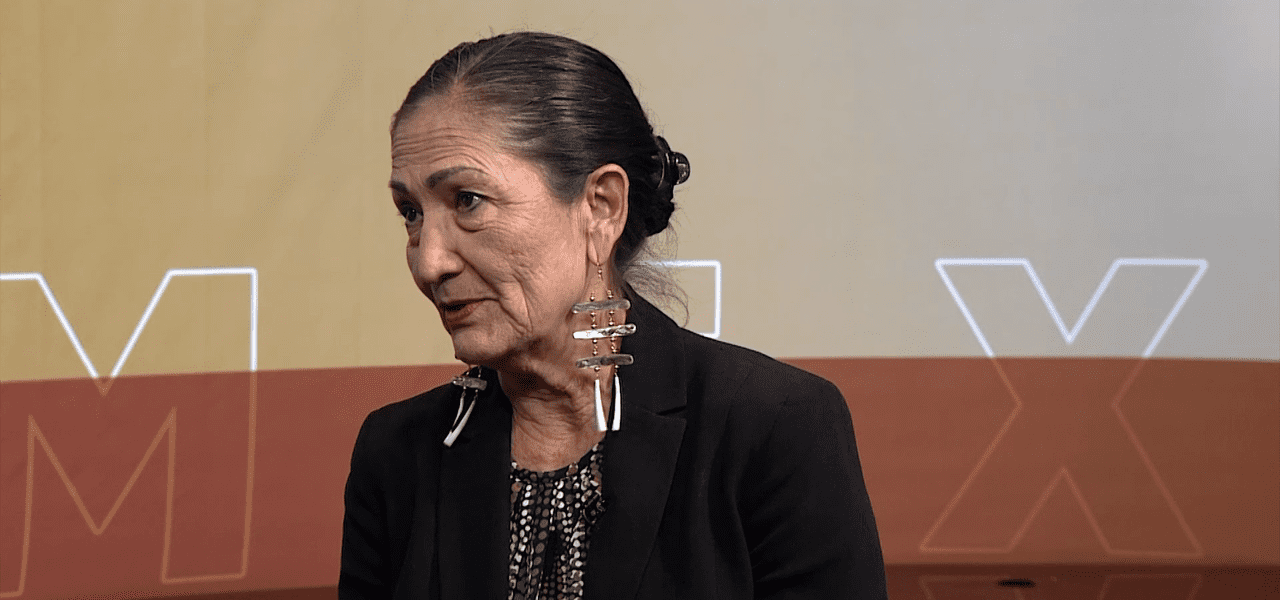
POLICY WIRE — ALBUQUERQUE, N.M. — In Washington, she runs the show, managing America’s public lands, its national parks, and grappling with the complex legacy of Indigenous relations. From the gilded halls of the Interior Department, Deb Haaland stands as the first Native American cabinet secretary, a pretty big deal—one might even say historic. So why, one might ask, is she now reportedly sizing up a dusty path back to the gubernatorial primaries in New Mexico for 2026? It’s not just a run for office; it’s a high-stakes downgrade, trading global optics for local skirmishes, D.C. power for Santa Fe’s endless legislative grind.
It’s an open secret, whispered among politicos over lukewarm coffee in the Roundhouse cafeterias, that Haaland might fancy herself back in the driver’s seat of her home state. She’s navigating intricate energy dilemmas, water rights, — and conservation battles on a national scale. But here? Here she’d be accountable for school budgets — and potholes. Because New Mexico politics—let’s be honest—it’s not exactly the United Nations. It’s a scrappy, often brutal game of patronage and personalities, far from the carefully curated press briefings of a federal department.
“Her experience on a national stage offers New Mexico an undeniable gravitas, a voice we haven’t seen in that office for quite some time,” mused State Senator Manny Ramirez, a Democrat from Las Cruces, speaking to Policy Wire from his capitol office. “But it also raises legitimate questions about connecting with the bread-and-butter issues here, away from the grand narratives of Washington. Folks back home want to know about their utility bills, not treaty negotiations with Greenland.” And he’s got a point. Voters aren’t usually swayed by someone’s command of the federal bureaucracy; they want to know who’s fixing the damn roads and keeping the local economy afloat.
On the flip side, some Republicans already see a weakness in her federal perch. “Secretary Haaland has spent years focused on grand, federal mandates—issues that sometimes feel pretty removed from the daily struggles of New Mexico families and businesses,” Republican state representative Gregg Hull, who’s also rumored to be weighing a run, told us bluntly. “Being a CEO of federal lands is a far cry from balancing a state budget that actually impacts livelihoods in Hobbs or Gallup. We need a governor who’s been grounded in this state’s unique challenges, not just flying over them.” Strong words, certainly.
Her path wouldn’t be without obstacles. The Democratic primary alone promises a brawl. Other potential contenders, like Sam Bregman, a name that’s been rattling around state political circles for ages, aren’t exactly shrinking violets. They’ve spent their careers clawing their way through New Mexico’s specific political ecosystem, a habitat often hostile to D.C. expatriates. They’re locals, deeply entrenched, — and they won’t yield ground easily.
Haaland’s supporters, however, paint her D.C. tenure as an advantage, not a handicap. Her understanding of federal funding streams, her network of powerful connections—that’s currency in a state where federal funds often make up a significant chunk of the budget. New Mexico consistently ranks as one of the states most dependent on federal aid, with federal funds accounting for approximately 36% of its total general revenues in recent years, according to data from the National Association of State Budget Officers. That’s a serious number, isn’t it?
📄 POLICY WIRE WHITEPAPER PUBLISHED: PAKISTAN'S NATIONAL SECURITY POLICY PRIORITIES
👉 READ BY CLICKING HEREHer background as a member of the Laguna Pueblo tribe, and her subsequent role leading Interior, lends a compelling—and complicated—global narrative to her candidacy. It draws parallels with land rights movements and resource management debates playing out across the world, from the arid stretches of New Mexico to, say, the remote communities of Balochistan in Pakistan, where indigenous populations are fighting for control over ancestral lands and mineral resources. It’s all about the ground beneath our feet, no matter the continent. Those struggles for environmental justice and self-determination—they don’t stop at national borders, do they?
This isn’t merely a local skirmish. A Haaland gubernatorial bid—especially if she wins—would ripple far beyond the Land of Enchantment. It cements an emerging truth: the executive branch of the U.S. government, once viewed as a sort of political mountaintop, is increasingly becoming a pit stop, a proving ground before politicians descend to wage war in state capitals. And if you’re looking for signs of broader discontent with the current national trajectory—of perhaps a retreat to local battles—well, then you’d do worse than looking right here in New Mexico, where the shadows of old conflicts often loom large, but local passions burn brightest.
What This Means
Deb Haaland’s rumored gubernatorial run isn’t just another entry on New Mexico’s political calendar; it’s a strategic calculation with implications reaching far beyond state lines. For the Democratic Party, it’s a potential validation of their ‘bench strength’ in historically marginalized communities, while simultaneously posing questions about career trajectories. Is a federal cabinet post merely a stepping stone for someone like Haaland, a prominent Indigenous figure, or a political zenith? Her decision could reshape perceptions of power for Native American leaders and inspire others to leverage federal experience for local impact.
Economically, Haaland would bring an intimate knowledge of federal budgeting and an established network in Washington to a state heavily reliant on federal aid. That could mean greater lobbying power for critical infrastructure projects, environmental initiatives, and support for the state’s significant tribal populations. But it also means navigating entrenched state interests, resource allocation battles, and the perennial challenges of economic diversification beyond oil, gas, and government jobs.
Her potential candidacy could ignite unprecedented interest from national progressive groups, environmental activists, and Indigenous rights organizations, pouring resources—and scrutiny—into the New Mexico political arena. This would transform a typically regional contest into a national referendum of sorts, amplifying the voices of New Mexico’s diverse populace and potentially offering a template for how national figures translate federal gravitas into local governance. It’s a high-stakes maneuver, isn’t it? One that forces us to question the very definition of political success in America today: is it higher office, or more direct, boots-on-the-ground power?