


Kremlin Vows ‘Consequences’ After Dormitory Strike Claim, Escalating Rhetoric
POLICY WIRE — Moscow, Russia — The rhetorical dust hadn’t even settled from the latest battlefield maneuver before Moscow, with characteristic bluntness, issued a stern promise: there’d be...

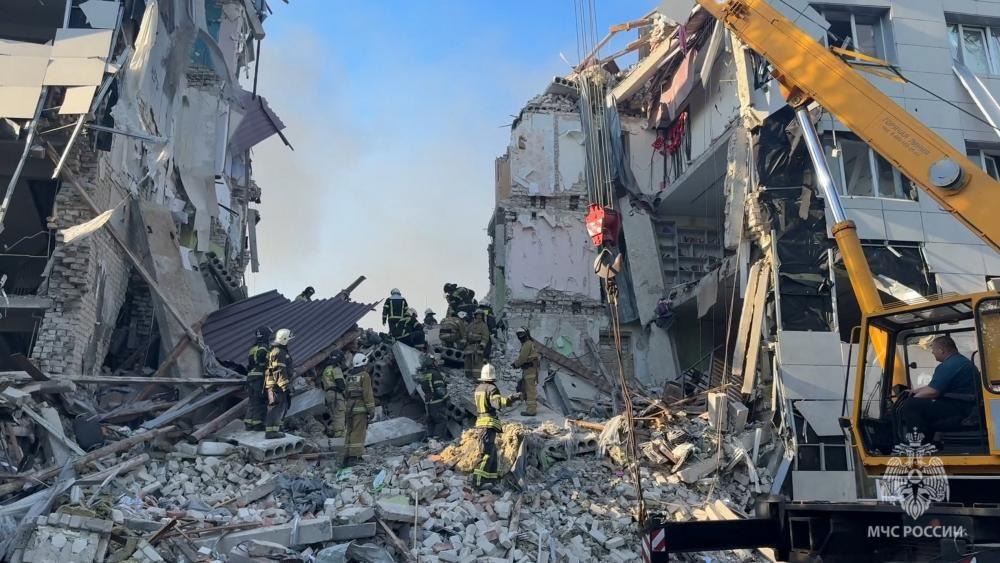
POLICY WIRE — Moscow, Russia — The rhetorical dust hadn’t even settled from the latest battlefield maneuver before Moscow, with characteristic bluntness, issued a stern promise: there’d be payback. It wasn’t about tanks or strategic positions this time. Instead, the Kremlin’s ire fixated on claims of an alleged Ukrainian drone attack hitting a student dormitory deep within Russian territory, a move it declared a flagrant, unforgivable act of aggression.
President Vladimir Putin, never one to mince words when it comes to perceived slights, made it clear. This incident, whatever its true nature—and there’s always ‘whatever its true nature’ in this ugly contest—marks a dangerous escalation. For his part, he’s apparently had enough of what he frames as Kyiv’s brazen provocations, pushing boundaries, perhaps a bit too far.
“We won’t stand by idly while our young citizens are targeted,” Putin stated in a televised address, his voice carrying the familiar, icy resolve. “There will be severe consequences. Our response won’t be just, but commensurate with the egregious nature of this attack.” It was a familiar refrain, one heard too many times already in a conflict that seems perpetually stuck in a loop of charge and counter-charge. But sometimes, even tired old threats still manage to bite, don’t they?
Ukrainian officials, however, quickly dismissed Moscow’s narrative as theatrical fluff. “Russia consistently manufactures pretexts to justify its barbaric acts,” shot back Mykhailo Podolyak, an advisor to President Volodymyr Zelenskyy, in a defiant social media post. “This ‘dormitory strike’ is another chapter in their fictional saga—a transparent attempt to divert attention from their ongoing crimes against humanity.” And so it goes: claim, deny, blame, repeat. The cynicism, one feels, is palpable.
Because, for all the strong words, independent verification remains maddeningly elusive, a grim standard in this fog of war. But what’s undeniable is the hardening of stances on both sides. Civilian infrastructure, real or alleged, is increasingly fair game, moving the battle lines well beyond the front-at least in terms of rhetoric. This latest flashpoint signals a troubling trend where domestic grievances quickly translate into international brinkmanship. It doesn’t exactly calm nerves, let’s be honest.
📄 POLICY WIRE WHITEPAPER PUBLISHED: PAKISTAN'S NATIONAL SECURITY POLICY PRIORITIES
👉 READ BY CLICKING HEREThe geopolitical tremors ripple outward, touching nations far removed from Europe’s eastern fringes. Consider Pakistan, for instance, a nation already navigating a complex web of economic pressures and regional rivalries. Such escalations—and the attendant impact on global energy markets, not to mention wheat and other commodity prices—don’t make things easier. Nations like Pakistan, keenly watching stability in their own region, also grapple with how this relentless conflict impacts the broader international order, especially as they often find themselves caught between competing global powers, needing good relations with all. (See also: Global Energy Market Volatility).
The alleged strike, according to the Kremlin, took place some 300 kilometers behind what it considers the frontline. And whether it truly involved a dormitory full of students—or was perhaps military accommodation cleverly re-labeled—the impact on Moscow’s internal messaging machine is, of course, exactly the same. The Russian state-controlled media, naturally, quickly spun the incident into a narrative of innocent lives imperiled by Ukrainian terror, fueling nationalist sentiment and solidifying public support for the ‘special military operation.’ It’s a playbook we’ve seen countless times, sadly, throughout history. A cynical observer might even call it efficient.
Statistically, the impact of the war on civilians is devastating. According to the United Nations High Commissioner for Human Rights, more than 10,000 confirmed civilian deaths have occurred in Ukraine since the invasion began, a figure almost certainly a significant underestimate of the true human cost. Each new alleged attack, especially on non-military targets, simply piles more tragedy onto an already horrific tally, often without clear accountability. We’re well beyond counting; now it’s more about bearing witness.
What This Means
This incident, regardless of its ultimate veracity, isn’t just about an alleged building strike. It’s a calculated rhetorical maneuver, a dangerous dance of provocation — and threatened consequence. Politically, it grants the Kremlin a fresh rallying cry, reinforcing its narrative of defensive action against an aggressive Kyiv supported by hostile Western powers. Economically, while one alleged drone doesn’t directly alter global markets, the promise of “severe consequences” implies further missile strikes, which do disrupt shipping lanes, commodity supply chains, and investor confidence—especially in energy and food. Countries in the Global South, including those within the Muslim world like Pakistan, who rely heavily on stable, affordable energy and grain imports, feel the sharp pinch of every such escalation. It means higher prices at the pump, increased food insecurity, — and greater social unrest. The international community, already stretched thin trying to contain this conflict, finds itself facing yet another hardening of lines, leaving even less room for meaningful dialogue. And don’t forget: each new threat means the bar for ‘unacceptable escalation’ just keeps inching a little higher, nudging us closer to truly unpredictable outcomes.