


Gridiron Politic: Star Quarterback’s Endorsement Stirs New York, Jolts National Stage
POLICY WIRE — New York, United States — The NFL, America’s secular religion, found itself tangled anew in the unforgiving machinations of political showmanship last week, courtesy of New York Giants...

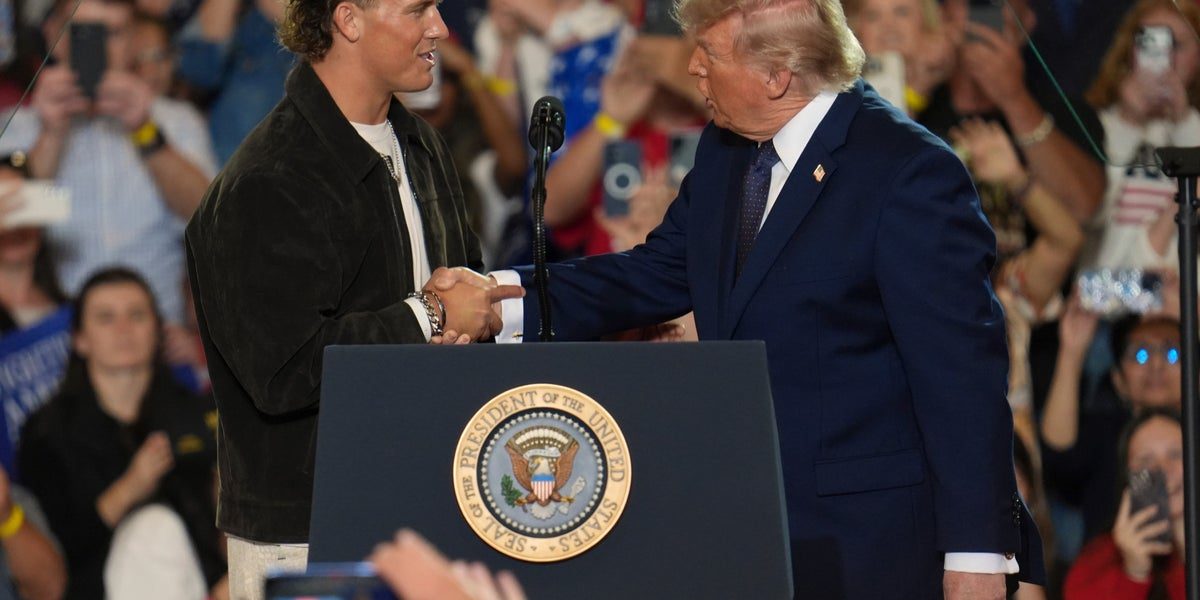
POLICY WIRE — New York, United States — The NFL, America’s secular religion, found itself tangled anew in the unforgiving machinations of political showmanship last week, courtesy of New York Giants quarterback Jaxson Dart. It wasn’t a dazzling pass or a clutch fourth-quarter drive that dominated headlines, but a brief appearance on a campaign stage—a momentary detour from the playbook to the podium that’s left observers across the spectrum scratching their heads, or perhaps, nodding vigorously, depending on their particular persuasion.
No, it wasn’t a sudden trade, nor a record-breaking contract extension. It was far more polarizing, much more American in its sheer audacity. Dart, who, to be frank, hadn’t exactly been broadcasting his political leanings from every social media rooftop, turned up beside former President Donald Trump. This wasn’t some quiet dinner, mind you. This was a bona fide rally for Representative Mike Lawler, right there in the Empire State. Talk about an unexpected snap.
But here’s the kicker: The setting sun might have been painting the Hudson a familiar orange, but the political atmosphere? That felt brand new, or perhaps just a very potent remix of an old tune. Dart, fresh off leading the crowd in a Giants chant (because, you know, priorities), expressed gratitude for the opportunity. Trump, ever the showman, responded with accolades, calling Dart a “future Hall of Famer” and “a beautiful guy” with “legs like tree trunks.” It was all rather chummy.
And then came the moment that ripped the thin veil of amiable political theatre right off: Trump leveraged Dart’s very presence to launch into a diatribe against transgender athletes in sports. “I’m looking at Jaxson,” Trump declared to the roar of the crowd, “is there any woman in the audience that thinks they can tackle that guy? Because I’d like to meet you.” A stark illustration, if one was ever needed, of how quickly an athletic endorsement can morph into a broader cultural flashpoint. But Dart stayed mum, wisely, one might say, opting not to engage that particular rhetorical Hail Mary.
The Giants QB hadn’t been known for such overt political endorsements. He’d posted online prayers for Charlie Kirk — a known conservative activist and Trump loyalist — after a much-reported assassination attempt last year, bemoaning “Political Violence NEEDS TO STOP!!” Many liberals condemned that violence, too. So, the public Trump endorsement? It’s different. It makes you wonder. Who advised this?
But the mixed reactions were instant, naturally. Charles Downs, a correspondent for the unabashedly right-wing Loomer Unleashed, crowed on X, “I remember a time when the NFL was writing BLM in their end zones. Now, NFL quarterbacks are introducing President Trump in New York. The American culture is changing. Wokeness is almost canceled.” He’s referencing the “End Racism” messages the league had featured for years, an obvious pivot point for those who see culture as a zero-sum game.
Conversely, many sports journalists, remembering the league’s chilly reception to Colin Kaepernick kneeling during the anthem — effectively ending his career — pointed out the apparent hypocrisy. “Where are the shut up and just play football people,” asked Mike Freeman on social media, echoing a sentiment that hasn’t exactly gone anywhere since Kaepernick’s silent protest.
📄 POLICY WIRE WHITEPAPER PUBLISHED: PAKISTAN'S NATIONAL SECURITY POLICY PRIORITIES
👉 READ BY CLICKING HEREFor some, this isn’t just about an athlete aligning with a politician; it’s about a continued blurring of lines, another piece of the American common ground evaporating into ideological divides. “This incident simply demonstrates how pervasive political polarization has become, infecting institutions once thought somewhat immune,” commented Dr. Evelyn Reed, a political sociologist at the University of Pennsylvania. “Professional athletes, especially those with considerable platforms, are now seen as prime real estate for political branding. It’s transactional, not necessarily ideological, — and that’s a disturbing trend.”
Conversely, former Congressman Anthony Valeri (R-NY) applauded the move. “It’s high time athletes, just like any other citizen, felt free to express their political beliefs,” Valeri stated. “For too long, conservative voices, especially in certain industries, have been silenced. Jaxson Dart is showing true backbone, — and we commend him for it. It resonates with folks.”
This isn’t an isolated American anomaly, either. Think of the intense political pressures on athletes globally, from cricket stars in Pakistan whose every public utterance is dissected, to footballers in Europe facing backlash for stances on everything from environmental policy to human rights. In societies often battling their own populist tides and conservative movements — ones not so dissimilar from those Trump leverages — such athlete endorsements often face intensified scrutiny, amplified by concerns over religious or cultural norms. It’s a messy business, this public persona in an increasingly fractured world. A Pakistan’s economy, facing its own structural challenges, sometimes sees its beloved cricketers as moral compasses. The stakes feel similarly high, just with different teams — and different flags. Indeed, a 2023 Gallup poll indicated that 58% of American adults believe professional athletes should keep their political opinions to themselves. Dart’s actions certainly ignore that widespread sentiment.
What This Means
Dart’s appearance doesn’t just add a football jersey to the red hat brigade; it crystallizes a significant and evolving trend in American politics. When a player of Dart’s caliber steps into the arena of a hyper-partisan rally, it does more than just offer a celebrity endorsement. It legitimizes a particular political narrative for a potentially new demographic — younger, perhaps less engaged politically, and definitely prone to hero-worship on the sports field. Because these athletes, they speak to millions. This isn’t just about votes; it’s about shifting cultural norms, making the political palatable, even fashionable, among those who might otherwise tune out.
Economically, for Dart, this could be a calculated risk or a genuine expression. Endorsements from mainstream brands often shy away from overtly political figures, but the burgeoning ecosystem of conservative-aligned businesses might open new doors. On the flip side, it risks alienating a significant portion of his fan base — and potential future brand partners. For the Giants, it’s a headache, an unnecessary distraction during a season when every narrative should be about touchdowns, not talking points. The NFL, still grappling with its image and the political landscape, just had another star player throw a pass that lands squarely outside the sidelines, in territory that’s become frighteningly common, yet still manages to surprise and infuriate in equal measure. It simply demonstrates that sports and politics — in America, at least — aren’t just intertwined anymore; they’re effectively on the same roster, sometimes even playing the same position.