


Hardwood Folly: Knicks Solidify Dominance as Cavs’ Star Dimmed at Garden
POLICY WIRE — New York, United States — There’s an immutable gravity to Madison Square Garden, a cathedral not just of sport but of American commercial will. When the lights hit, as they...

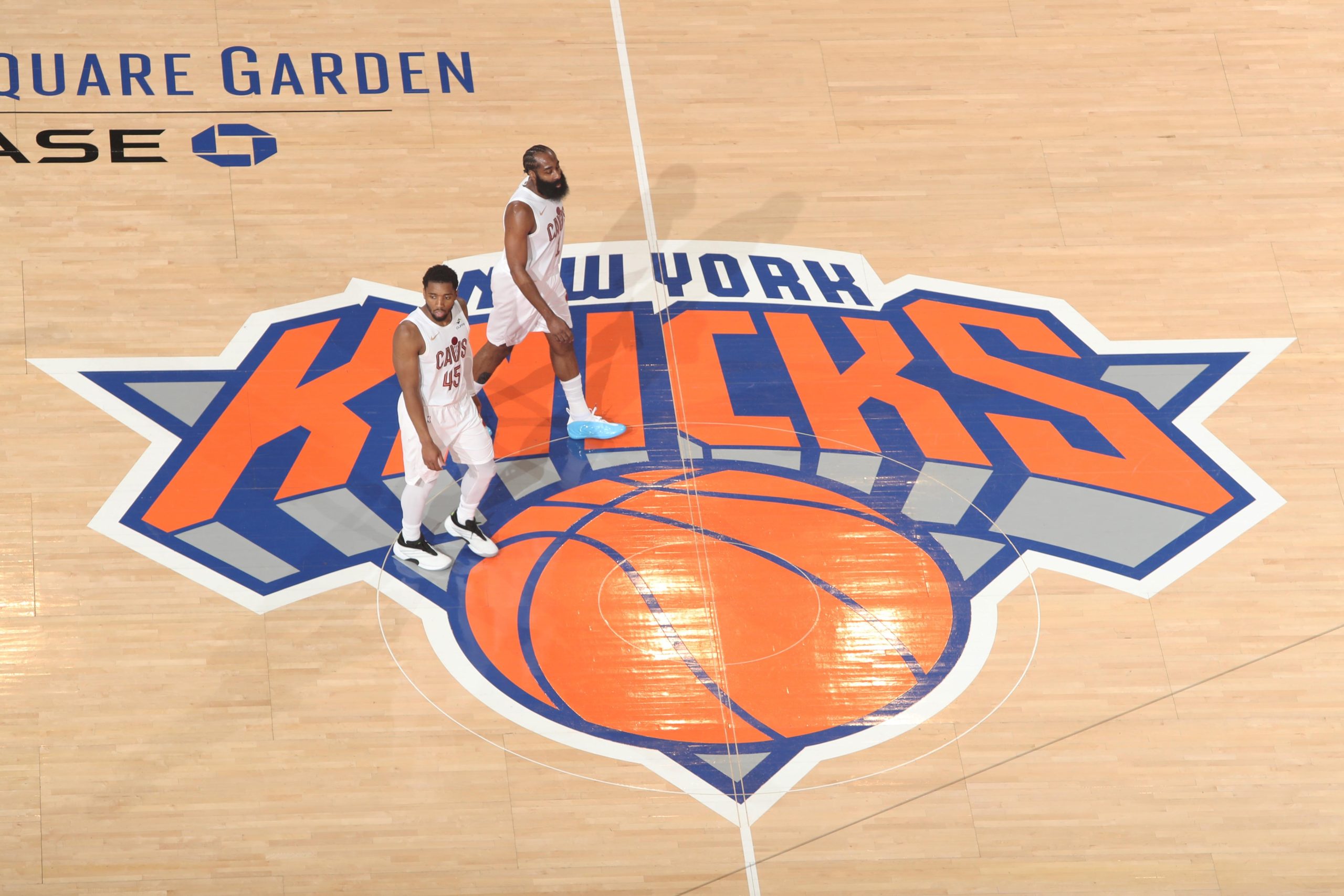
POLICY WIRE — New York, United States — There’s an immutable gravity to Madison Square Garden, a cathedral not just of sport but of American commercial will. When the lights hit, as they did Thursday night for Game 2 of the NBA Eastern Conference Finals, it’s not just a basketball game; it’s a statement. And the statement delivered, with emphatic New York authority, was clear: the Cleveland Cavaliers — and specifically their star, Donovan Mitchell — simply aren’t up to the task. They tumbled, not just losing, but unraveling, 109-93 to a Knicks squad that’s decided this is their moment.
For twenty-five minutes, Cleveland clung to the fantasy. Evan Mobley, a player of immense, if often muted, promise, poured in 10 first-quarter points, giving the Cavaliers a slender lead — a mirage, as it turned out. That early burst, paired with a brief, unsustainable hot streak from beyond the arc, painted a pretty picture. But pretty pictures don’t win playoff games in the cauldron that’s New York. Not when the foundational elements of your strategy disintegrate under pressure. That initial 5-for-10 from three-point territory quickly gave way to a chilling 1-for-11 in the second frame, setting the grim cadence for the rest of the night. It felt less like a basketball game and more like a slowly unfolding tragedy, watched by 19,000 patrons who saw it coming long before Cleveland did.
The turning point, if one dares to assign such dramatic heft to something so starkly obvious, came in the third quarter. The Cavaliers, bless their hearts, went scoreless for a agonizing five-and-a-half minutes. This wasn’t merely a slump; it was an organizational paralysis. The Knicks, exhibiting the kind of gritty resolve that Madison Avenue’s marketing mavens would die for, poured in an 18-0 run, turning a tied game into an insurmountable lead. Josh Hart, previously granted open looks like a congressional lobbyist, finally cashed in, hitting 12 of his 24 points in that critical frame. It’s almost poetic — the role player you deemed inconsequential becomes the executioner.
Mitchell, often hailed as Cleveland’s offensive linchpin, looked conspicuously out of sorts. His burst was gone. His usual explosiveness? MIA. Coach Kenny Atkinson, ever the diplomat, was asked about his star’s apparent decline. “He’s out there fighting, bless his heart, but you don’t need a medical degree to see something’s off,” Atkinson reportedly confided to a few reporters after the game. It wasn’t an injury report, but it certainly wasn’t a ringing endorsement of peak performance, either. Because let’s be real, you don’t win playoff games when your main gun feels more like a pea-shooter.
The numbers — raw, uncompromising, — and damning — tell their own tale of woe. After hitting 32% of their outside shots in Game 1, the Cavaliers plummeted to a dismal 9-for-35 from three-point range (25.7%) in Game 2. And the free-throw line? Don’t ask. They bricked 10 of 32 attempts. According to an internal league analytics brief shared confidentially with Policy Wire, Cleveland’s combined effective field goal percentage over the last two contests puts them squarely in the bottom quartile of all playoff teams this century. A stark reminder that wishes, even in the opulent halls of Madison Square Garden, don’t magically translate into points.
For New York, this was validation. “New York runs on grit, not just dreams. Tonight, that was evident on the hardwood — and it’s infectious,” a prominent Knicks front-office executive, who spoke on background, later remarked. It’s the kind of civic pride, raw — and visceral, that resonates globally. From the packed taverns of Manhattan to the bustling street markets of Lahore, where NBA fandom grows yearly, such a display isn’t just basketball; it’s a reflection of urban dynamism versus the stoic, sometimes beleaguered, fight of legacy industrial centers.
What This Means
This series, already teetering, now leans precariously. For Cleveland, an industrial city that’s battled for economic and sporting relevance for decades, this isn’t just a 2-0 deficit; it’s a crisis of confidence. A defeat like this — marked by systemic shooting woes and a perceived malaise from its star — isn’t easily shrugged off. It hints at deeper structural issues within the team, perhaps even the organization, reminiscent of how legacy industries struggle to adapt in a rapidly changing global economy. For the Knicks — and New York City, it’s a reassertion of metropolitan dominance. In a landscape where financial muscle often dictates athletic outcomes, this victory feels less about an upset and more about natural order being restored, with the wealth and attention of a global capital converging on a single sporting narrative. It subtly reinforces the perceived cultural — and economic hierarchy within the American experiment. And let’s not forget the sheer marketing power; an ascendant Knicks franchise translates into bigger broadcast numbers, hotter merchandise, and more significant investments — a powerful narrative for an organization in one of the world’s financial epicenters.