
Rio Grande’s Embrace Under Threat: Albuquerque’s Bosque Fire Rekindles Old Debates on Climate, Commerce, and Control
POLICY WIRE — ALBUQUERQUE, N.M. — It started small, they always do. A flicker, an ill-placed ember, maybe just the brutal thermodynamics of an increasingly parched landscape—but down by Tingley...

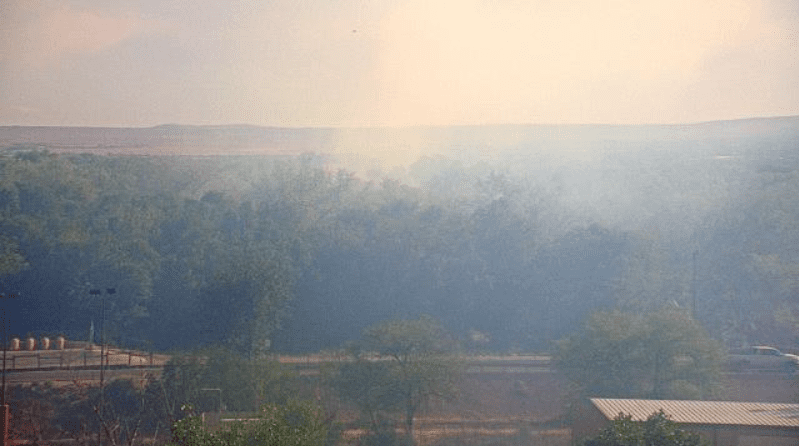
POLICY WIRE — ALBUQUERQUE, N.M. — It started small, they always do. A flicker, an ill-placed ember, maybe just the brutal thermodynamics of an increasingly parched landscape—but down by Tingley Beach, on the emerald fringe of the Rio Grande, a brush fire erupted yesterday. Not a raging inferno for the network news, no; but a stubborn, smoke-filled declaration from a world growing warmer. It was a local brush-up, quickly contained, yet it illuminated fissures far deeper than its smoldering edges: the simmering tensions between urban development, environmental resilience, and the relentless march of global climate change.
Fire crews, initially sparse, descended on the Bosque with the practiced urgency of professionals who’ve seen too much. They hadn’t provided details, not really—just a confirmation that they’re there, they’re working, they’re pumping precious Rio Grande water onto a nuisance fire that, in drier times, could’ve been so much worse. But beneath the stoic efficiency of Albuquerque Fire Rescue, a growing exasperation brews. And it isn’t just about this one patch of flame.
Because every dry season, it feels like we’re playing a game of meteorological Russian roulette. “We hit it fast, thank god,” acknowledged Chief John Salazar, his voice carrying the weary authority of command over a crackling two-way radio. “But these dry conditions? They’re becoming a real headache. Prevention’s our best tool, but even that’s not enough when the landscape is literally drying out under our feet.” He’s not wrong; you just don’t argue with the weather, but you do argue about how to fund its consequences. These localized skirmishes with nature are increasingly taxing local budgets, diverting resources from other essential services, turning fire departments into first responders for the planet itself.
This isn’t merely a New Mexico problem, either. The same climate patterns drying out our majestic Southwest, creating these tinderboxes, they’re ravaging ecosystems half a world away. Think about the flash floods that followed devastating heatwaves in Pakistan last year, or the increasingly unpredictable monsoon cycles across South Asia disrupting lives and livelihoods. That global pattern, the systemic shift in rainfall and temperature, it’s felt from the parched reeds of the Rio Grande Bosque to the irrigated fields of Punjab. And we’re still arguing over the small stuff.
State Senator Elena Garcia, a long-time advocate for environmental protections in the statehouse, didn’t mince words. “Every ember in our bosque isn’t just a local incident; it’s a stark reminder of systemic vulnerabilities. We can’t just throw water on problems without addressing their root causes.” She sees it—many do. Our leaders know the science, but navigating the political winds, that’s where the real firestorms often start. Budget appropriations, land use policy, the slow, agonizing crawl of infrastructure projects designed to mitigate these increasingly frequent, increasingly intense climate impacts; it’s all connected.
We’re looking at a national trend here, frankly. The National Interagency Fire Center (NIFC) reported New Mexico alone saw over 600,000 acres burn in 2022, marking it as one of the state’s most destructive fire seasons on record. That’s a staggering figure—it’s an area roughly the size of Rhode Island, gone up in smoke. And it begs the question: are we just reacting, or are we building genuinely resilient systems? The Rio Grande, a river already facing immense pressure from agricultural demands and urban consumption, can’t endlessly supply water to quench these fires. Its lifeline, you know, it’s everyone’s lifeline here.
The fight against this relatively minor blaze will soon be over. They’ll hose it down, the smoke will clear, — and the charred remnants will fade from immediate public memory. But the policy implications? They persist. Just like the ghost in the machine that dictates our increasingly extreme weather events, forcing us to constantly re-evaluate. It forces hard decisions on cities, states, and even nations — decisions about resources, about urban sprawl, about conservation, and frankly, about survival. The irony isn’t lost: a small, almost inconsequential fire at the heart of New Mexico’s most populous city ignites a global conversation about our shared climate fate.
What This Means
This seemingly contained incident isn’t just about charred earth; it’s a proxy battleground for broader political and economic forces. On a local level, it sharpens the ongoing debate over funding for fire management, prevention strategies like controlled burns and forest thinning, and the necessity of preserving fragile urban green spaces like the Bosque. Economically, even minor fires drive up municipal insurance premiums, strain public works budgets, and can subtly deter tourism in areas dependent on natural attractions, like those around Tingley Beach.
Politically, every smoke plume presents a new challenge for city — and state officials. They’re tasked with balancing constituent demands for immediate safety with the long-term, politically difficult investments needed for climate resilience. The subtle irony? Albuquerque sits on a desert, yet its main artery, the Rio Grande, must now double as a fire hose for its increasingly vulnerable surroundings. This re-opens policy questions on energy policy and resource allocation nationally. Globally, these micro-incidents add weight to the argument for a more concerted international approach to climate change. The vulnerability of local ecosystems—whether it’s a bosque in New Mexico or the agricultural lands in Pakistan—demonstrates a shared destiny, pushing the necessity for robust policies and collaborative climate action onto the front pages. The localized effort to put out these flames is a smaller, if no less urgent, echo of larger global resource struggles. It’s not just a fire; it’s a forecast.