
New Mexico’s Chill: A Desert’s Elegy Amidst Unpredictable Skies
POLICY WIRE — ALBUQUERQUE, N.M. — Sometimes, the most revealing political statements aren’t issued from a podium or codified in law; they arrive on a blustery Friday, borne on a gust of arctic...

POLICY WIRE — ALBUQUERQUE, N.M. — Sometimes, the most revealing political statements aren’t issued from a podium or codified in law; they arrive on a blustery Friday, borne on a gust of arctic air. Eastern New Mexico, a land whose arid visage usually connotes a perpetual sun-baked existence, finds itself staring down an unwelcome guest: a sharp cold front promising an abrupt chill and the kind of weather that forces residents to recalibrate—or simply cope.
It isn’t just about dropping mercury, though that’s certainly part of the equation. This particular meteorological shift, snaking overnight from Raton to Tucumcari, hints at deeper currents in a state already grappling with resource management, agricultural fragility, and the nagging question of how local ecosystems will fare in a climate increasingly prone to extremes. But really, it’s about control—or the profound lack thereof. Weather, it turns out, remains one of the few forces impervious to legislative lobbying or electoral cycles.
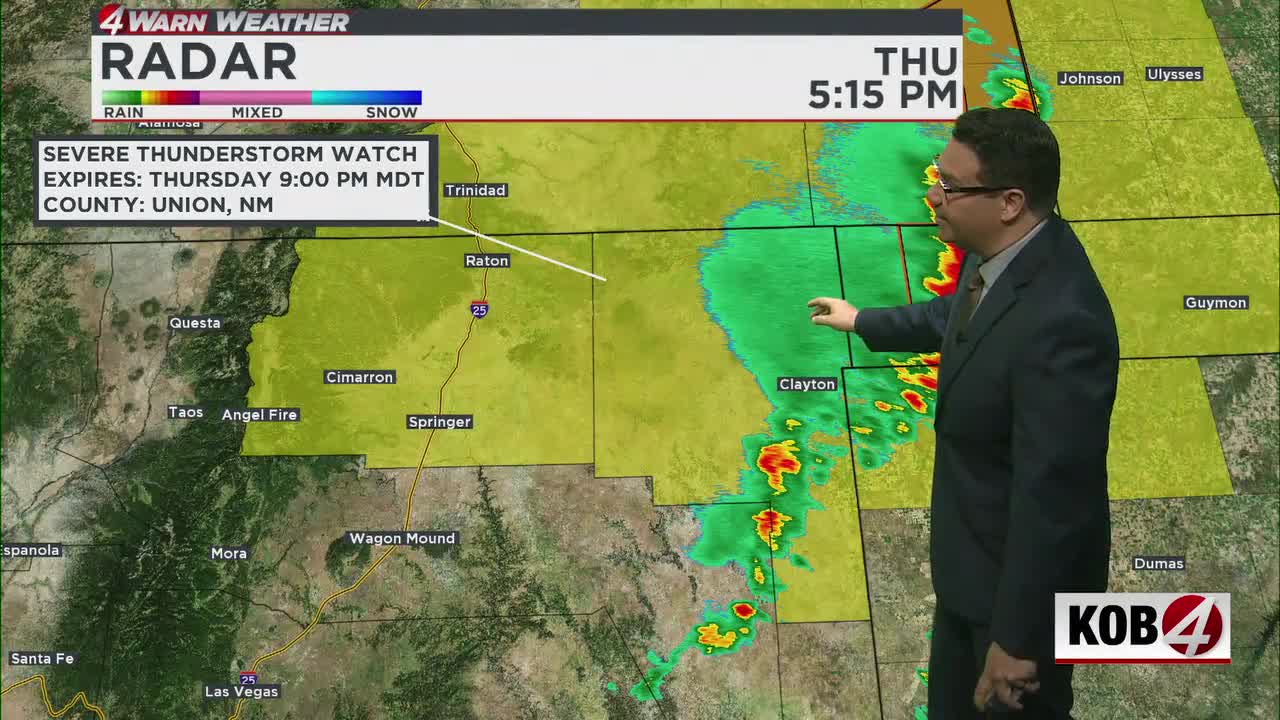
And so, as the front grinds across the plains, slicing east toward the central Rockies, communities from Las Vegas to Clovis are bracing for more than just a dip in temperature. Thunderstorms are forecast for Friday, accompanied by those notoriously gusty canyon winds that seem to strip the landscape bare, making a mockery of any loose possessions left unattended. The National Weather Service anticipates ‘cooler air’ – a mild descriptor for what locals often perceive as a sudden, sharp betrayal from a landscape that typically reserves its bite for summer droughts.
Because these shifts, though localized, resonate. They stretch far beyond the Sangre de Cristo foothills, echoing in conversations about global weather phenomena and regional resilience. Take, for example, the struggles of a nation like Pakistan, where annual monsoon patterns—once predictable anchors of agricultural life—have recently brought devastating, unprecedented floods, displacing millions and collapsing vital infrastructure. Their scale is different, absolutely, but the core challenge of environmental instability against a backdrop of human settlement? That’s a story you hear in many tongues, across many continents, often starting with the weather report.
New Mexico State Senator Michael Sanchez (D-Belen), whose constituency often feels the pinch of environmental shifts first, didn’t mince words. “Look, we budget for contingencies, we talk about infrastructure, we plan for growth,” Sanchez told Policy Wire, his voice tinged with the weary practicality of someone used to bureaucratic headwinds. “But when nature decides to remind you who’s boss, all those plans get tested. We’ve got a lot of folks, particularly our farmers and ranchers, who are already hanging by a thread with water concerns. A cold snap and hailstorms right now? It doesn’t help. It’s not just a weather event; it’s an economic threat to their livelihoods.”
Meanwhile, the Storm Prediction Center maintains a ‘marginal risk’ for severe weather. Large hail is the primary concern – think marbles or even golf balls, pummeling crops and denting rooftops – alongside those gusty winds and frequent lightning. Albuquerque and points west get off easy this time, staying ‘warmer, drier, and mostly rain-free.’ For them, it’s just another Friday, proof of New Mexico’s inherent meteorological dichotomy.
Dr. Elena Rodriguez, a climatologist at the University of New Mexico, offered a broader perspective. “New Mexico’s average annual rainfall, historically around 14 inches statewide, masks extreme variability,” she pointed out in an email. “We’re talking about an ecosystem built for harsh swings. These fronts, they’ve always happened, sure. But their intensity, their timing, the cascading effects they trigger? We’re observing changes. And understanding those nuances—how this impacts our aquifer, our desert agriculture, our vulnerable communities—is where the real work is, politically and scientifically.”
What This Means
The immediate consequence is a few uncomfortable days for eastern New Mexicans, but the deeper implications are far more complex. Economically, even a ‘marginal risk’ for severe weather can translate to measurable losses. Agriculture, particularly ranching which accounts for over half of New Mexico’s agricultural cash receipts, stands vulnerable to sudden temperature drops and hailstorms. Imagine a cattle rancher in Curry County watching his herd exposed, or a farmer fearing crop damage—it’s a brutal economic math that can take months to reconcile. Resources get strained, emergency services find themselves on high alert, and folks wonder if their state has adequate infrastructure to manage the increasingly unpredictable whim of the heavens. For a region heavily reliant on careful water management and a relatively stable growing season, such events are stark reminders of an ecological tightrope walk.
Politically, these localized weather disruptions force conversations around climate adaptation and state-level preparedness. They fuel debates on water policy, on investments in resilient infrastructure, and on support systems for vulnerable populations. The political implications often appear in the form of aid packages, insurance claims debates, and sometimes, stark disagreements over how to mitigate future risks—or if mitigation is even possible given such planetary shifts. Consider the political battles over energy resources elsewhere; here, it’s about defending existing ones. But it’s not just policy; it’s about perception too. When the state’s very air turns hostile, confidence—in government, in foresight—can waver. It serves as an unspoken challenge to political leaders, prompting them to demonstrate readiness in the face of what feels, increasingly, like an environmental long game with no easy wins. The truth is, when Mother Nature delivers a cold hard shock, it’s rarely just about the weather—it’s about everything else it touches, everything we rely on.