


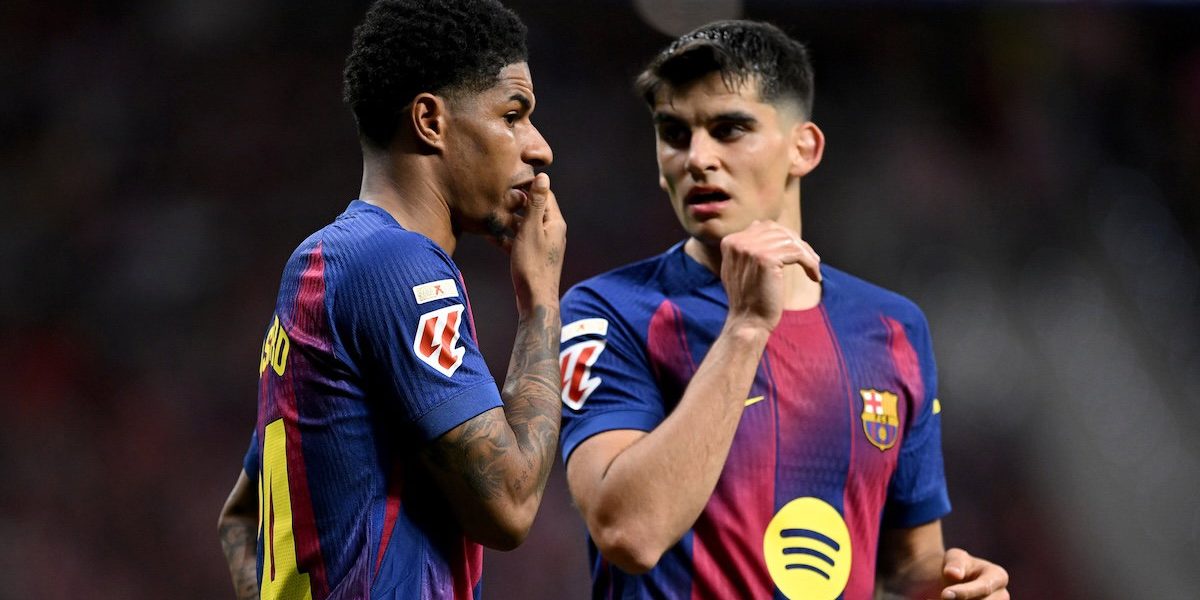
Red Devil’s Reckoning: Rashford’s Barça Bloom Exposes Football’s Ruthless Economy
POLICY WIRE — London, UK — Not every fairy tale ends with a loyal prince. Sometimes, it’s just cold, hard cash, tallied up on a balance sheet like a grocer counts apples. And right...

POLICY WIRE — London, UK — Not every fairy tale ends with a loyal prince. Sometimes, it’s just cold, hard cash, tallied up on a balance sheet like a grocer counts apples. And right now, Manchester United is doing some serious accounting—especially where Marcus Rashford is concerned. The prodigal son, once hailed as Old Trafford’s future, has become an asset. An asset they’re eager to convert to pure profit, a bitter pill for many who recall his meteoric rise from the academy.
It’s a transaction laid bare for the world to scrutinize, an almost brutal dissection of a player’s journey. Here’s a local hero, seemingly discarded, only to thrive spectacularly a thousand miles away. At Barcelona, on a season-long loan — his second loan spell after a brief, frosty detour to Aston Villa following Erik ten Hag’s departure — Rashford isn’t just playing. He’s starring. Winning LaLiga, clinching the Supercopa de España, he’s proven more than a mere mercenary.
And because he came up through United’s youth system, a sale — even for a €30 million ‘option to buy’ fee — lands squarely in the ‘pure profit’ column for his parent club. Think about that: a £0 investment potentially yielding £25 million. It’s not charity, this football business, is it?
But Barça, never ones to overpay if they can haggle, are reportedly trying to chip away at that figure. They want him, sure, but on their terms. This delicate dance of negotiation — of ambition, pride, and bottom lines — has turned Rashford’s impressive 2025/26 season into a financial spectacle. He’s clocked 14 goals and a matching 14 assists across 48 appearances for the Catalan giants, according to data from Transfermarkt — making him fifth in goals and third in assists for the team. Not bad for someone thought to be on the wane.
His teammates certainly see his worth. “He’s been nothing short of immense, honestly,” Barcelona midfielder Frenkie de Jong told Spanish sports daily SPORT, adding a typically understated Dutch assessment. “In the minutes he’s had, he’s given us a heck of a lot: goals, assists, depth. He’s a quick player; he poses a real headache for opposing defenders, doesn’t he? As far as I’m concerned, I’d be over the moon if he stuck around.” That’s not just pleasantries; it’s a dressing room endorsement. And those carry weight, even if not directly reflected in transfer budgets.
On the other side of this transaction sits Manchester United. There’s no sentimental journey planned back to Old Trafford for Rashford. They’re just ready to cash the check. “Look, it’s never easy parting with a player who’s literally grown up within the club’s walls,” a senior executive close to United’s operations, who asked not to be named given the ongoing negotiations, mused to Policy Wire. “But this isn’t about feelings. It’s about strategic capital deployment, bolstering our Financial Fair Play standing, and — frankly — bringing in the funds necessary for our next cycle of talent acquisition. His success elsewhere, while validating his quality, actually makes our position clearer.”
Because ultimately, football is a business — a global one. The discussions over Rashford aren’t confined to European boardrooms or Spanish cafés. This drama resonates. Beyond the roar of the Camp Nou, this transfer saga isn’t just about tactical formations or Spanish titles; it echoes in living rooms from Karachi to Kuala Lumpur, places where the Premier League, and United especially, command a near-religious following. The decisions made in European capitals impact global fan engagement, merchandise sales, and even how football academies across the Muslim world view the pathways for their own aspiring stars — a harsh reminder that loyalty, in this sphere, often comes with an expiry date. And when a star, particularly one who epitomizes his local club, is seemingly jettisoned, it feels personal even halfway around the world.
It’s not that United don’t want to see him succeed; it’s just that they prefer he succeeds for someone else, ideally with a hefty payment attached. This situation illustrates the fickle fortune of football careers, where market value and utility override past glory and perceived emotional ties. The romance? It’s largely left for the terraces — and the history books now.
What This Means
This entire saga boils down to more than just player movement; it’s a stark policy statement on modern football club management. For Manchester United, securing €30 million for a homegrown player who’d lost his way and subsequently found his feet elsewhere is a masterstroke in financial recovery — even if it’s publicly framed as ‘streamlining the squad.’ It offers them crucial flexibility under tightened Financial Fair Play regulations. That cash injection, often critical for major clubs balancing ambition with solvency, isn’t just for new signings. It’s for offsetting previous spending, covering operational costs, and generally keeping the high-roller ecosystem humming. Barcelona, conversely, is trying to buy low, proving even top clubs must navigate a landscape riddled with economic pressures, not just sporting desires. It’s a constant push and pull: clubs balancing on-pitch success with ever-present financial constraints, sometimes at the expense of player sentiment or fan expectation. What we’re witnessing here is less a football transfer and more a high-stakes, cross-continental corporate maneuver, reflecting broader trends in global sports economics.
Ultimately, Rashford’s ‘pure profit’ status is a financial sweet spot many clubs dream of replicating, highlighting the continued push towards strong academy systems not just for talent, but as a potential cash cow. Because in today’s game, even icons can become commodities.