

Norwegian Journalist Who Questioned Modi Still Locked Out of Instagram as Meta Investigates
Norwegian Journalist Who Questioned Modi Still Locked Out of Instagram as Meta Investigates Helle Lyng Svendsen is a journalist. She works at Dagsavisen in Oslo. She showed up to do her job on a...
Norwegian Journalist Who Questioned Modi Still Locked Out of Instagram as Meta Investigates
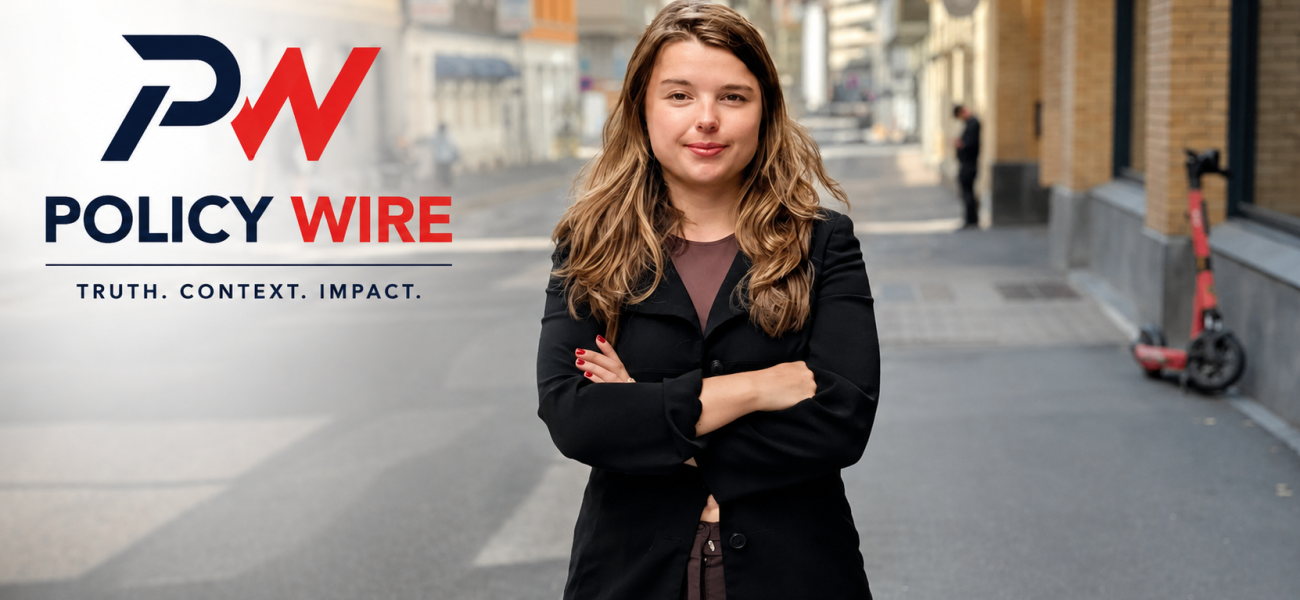
Helle Lyng Svendsen is a journalist. She works at Dagsavisen in Oslo. She showed up to do her job on a Monday morning in May, and by Tuesday night strangers were searching for her front door.
Modi was visiting Norway. The first Indian prime minister to do so in forty-three years, which the Indian government wanted to present as a moment of diplomatic prestige. The joint briefing with Norwegian Prime Minister Jonas Gahr Støre ended without Modi taking a single question from the floor. He spoke in Hindi and then he walked toward the exit. No pause. No acknowledgment of the journalists in the room. Just a man leaving a room because he had decided the room was done.
Svendsen called after him. She asked him, in plain words, why he would not stop and take a question from journalists in the country the whole world considers the gold standard for press freedom. He did not break his stride. She had not really expected him to. What she had not counted on was waking up the next morning to find that people she had never met, thousands of miles away, had reported her accounts until Meta shut them down.
Check Digital Magazine cover: https://policy-wire.com/digital-magazine-cover-featured-norwegian-journalist-helle-lyng-svendsen/
She posted a sixteen-second clip on X. She did not editorialise much. Norway is ranked first on the World Press Freedom Index. India is ranked 157th. She said it is the job of Norwegian journalists to question the powers their government cooperates with. That was it. Sixteen seconds, one post, four sentences.
By the next morning, India had decided she was a spy.
Not metaphorically. People were saying, with apparent seriousness, that she was working for Pakistan or China or some unnamed foreign interest that wanted to weaken India. BJP IT Cell chief Amit Malviya, who runs the ruling party’s digital operation, weighed in personally to call her work an incoherent rant and to suggest, with the practiced vagueness of someone who knows exactly what he is doing, that she might be on the take. Her Instagram got mass-reported until Meta locked it. Then suspended it. Her Facebook followed. Her phone number was being shared. People were trying to find out where she lives in Oslo.
All of this, every piece of it, because she asked a man why he would not answer questions.
Svendsen spoke exclusively to Policy Wire about what happened next. What emerges from her account is a portrait of someone still trying to understand an experience that, even now, doesn’t entirely make sense to her.
Her access to both platforms has technically been restored, she says, but only partially. “Yes, I got access to both my Facebook and Instagram again, but my Instagram is not working,” she told us. The whole process unfolded without any real explanation from the company. She got an email telling her the accounts were suspended. Then, days later, another email telling her they were back. Nobody called. Nobody wrote to explain what had happened or why. “No, I have not had any contact with them directly,” she said, when we asked whether anyone from Meta had personally reached out.
As of the time we are publishing this, her Facebook works. Her Instagram does not. “It is a bit stressful as I have no control over any of it,” she said. “I don’t know what happened. I never experienced anything like this. I hope someone with more knowledge on the topic will look into it.”
Policy Wire has contacted Meta directly. The company says it is looking into the matter.
There is something worth sitting with here. Helle Lyng Svendsen is a journalist in Norway. Nobody is going to arrest her. No counterterrorism law is going to be used against her. The Norwegian government is not going to pull advertising money from her newspaper to punish her for a story. She is, by any honest measure, one of the safest journalists on the planet. And still the machine came for her.
But the machine does not calculate risk. It does not ask whether the target is reachable. It runs because running it is the point. The running of it is the message. And the people receiving that message are not Norwegian journalists with governments that would actually complain if something happened to them. The people receiving the message are the journalists in India watching this happen to a foreigner in a safe country, doing the math on what would happen to them.
That math is not complicated. Since Modi came to power in 2014, at least fifteen journalists have been charged under the UAPA, India’s counterterrorism law. Thirty-six journalists jailed in that same stretch. The law was amended in 2019 so the government can now label someone a terrorist before proving any crime in court. You wake up one morning and you are legally a terrorist. Your bank accounts, your movement, your ability to work, all of it can be frozen while the state takes however long it wants to build a case. Or not build a case. Kashmiri journalist Irfan Mehraj reached three years of pretrial detention in March 2026. Three years. No conviction. Just waiting in a cell while the government gets around to deciding what to do with him.
In February this year, journalist Ravi Nair was sentenced to a year in prison. His crime was social media posts critical of the Adani Group. Adani is a close friend of the prime minister and one of the richest men on the planet. He also now owns NDTV, which was until recently one of the few mainstream news channels in India with real editorial independence. That ended in 2022. Reporters Without Borders called that acquisition the end of pluralism in Indian mainstream media.
Mukesh Ambani, another tycoon and another close friend of Modi, owns more than seventy media outlets reaching at least 800 million Indians. Seventy. Not seven. Seventy outlets, one owner, one man who is photographed smiling with the prime minister.
The government is also the largest advertiser in the country. There is no law saying you will lose the contract if you run a critical story. There does not need to be a law. Everyone in the business understands how it works. You run critical stories, the money dries up, your publication folds. You run favourable stories, the money keeps coming. The pressure is structural and invisible and completely effective.
What you get from all of this is a media environment that RSF this year described as being in an unofficial state of emergency since 2014. India’s score has been falling almost every year. 159th in 2024. 151st in 2025. 157th in 2026, a six-place drop in a single year. The government’s response to these rankings, every year without exception, is to call them propaganda and driven by anti-India bias. The government has never explained which specific findings are wrong.
Helle understood all of this and said it plainly. She said she was asking from a privileged position precisely because Indian journalists cannot ask the same questions without consequences she will never face. She called it her obligation. She said that if journalists sitting in the freest country in the world are not willing to stand up for press freedom with all the protection they have, then who will.
The Indian Embassy in Oslo invited her by name to a briefing at the Radisson Blu that same evening, apparently thinking they could manage the situation. She went. She asked the same questions. The diplomat Sibi George responded with seventeen minutes about yoga, chess, the Indian constitution, and Mahatma Gandhi. When she pushed him to actually address human rights, he told her she was wasting his time.
She was not wasting his time. She was giving his government a chance to account for itself in public, in front of cameras, at an event they had organised and to which they had specifically invited her. He could not answer. So he ran out the clock and then blamed her for asking.
Rahul Gandhi shared the video and wrote that when there is nothing to hide there is nothing to fear. The BJP called him a lunatic. Helle asked Gandhi for an interview. She is waiting to hear back.
Modi has not held an open press conference in twelve years as prime minister. Twelve years. He grants interviews exclusively to journalists and personalities who cover him favourably. He runs a government that has spent billions of public money on advertising as a mechanism of editorial control, that uses terrorism laws against journalists as a first rather than last resort, that sent its IT Cell after a Norwegian woman because she called out to him in a hallway and he kept walking.
The question that remains, the one that goes beyond this story and into something larger, is what Meta is going to do about the fact that its own reporting tools were used as a weapon against a journalist for asking a question. The campaign worked. The accounts went down. The journalist still does not fully have them back. She still has not heard from anyone at the company in any meaningful way. One platform is working. One is not. Nothing has been explained to her.
A leader who cannot stop and take a question from a journalist in Oslo is not projecting strength. He is protecting an image that cannot survive contact with honest scrutiny. Helle Lyng handed him the simplest possible opportunity to demonstrate confidence in his own record. He walked away from it. And then the machine his party runs went to work on her.
She said it was a small price to pay for press freedom.
The journalists in India who are paying the real price have no such luxury of perspective.
Policy Wire will keep following this as Meta continues its review.
Policy Wire contacted Meta for comment. Additional reporting ongoing.
Author