


Uganda’s Wigged Resistance: Judges Clash With Lawyers Over Colonial Legal Vestiges
POLICY WIRE — Kampala, Uganda — The peculiar sight of a powdered wig atop an African head in a courtroom isn’t merely an antiquated fashion statement. No, it’s a profound, rather...

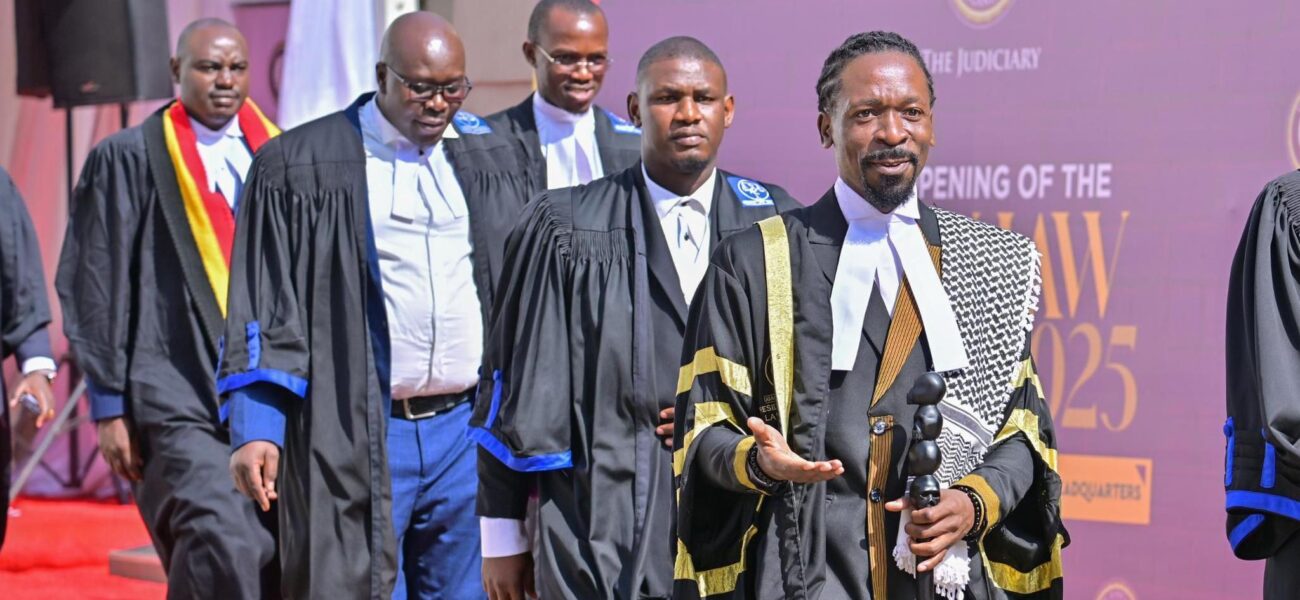
POLICY WIRE — Kampala, Uganda — The peculiar sight of a powdered wig atop an African head in a courtroom isn’t merely an antiquated fashion statement. No, it’s a profound, rather uncomfortable tableau of lingering colonial power. In Uganda, this seemingly anachronistic tradition has now sparked a legal donnybrook, pitting the nation’s judges against a vocal cadre of lawyers demanding a wholesale abandonment of these symbolic chains.
It’s not just the wigs, mind you. It’s the entire suite: the robes, the ceremonial formalities—all the accouterments imported wholesale from London during the heady days of Empire. Many saw it as just part of the furniture, harmless pomp. But a growing movement of Ugandan legal practitioners isn’t buying it. They’ve gone on record, arguing this institutional finery isn’t just outdated; it’s an insult, a daily reminder of a past that really ought to be past. Their bid to formally scrap these so-called ‘colonial titles’ and traditions has, predictably, met with stern resistance from the very people who wear them.
“We can’t just toss aside centuries of legal tradition on a whim, can we?” argued Justice Peter Ssempijja, a senior jurist in Kampala, speaking exclusively to Policy Wire. “These robes, these wigs, they represent the majesty of the law, the impartiality — and solemnity of our courts. It’s about continuity, not colonialism. To dismiss them as mere ‘colonial relics’ misunderstands the evolution of our jurisprudence, doesn’t it?” His tone was firm, unwavering, like a well-thumbed legal precedent.
But lawyers like Rashid Matovu, a prominent human rights advocate, see it differently. “This isn’t about aesthetics. It’s about identity. It’s about psychological decolonization,” Matovu countered in an impassioned social media post that quickly went viral within legal circles. “How can we claim full sovereignty when our arbiters of justice literally dress in the attire of our former oppressors? It’s high time we forge an authentically Ugandan legal identity, not just a carbon copy of Westminster.” He’s got a point. You really don’t see Queen Elizabeth II wearing a gomesi while addressing Parliament, do you?
This squabble in Kampala isn’t happening in a vacuum. It echoes broader, often unarticulated, debates unfolding across the post-colonial world. From the legal systems of Pakistan to the educational curricula in South Africa, nations grapple with the legacy of British rule, particularly in institutions meant to be cornerstones of national identity. While some argue for the utilitarian value and stability of inherited structures—the common law system itself, for instance—others view the visible symbols as egregious affronts, blocking true self-determination. In some corners of the Muslim world, attempts to indigenize legal systems by integrating Sharia principles often run up against the rigid frameworks of common law, creating a perpetually uneasy marriage.
And let’s be frank: the wigs aren’t cheap. Maintaining this kind of formal grandeur carries a cost, literal — and metaphorical. Approximately one-third of the world’s population lives under common law systems, a direct inheritance from former British colonial territories, as reported by the World Bank’s Legal Systems Review. For many, that framework provides a recognizable, albeit imported, stability. For others, the symbols it carries are simply too heavy a burden to keep shouldering.
The judges’ pushback suggests a deeply entrenched resistance to change within sections of the Ugandan judiciary. They’re effectively arguing for an unbroken chain of authority, tracing their lineage back through British common law, implicitly—and sometimes explicitly—sanctifying the structures inherited from colonialism as somehow inherently superior or more legitimate. This isn’t just about clothing. It’s about who defines authority, whose history takes precedence, and what ‘justice’ really looks like in a modern African state.
📄 POLICY WIRE WHITEPAPER PUBLISHED: PAKISTAN'S NATIONAL SECURITY POLICY PRIORITIES
👉 READ BY CLICKING HEREBut the pressure won’t dissipate. Young lawyers, activists, and a public increasingly attuned to questions of national pride and cultural reclamation are unlikely to simply concede. The argument transcends the mere trappings of the bench; it dips into the wellspring of Ugandan identity itself. The future of Uganda’s legal decorum, it seems, won’t be settled by tradition alone. It’s shaping up to be a long, drawn-out battle—more theatrical, perhaps, than the robes themselves, but with far greater implications.
For more on how cultural legacies ignite diplomatic and social currents, check out Beyond the Pitch: France-Morocco World Cup Clash Ignites Cultural Currents, Diplomatic Echoes. Or explore how nations navigate inherited systems amidst modern challenges, like Gold Dust and Despair: Venezuela’s Riches Held Hostage Amidst Quake Catastrophe.
What This Means
This seemingly minor dispute over courtroom attire actually signals a much broader ideological tug-of-war in Uganda. Politically, it reveals a clear fault line between the old guard—those often beneficiaries of the inherited colonial administrative state—and a rising generation committed to full, tangible decolonization. It’s not just about what a judge wears; it’s about whose authority system he embodies. If the judiciary, an institution meant to dispense justice fairly, clings so tightly to foreign symbols, it creates a legitimacy crisis for those seeking a more authentic, domestically-rooted governance.
Economically, this sort of symbolic conflict might seem trivial. But it speaks volumes about the national appetite for true systemic reform. Nations struggling with their colonial legacies often face investor reluctance if internal governance mechanisms are perceived as unstable or prone to sudden, radical shifts, even symbolic ones. More broadly, diverting institutional energy into these protracted identity debates can sideline efforts on more tangible policy reforms necessary for economic development. It creates a subtle, almost imperceptible drag on the gears of state. And it underscores the persistent, sometimes exasperating, challenge of constructing a genuinely independent, forward-looking nation out of a colonial past.