


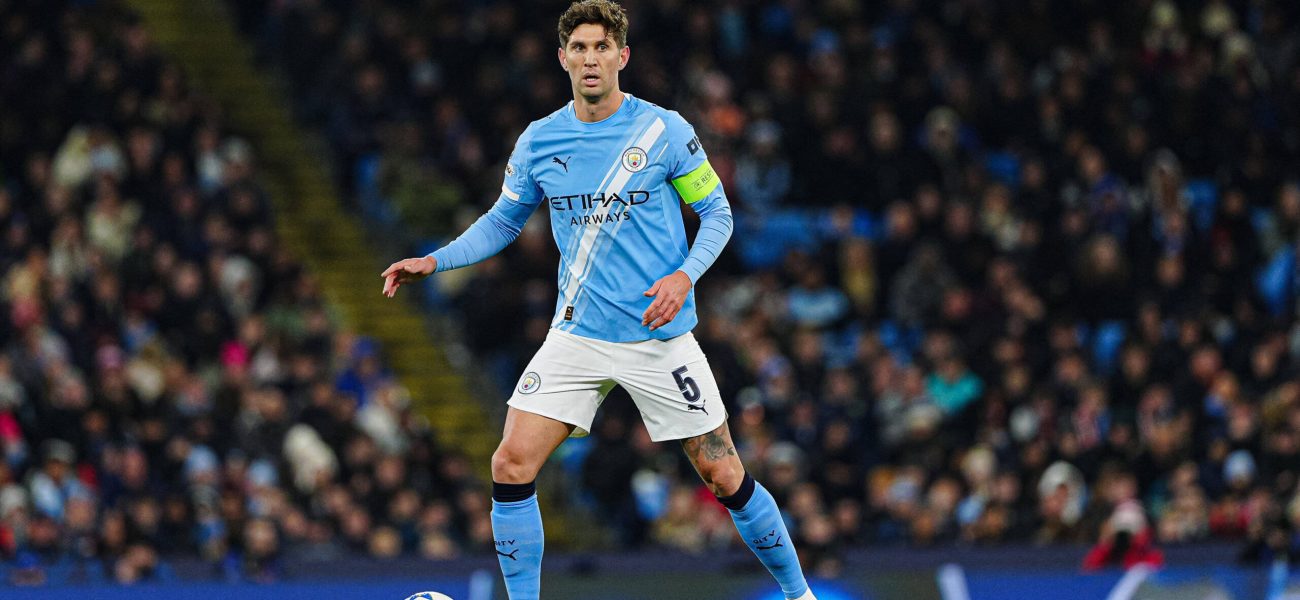
The Price of Imperfection: John Stones, Bayern, and Football’s Cold Calculus
POLICY WIRE — London, UK — Call it a footballer’s paradox: spend a decade meticulously building a dynasty, stack up a trophy haul that would humble a small nation, then watch as your club quietly...

POLICY WIRE — London, UK — Call it a footballer’s paradox: spend a decade meticulously building a dynasty, stack up a trophy haul that would humble a small nation, then watch as your club quietly considers letting you walk—for free. That’s the bitter espresso brewing for John Stones, the Manchester City stalwart whose elite contributions have often been as much about their sheer brilliance as their intermittent nature. And now, the Bavarians at Bayern Munich are circling, sniffing a bargain, perhaps—or a calculated risk, depending on your preferred flavor of corporate euphemism.
It’s not often a player credited with reshaping tactical philosophy, a key cog in Pep Guardiola’s glittering engine, simply departs the scene without a substantial farewell package for his employers. But here we’re. Stones, 31, isn’t being chased for his raw market value; he’s being eyed for his potential on a clean slate, the tantalizing prospect of a talent too rare to ignore, injuries be damned. It’s a move that speaks volumes about modern football’s brutal efficiency: pedigree sells, but sustained availability dictates the premium.
Sources close to the deal, speaking on condition of anonymity, confirm Bayern is actively weighing this “shock move,” as one tabloid termed it, echoing like a familiar refrain from football’s well-worn script. Why Stones, a player who’s spent chunks of the last two seasons warming physio tables rather than defensive lines? Simple, really: his ceiling, even with a few cracks, remains higher than most. And Germany’s top club isn’t shy about strategic acquisitions that bolster their perceived authority.
A move to Bavaria would mean a reunion with Vincent Kompany, his former City captain, now Bayern’s coach. That relationship, deep-rooted in shared history, speaks volumes. Kompany isn’t just signing a defender; he’s bringing in someone whose intelligence, composure, and tactical flexibility he knows intimately. It’s an act of faith, yes, but also one of astute managerial calculation. Imagine the shorthand they’ll employ on the training ground! “Look, Kompany isn’t daft,” remarked Jürgen Klinsmann, former Bayern and Germany forward, reflecting on the potential transfer. “He knows John’s got those moments, those flashes. If they can manage him, really manage that physical toll, it’s a brilliant, low-cost gambit.”
And let’s be frank, for a club accustomed to spending big, snagging a player of Stones’ caliber on a free effectively warps the transfer economics. Market analysts project that European football’s transfer market alone reached a staggering €7.35 billion in 2023, as per FIFA’s latest report, illustrating the intense financial churn these moves represent. Getting a proven winner like Stones outside that conventional outlay? That’s just smart business.
Of course, this isn’t merely about Bayern’s balance sheet. Barcelona and Everton were also rumored suitors, showcasing the widespread appeal of a top-tier free agent. But for Stones, who’s off to the US with England for the World Cup, his immediate future remains somewhat overshadowed by the international spotlight. “John’s given us everything he had,” said a senior Manchester City executive, acknowledging the years of service, though perhaps sidestepping the uncomfortable truth of the player’s exit terms. “We’ll wish him the very best. He deserves it.”
What This Means
This potential transfer, while seemingly a singular event on a European football pitch, carries broader implications, extending far beyond Munich’s Allianz Arena. For starters, it exemplifies the accelerating trend of top-tier talent moving as free agents, fundamentally shifting market dynamics. Clubs like Bayern benefit from reducing outlay, while the player gains leverage for larger salaries or bonuses, impacting league-wide wage structures. From an economic perspective, this represents a subtle re-calibration of financial power, favoring players and clubs with deep pockets but less immediate liquidity for extravagant transfer fees.
Geopolitically, these player movements feed into the broader narrative of soft power. Manchester City’s ownership, stemming from Abu Dhabi’s vast wealth, has consistently projected an image of global ambition and sporting dominance. When a foundational player, despite injury concerns, transitions from such a heavily invested club to another continental giant, it underscores the constant flow of assets within an increasingly interconnected global sports economy. For markets like Pakistan and across the South Asia/Muslim world, where European football enjoys colossal viewership, such transfers aren’t just about sporting rivalry; they’re symbolic acts in an ongoing contest for hearts, minds, and consumer loyalty. Clubs like Bayern and City meticulously cultivate their global fan bases—this move is a small ripple in that much larger wave, affecting brand perception and potentially attracting new regional investors, particularly from sovereign wealth funds. Because, ultimately, every high-profile acquisition or departure isn’t just about goals and glory; it’s about maintaining relevance in a ruthlessly competitive, globalized spectacle.
Stones’ departure from City would mark the close of a glorious chapter. He joined in 2016 for £47.5 million, a hefty sum for a young defender then. He leaves a winner, having helped secure six Premier League titles, a Champions League, — and a host of other silverware. Across 293 appearances, he transcended the traditional center-back role, famously stepping into midfield during City’s treble-winning season. Pep Guardiola himself once lauded Stones: “I don’t have doubts with John. When he reaches his level, he’s a top central defender.”
It’s that elusive “level” Bayern is betting on. If Stones can recapture even a significant portion of his peak fitness, if Kompany’s tailored management can mitigate the physical risks, then Bayern might not just have found a defender. They’ll have landed a significant chess piece in their eternal pursuit of European dominance—all for the neat price of nothing but wages. Not a bad deal, if it clicks. And when does it not, for Bayern?