


Fiber Optic Furies: Israel’s New Frontier in Shadow War with Hezbollah
POLICY WIRE — Tel Aviv, Israel — The future of warfare, it turns out, doesn’t always roar; sometimes, it whispers—a quiet hum guided by a hair-thin strand of light. On Israel’s northern...

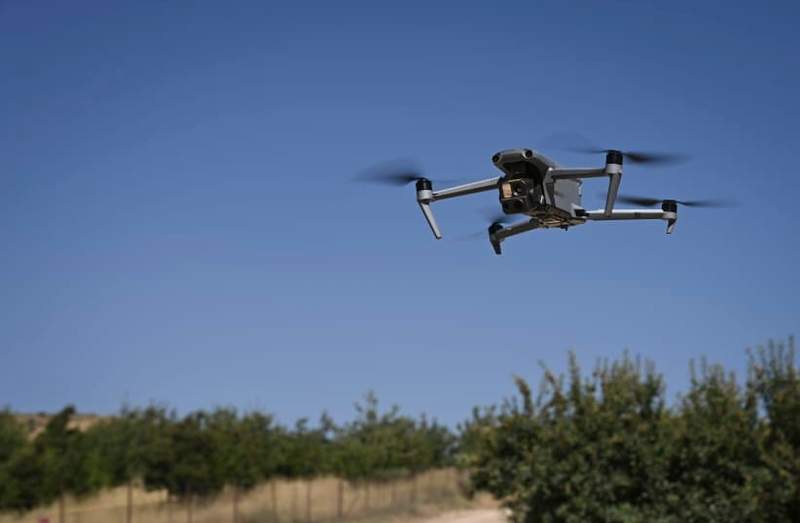
POLICY WIRE — Tel Aviv, Israel — The future of warfare, it turns out, doesn’t always roar; sometimes, it whispers—a quiet hum guided by a hair-thin strand of light. On Israel’s northern flank, where tensions simmer hotter than summer asphalt, it isn’t the predictable rockets or sophisticated missile systems keeping strategists awake at night. No, it’s something far more subtle, — and in its own way, terrifyingly primitive: Hezbollah’s fiber-optic drones. These aren’t your typical GPS-guided, radio-controlled aerial pests. They’re nearly invisible, notoriously difficult to jam, and now, they’ve forced Israel’s vaunted defense industry into a breathless race for countermeasures.
It’s a peculiar twist in the forever-evolving cat-and-mouse game. Think of it: in an era defined by satellites, cyber warfare, and fifth-generation fighter jets, a low-cost, virtually undetectable contraption tethered by an optical cable poses a bona fide threat. This isn’t just about blowing things up; it’s about surveillance, intelligence gathering, and an unnerving capacity to bypass the very electronic systems designed to protect against such intrusions.
The core of the problem lies in its analog nature. These drones transmit data and commands through a fiber-optic cable, immune to electromagnetic interference, radar detection, and traditional jamming. They fly low, slow, — and often quietly, presenting a profile more akin to a hobbyist’s gadget than a military weapon. And that’s the rub, isn’t it?
“We’ve fought wars of attrition, wars of technology, even wars of information,” observed Brigadier General (res.) Itai Brun, a former head of the IDF’s Military Intelligence Research Division. “But this particular challenge… it forces us to reconsider foundational assumptions about detection — and interception. It’s like trying to catch smoke with a sieve.” Brun’s frustration was palpable, echoing sentiments within Israel’s defense apparatus as they scramble to design new defensive layers.
And scramble they’re. Defense contractors, usually pushing the envelope on AI-driven platforms and hypersonic munitions, are now focusing R&D on bespoke solutions for a threat that feels like it sprung from a dystopian B-movie. They’re reportedly exploring everything from laser-based interceptors to specialized net-firing drones. But it’s not an easy fix. Each new defensive measure often births several new offensive adaptations. It’s a relentless churn, a high-stakes, perpetual upgrade cycle where even regulatory tinkering can stall grand plans, albeit in a different arena.
For context, consider a chilling data point: analysts from the Israeli Institute for National Security Studies (INSS) have noted a 40% increase in Hezbollah’s drone-related activities — encompassing reconnaissance and attempted incursions — along the border over the past year, showcasing a persistent and escalating commitment to this low-tech, high-impact strategy.
What This Means
This evolving drone menace isn’t just a tactical headache for Israel; it’s a geopolitical ripple maker. Its true implications extend far beyond the Levant, signaling a shift in asymmetric warfare that countries across the Muslim world and South Asia are surely watching. Imagine, for instance, what similar technology could mean in the hands of various non-state actors operating within, say, Kashmir or along the porous Durand Line between Afghanistan and Pakistan. This relatively inexpensive, hard-to-counter tech effectively democratizes surveillance, offering groups an intelligence gathering capability once reserved for state militaries.
For nations like Pakistan, constantly battling cross-border infiltration and managing complex internal security landscapes, the proliferation of such uncomplicated yet devastatingly effective tools presents a harrowing prospect. It’s not about competing with the U.S. or China on quantum computing, it’s about making existing high-tech defenses suddenly appear… less high-tech. Policy makers there, and in places like India or Iran, must be considering how such capabilities could fundamentally alter localized conflicts, providing significant leverage to insurgent groups or even individual saboteurs. These fiber-optic devices, silent and sinister, chip away at the strategic advantage conventional forces typically hold. They’re changing the math.
And because these drones leverage off-the-shelf components, their barrier to entry remains incredibly low, making their replication or independent development quite attainable. This isn’t just an Israeli-Hezbollah problem; it’s a global blueprint for any state or non-state actor seeking an advantage in observation and precision targeting against a more technologically advanced adversary.
“The battlefield dynamic is changing faster than many realize,” noted Dr. Sara Khan, a regional security analyst at Islamabad’s Centre for Strategic Studies. “It’s less about who has the biggest budget for missile defense, and more about who can innovate with simple, disruptive ideas. This kind of technology—low observable, non-jamable, precise—gives incredible power to the agile, decentralized player. It stokes old fires in new ways.” Indeed, the humble fiber optic cable, it seems, has become a very sharp arrow in an already brimming quiver, complicating regional stability in ways few foresaw just a few short years ago. We haven’t seen the last of this particular nightmare, not by a long shot.