


Velvet Gloves, Iron Fist: Arteta’s Overtures Hint at Tactical Iceberg in Paris Showdown
POLICY WIRE — London, UK — Football management is often painted as a high-octane spectacle of roaring touchline theatrics. But sometimes, the most cutting blows are delivered not in fiery rhetoric,...

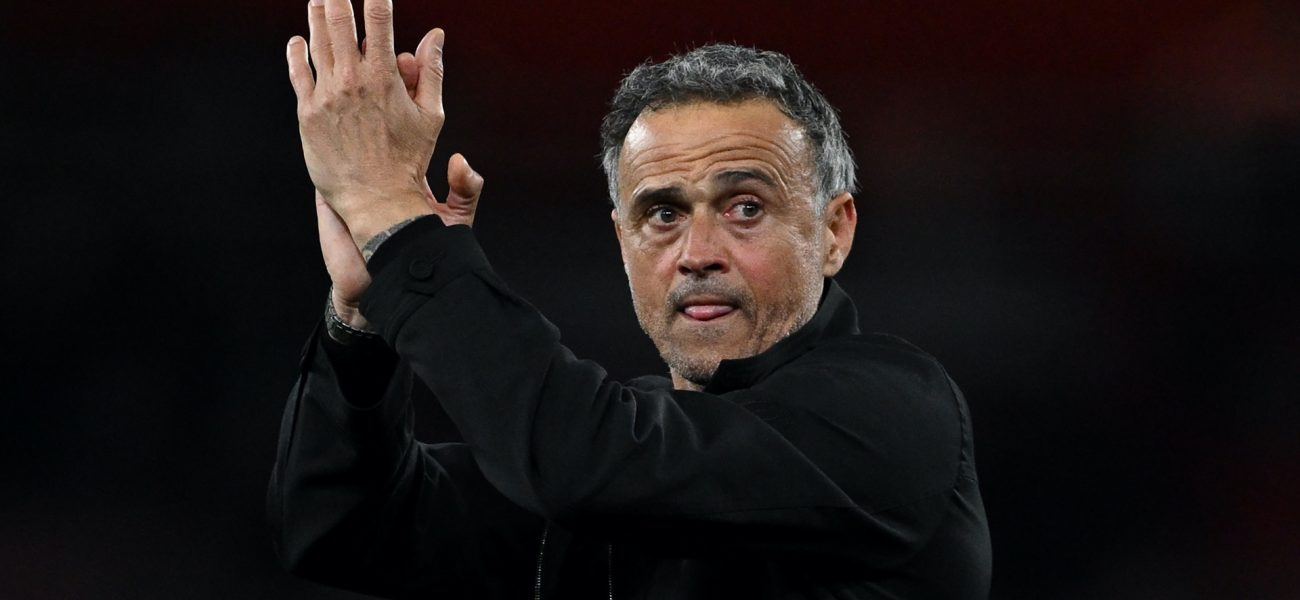
POLICY WIRE — London, UK — Football management is often painted as a high-octane spectacle of roaring touchline theatrics. But sometimes, the most cutting blows are delivered not in fiery rhetoric, but in carefully modulated compliments—or, perhaps, psychological warfare cloaked in civility. That’s what’s unfolding as Arsenal’s Mikel Arteta and Paris Saint-Germain’s Luis Enrique gear up for the UEFA Champions League final, a contest where every word seems weighed with the gravitas of a chess grandmaster’s move.
Arteta, usually a picture of controlled intensity, just lobbed an effusive bouquet at his Parisian counterpart. It wasn’t merely a polite nod. He hailed Enrique as “really someone special.” Back when Arteta was a fresh-faced 16-year-old at Barcelona, crossing paths with the first team, Enrique, then a formidable midfielder, supposedly “always took care of the young academy players.” It’s a narrative steeped in admiration, almost bordering on veneration. A shared lineage. A mutual respect forged on hallowed Camp Nou turf. He told Le10Sport: “He’s not just a coach who brings a lot tactically. He is the main character, with his charisma — and the way he manages people. That’s why he’s unique.”
It’s a peculiar thing, this torrent of praise ahead of the biggest game of their seasons. Arteta isn’t known for gratuitous flattery. And Enrique, well, he isn’t exactly the type to shy from a verbal joust himself. But sometimes, when two minds of this caliber meet, it’s all about controlling the pre-match temperature, isn’t it? “Of course, we have several people in common,” Arteta acknowledged, referring to their Barcelona ties. “I have enormous respect for him, and I think what he’s doing is remarkable.” It’s a statement that, in its very generosity, manages to hint at a deeper, unspoken challenge.
Because let’s face it, nobody’s forgetting the stakes here. PSG’s got a shot at European football’s most sought-after prize. Arsenal? They’re hungry for their first Champions League title ever. It’s a battle of club philosophies, national leagues, and—perhaps most interestingly—the two Spanish managers who are, on some level, reflections of each other’s Barcelona DNA.
But Enrique, ever the pragmatist, offered a starker perspective, though still laced with confidence. When asked about Arteta’s kind words, he responded through an aide, saying, “Admiration between competitors is good. But respect is earned on the pitch, every single second. My job isn’t to be charismatic; it’s to win, and to imprint a singular, unyielding vision on every player.” He keeps things terse. That’s just his way. He doesn’t really mess around.
This match also highlights a glaring discrepancy in preparation. PSG’s Ligue 1 season concluded well before Arsenal’s Premier League campaign. The Gunners are wrapping up domestic duties against Burnley — and Crystal Palace in the final days before the main event. It means one squad comes in comparatively fresh; the other, battle-hardened, or perhaps, simply fatigued. The economic machine of European football, always churning, rarely adjusts for such imbalances, does it?
This grand finale isn’t just a spectacle for European enthusiasts; it’s a global commodity. According to UEFA’s official reports, the 2023 Champions League Final alone drew a global TV audience of over 450 million viewers. A significant chunk of that audience—tens of millions, easy—is tuning in from countries across Asia, including Pakistan, where despite cricket’s longstanding dominance, the sheer spectacle and celebrity of European club football, particularly its highest echelons, holds an undeniable, rapidly growing sway. From Lahore tea shops to Kuala Lumpur cafés, these games are a communal ritual, uniting fans who’ve never set foot in Paris or London.
📄 POLICY WIRE WHITEPAPER PUBLISHED: PAKISTAN'S NATIONAL SECURITY POLICY PRIORITIES
👉 READ BY CLICKING HEREWhat This Means
The mutual manager-to-manager praise isn’t just good sportsmanship; it’s a calculated element in the grand theatrical production of the modern game. For both clubs, a Champions League trophy isn’t just silverware; it’s a global branding statement, an economic shot in the arm. Consider PSG, backed by Qatari wealth; victory solidifies their status not merely as a footballing powerhouse, but as a Soft Power projection, an advertisement for investment and influence on a global scale. This matters, a whole lot, to the entities behind the club. And for Arsenal, a win would resurrect an empire, catapulting them back into football’s elite commercial and sporting strata, significantly increasing their global commercial reach, including into burgeoning markets like those across South Asia.
The managers, Arteta and Enrique, are acutely aware they aren’t just coaching a game; they’re orchestrating a multi-billion-dollar global enterprise. Their words, whether praise or provocation, serve to shape narratives, manage expectations, and—perhaps most critically—inject a subtle psychological element into the very core of their preparations. It’s a dance. And neither of them can afford a misstep before the real show even begins. You’ve just gotta watch how this plays out. This isn’t simply football; it’s a battle of wills, where the opening shots are fired not with tactics boards, but with polite—perhaps even disingenuous—regards. Just the way it goes. And for anyone watching, it’s going to be a fascinating contest of tactical brilliance versus, well, whatever the other guy has cooking up behind the velvet curtain.