


Ghosts in the Rubble: A German Collapse Exposes Europe’s Structural Cracks
POLICY WIRE — Eichenheim, Germany — You know a region’s seen better days when a corpse unearthed from a pile of old bricks doesn’t even make the top half of the nightly news. It’s not a...

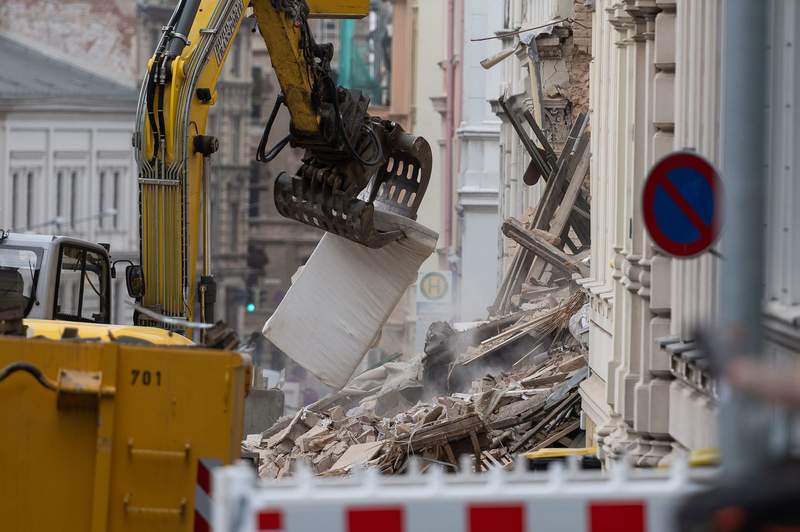
POLICY WIRE — Eichenheim, Germany — You know a region’s seen better days when a corpse unearthed from a pile of old bricks doesn’t even make the top half of the nightly news. It’s not a headliner, see? It’s just a tragic punctuation mark on a much longer sentence—one written in rust, peeling paint, and the unsettling quiet of economic retreat. That’s what played out this week in Eichenheim, an eastern German town that’s learned a grim sort of stoicism about decline. Authorities there pulled a body, identity still a cipher, from the rubble of a collapsed industrial shell. Another one gone. And it raises some gnawing questions.
Because this wasn’t some sudden, unforeseeable catastrophe. Buildings don’t just ‘decide’ to fall; they lean, they crack, they shed bits and pieces for years, whispering warnings no one wants to hear. This particular relic, locals tell us—if they even bother to—has been an open wound on the landscape for decades. A leftover from a bygone industrial era, standing like a broken tooth in Eichenheim’s faded grin. Folks would point at it, shrug. “Eventually,” they’d say. Well, eventually arrived. And with it, another casualty nobody claims, caught in the silent collapse of what once was.
It’s easy to dismiss this as just a local affair. A German problem. But the sag of a collapsing wall in Eichenheim has far wider implications than the dusty heaps left behind. Think about it: a structure, once part of the very sinews of industry, now a death trap. This isn’t just about aging concrete; it’s about the erosion of trust in the physical world around us, and, really, in the systems meant to safeguard it. You’d think in Germany—the land of meticulous engineering, right?—this sort of decay would be anathema. But tell that to the empty pockets of towns all across what used to be the German Democratic Republic.
Bärbel Krause, Eichenheim’s often-beleaguered mayor, didn’t pull any punches when asked about the incident. She’s seen this play before. “We’ve been flagging these hazards for years,” she sighed, her voice rough with fatigue. “But budgets don’t stretch forever, and these derelict shells, with their complicated ownerships or, more often, *lack* of clear ownership, they just don’t get the immediate attention they deserve until something… this tragic… happens.” It’s the classic municipal lament, isn’t it? No money for prevention, plenty of outrage for the aftermath. It’s a system, she argued, that’s just plain busted.
But it isn’t just the ex-GDR. The challenge of aging infrastructure and the social costs of neglect—of simply letting things crumble until they can’t stand anymore—that’s a European story. And an uncomfortable one. You look around at some of the older urban centers, or the peripheries of what were once thriving industrial towns, and you see similar architectural grimaces. You see it in the way the continent struggles to house burgeoning migrant populations, sometimes shunting them into exactly these kinds of rickety structures or substandard housing that European societies, let’s be honest, wouldn’t tolerate for their own established citizens.
The global south isn’t immune either. Far from it. In places like Pakistan, rapid urbanization and an almost insatiable demand for housing means developers often skirt regulations, leading to a constant, simmering fear of similar catastrophes. Remember that garment factory collapse outside Dhaka a few years back? That’s an extreme case, sure, but the underlying narrative of corners cut — and lives lost? It’s a sadly familiar tune played on different instruments. People want places to live, work, exist. And sometimes, you get what you pay for. Or don’t pay for, as the case may be for building inspections.
Because there’s a statistic worth noting: according to a 2022 survey, almost 25% of residential buildings in Germany were constructed before 1979. That’s a lot of old bones, prone to fatigue, decay, — and the unforgiving pull of gravity without consistent maintenance. This incident in Eichenheim—where an unknown soul met their end in a heap of socialist-era detritus—it isn’t an anomaly. It’s a symptom, writ small.
Regional Development Minister Thomas Richter, his tone more circumspect but no less direct, echoed the concern for a broader German malaise. “It’s a grim reminder,” he stated in a press briefing that skirted directly naming the Eichenheim incident but clearly referenced its implications. “You can’t just pave over the past with good intentions. Sometimes, it collapses right in front of you, forcing a reckoning with structures we’ve allowed to become hazards. We’ve seen other nations struggling with their post-industrial skeletons, and Germany, despite its economic might, is certainly not immune.”
What This Means
This collapse, though seemingly minor on a national scale, spotlights significant political — and economic fault lines. Economically, it points to the underinvestment in certain German regions, particularly those still grappling with the legacies of reunification. The costs of maintaining and demolishing derelict structures are astronomical, often outstripping the budgets of cash-strapped municipalities like Eichenheim. This leaves them in a cruel bind: risk further decay, or shoulder a crippling financial burden. Politically, the incident could fuel renewed debates about federal aid to distressed communities, property rights for abandoned structures, and even the efficacy of safety regulations. But here’s the kicker: with public attention increasingly diverted to geopolitical crises and energy security, domestic structural integrity often takes a backseat until tragedy forces the issue. This tragedy isn’t going to change that calculus dramatically. Not yet. It’s just another ghost whispering about priorities lost in the dust.