

DPRK’s Football Foray: A Kick Towards Unity, Or Just Another Play in Seoul’s Shadow War?
POLICY WIRE — Seoul, South Korea — Football. It’s supposed to be a straightforward game, isn’t it? Twenty-two players, a ball, two goals, a ninety-minute clock. But when the referee’s whistle...

POLICY WIRE — Seoul, South Korea — Football. It’s supposed to be a straightforward game, isn’t it? Twenty-two players, a ball, two goals, a ninety-minute clock. But when the referee’s whistle blows on the Korean peninsula, even a simple kick can feel less like a sporting maneuver and more like a carefully orchestrated diplomatic incident. And so it was when North Korea’s Naegohyang Women’s FC arrived in South Korea, marking the first time in eight years a DPRK sports team had dared cross the divide.
No, this wasn’t about reunification. Don’t be daft. It was about a semi-final match in the Asian Women’s Champions League, a fleeting, almost surreal encounter that saw athletes from a hermetically sealed state suddenly swarmed by cameras and curious crowds. North Korea, in a move that likely raised more than a few eyebrows in diplomatic circles (or perhaps caused them to shrug, resignedly), chose to participate. The optical dissonance was sharp, palpable.
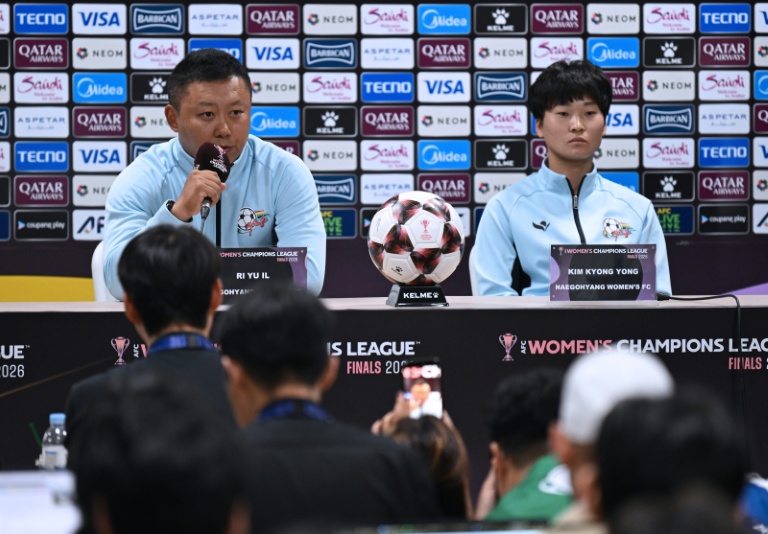
Ri Yu Il, Naegohyang’s head coach, faced the press pack, a man presumably well-versed in the art of saying much without revealing anything. They jabbed him with political questions – ‘What about South Koreans cheering for you?’ they wanted to know. His reply? Dry, measured, almost robotic. “I’m not sure whether similar questions will continue to come up,” he told them, his words clipped, dismissive. “But we’re here solely to play football. Simply put, we will focus only on each match.” His team, after all, hadn’t flown across the parallel for a photo op with the Unification Ministry; they were here to win. It’s a classic play from Pyongyang’s handbook: project an image of normalcy, focus on specific, apolitical engagements, and neatly sidestep any messy questions about a half-century-plus of unresolved conflict.
Because, for all the talk of sport transcending boundaries, some lines remain stubbornly etched. These two nations, still technically at war since the 1950-53 conflict sputtered to a truce, aren’t exactly exchanging pleasantries. Pyongyang, it seems, has developed a remarkable talent for ghosting Seoul’s persistent calls for dialogue, leaving President Lee Jae Myung’s ‘softer stance’ initiatives hanging in the diplomatic ether like a poorly hit volley.
But back on the pitch, or at least at the press conference, there was another perspective, a South Korean one, voiced by Suwon’s captain and former Chelsea midfielder, Ji So-yun. She’d never seen such a frenzy around women’s football. And she certainly wasn’t under any illusions about North Korean sportsmanship. “Naegohyang are expected to be very strong — almost at the level of a North Korean national team,” Ji remarked, adding a pointed detail about her previous encounters. “When North Korean players compete, they tend to be very physical and there’s also a lot of verbal abuse on the pitch.” Her prescription for her team? Simple: don’t back down. “If they swear at us, we will swear at them back. If they kick us, we will kick them back.” Not exactly the spirit of the Olympics, is it? More like a microcosmic extension of the national posture.
And what a national posture it’s. Women’s football, believe it or not, is one of North Korea’s few consistent claims to international sporting prowess. The DPRK national women’s side currently sits at an impressive 11th in the FIFA Women’s World Ranking, a dizzying height when compared to their male counterparts languishing at 118th. That disparity tells its own story about where national resources and ambition are funnelled when it comes to international recognition.
Interest from the South Korean public, naturally, was off the charts. The 7,087 general admission tickets evaporated within hours. An intriguing wrinkle: while civic groups, bankrolled by a generous US$200,000 from the Seoul government, planned to cheer both teams, there would be no official North Korean away support. Why? Well, national security laws here prohibit waving the DPRK flag in public, among other little strictures. In past ‘unity’ events, supporters instead hoisted flags depicting a unified Korean Peninsula—a symbolic olive branch that still, somehow, remains ungrasped. It’s a bit like India and Pakistan playing cricket; the national passions spill onto the pitch, but the underlying tensions never quite vanish. Just look at the stakes involved in some matches.
What This Means
This match, at its core, is less about football — and more about performative politics. For South Korea, hosting a DPRK team, however briefly, offers a PR coup: look, we’re extending the hand of friendship! We want peace! For Pyongyang, it’s a controlled exposure, a careful negotiation of their isolation. They get to send their best athletes—who probably haven’t experienced anything quite like this level of outside scrutiny—without conceding any ground on the larger, more vexing political issues. It’s a display of national strength, an assertion that even under global sanctions and self-imposed seclusion, their women’s football program can compete on the world stage. It’s a calculated decision, surely, weighed against the economic benefits (which are slim, mostly just the travel costs) and the chance to flex soft power, however limited.
This isn’t really a thaw in relations, then, so much as a temporary melt around a very specific, carefully chosen ice cube. The South Korean government funds the cheerleaders, while North Korea’s coach insists it’s only about the game. Everyone knows it isn’t. The optics, particularly for a leadership keen to maintain a semblance of normal international engagement in select spheres—and that often involves calculated moves toward non-aligned nations or those with historical ties to the Muslim world—are key. It keeps the channels, however thin, from completely freezing over. But don’t expect any joint economic summits just yet. This is just a game, after all. Or so they say.