


Beyond the Buzzer: Albuquerque’s Local News Embraces Hoop Hype, Deflecting Deeper Woes
POLICY WIRE — ALBUQUERQUE, N.M. — In a city grappling with everything from burgeoning homelessness to a perplexing rise in violent crime, one might expect the airwaves and digital pixels of local...

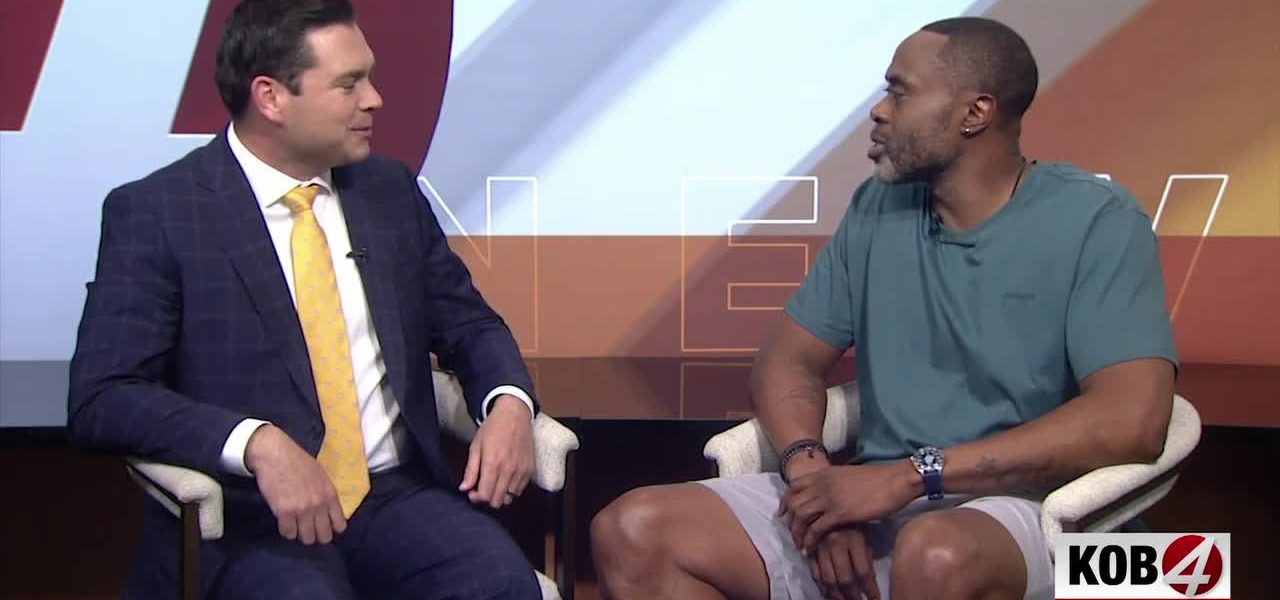
POLICY WIRE — ALBUQUERQUE, N.M. — In a city grappling with everything from burgeoning homelessness to a perplexing rise in violent crime, one might expect the airwaves and digital pixels of local media to hum with urgent civic debate. But sometimes, what you get is basketball. More precisely, you get ‘Kenny’s Got the Score,’ a recurring segment—apparently—dedicated to the minutiae of NBA Conference Finals.
It’s an intriguing juxtaposition, isn’t it? Here’s a regional media outlet, presumably charged with informing its populace about matters directly affecting their daily grind, opting instead to broadcast prognostications about a sport whose direct impact on New Mexico’s desert heartland is, shall we say, tangential. This isn’t just about hoops; it’s about what gets airtime, what shapes public discourse, and—more cynically—what pays the bills.
Because let’s face it, local news isn’t exactly thriving. They’re all trying to figure out how to stay solvent, how to capture eyeballs in a fragmented digital landscape. And often, sports are an easy win—a comfortable, uncontroversial reprieve from the harsher realities that require actual reporting. It’s cheap, it’s engaging for a segment of the audience, — and it often comes with a ready-made advertising package.
“We’re under tremendous pressure to deliver content that resonates and generates traffic,” conceded Sarah Jenkins, KOB-TV’s News Director, in a recent—and rather candid—email exchange. “Viewership data clearly shows that certain sports coverage, even at the national level, consistently performs. You’ve gotta play to your strengths when every quarter feels like a knife fight, don’t you?” Indeed. But what happens to the civic conversation when those strengths increasingly favor celebrity takes over granular investigations?
And it’s not a uniquely American phenomenon. In cities like Karachi or Lahore, where local newspapers once served as the primary nexus of community information, you now see a similar push toward glitzier, more universally appealing content—cricket, celebrity gossip, international headlines—often at the expense of deeply local, accountability-driven journalism. The digital migration hasn’t just shifted consumption habits; it’s reshaped editorial priorities, emphasizing reach and immediate engagement over granular local context. Think about the sprawling news deserts now forming in parts of rural Pakistan, where traditional media has either folded or outsourced its reporting to underpaid freelancers, all while urban outlets chase clicks with easily consumable content.
Albuquerque’s Mayor Tim Keller, a Democrat, seems acutely aware of this media pivot, even if his office rarely publicly criticizes local outlets. “My job is to address the city’s challenges—crime, homelessness, economic development—not to dictate what cable news runs,” he stated, his voice tight during a recent press conference regarding city council budget hearings. “But I can’t help but notice sometimes where the public’s attention is drawn, and how easily it can be diverted from the pressing matters of our communities. We need an engaged citizenry, — and that means being informed, truly informed, about where we stand as a city.”
Data from the Pew Research Center’s 2023 report on local news trends paints a stark picture: print newspaper advertising revenue declined by 82% between 2005 and 2021. And digital ad revenue? It’s rarely picked up the slack. For many local newsrooms, any content that draws steady eyes without draining vast resources—like a recurring sports segment featuring a known local personality—becomes an almost irresistible siren call.
But the real score, perhaps, isn’t about LeBron’s latest triple-double. It’s about a local media ecosystem constantly recalculating its value proposition, weighing civic duty against commercial survival. And in this particular game, Albuquerque isn’t just watching from the sidelines; it’s seeing its own narrative shaped, or perhaps deliberately reshaped, by these complex, sometimes contradictory, editorial decisions. They’re telling us a story, alright, but maybe not the one we thought we signed up for.
What This Means
The embrace of national sports narratives over local civic reporting has several telling implications. Economically, it represents a reactive survival strategy by local media, where easily digestible, mass-appeal content takes precedence over resource-intensive investigative journalism. This can create a false sense of prosperity for outlets in the short term, while further eroding trust and critical engagement from their audience in the long run. Politically, a less informed or distracted populace often translates to reduced accountability for local officials. If the public isn’t actively monitoring municipal budget discussions or zoning controversies, it becomes significantly easier for governance to drift without public scrutiny. for a city like Albuquerque, struggling with its public image and deep-seated social issues, a focus on distant sporting events rather than local problem-solving could reinforce the narrative of civic inertia, even as genuine efforts to address core challenges continue behind the scenes. It’s a classic case of short-term audience metrics eclipsing long-term societal health, a trade-off that few seem to have a clear exit strategy for.