


Inflation’s Bitter Harvest: Portsmouth Parish Stems Tide as Economic Currents Rattle Grocers
POLICY WIRE — Portsmouth, New Hampshire — Forget the glossy economic indicators; the real barometer of America’s fiscal health often hides in plain sight, tucked away in the fluorescent-lit...

POLICY WIRE — Portsmouth, New Hampshire — Forget the glossy economic indicators; the real barometer of America’s fiscal health often hides in plain sight, tucked away in the fluorescent-lit aisles of your local supermarket. But for some, that’s already a luxury. Instead, their week’s sustenance, a stark necessity, hinges on the strained generosity of institutions like St. Mark’s Episcopal Church, which now finds its hallowed halls serving up canned goods and boxed pasta with an almost alarming regularity.
It’s an unglamorous reality, this weekly ritual of neighbors collecting basic victuals, a somber counter-narrative to celebratory pronouncements of economic recovery. This isn’t just about a kind church lending a hand, is it? It’s about a nation where, for an ever-widening segment of its population, the act of feeding one’s family has transformed into a bureaucratic gauntlet or, failing that, an act of faith and charity.
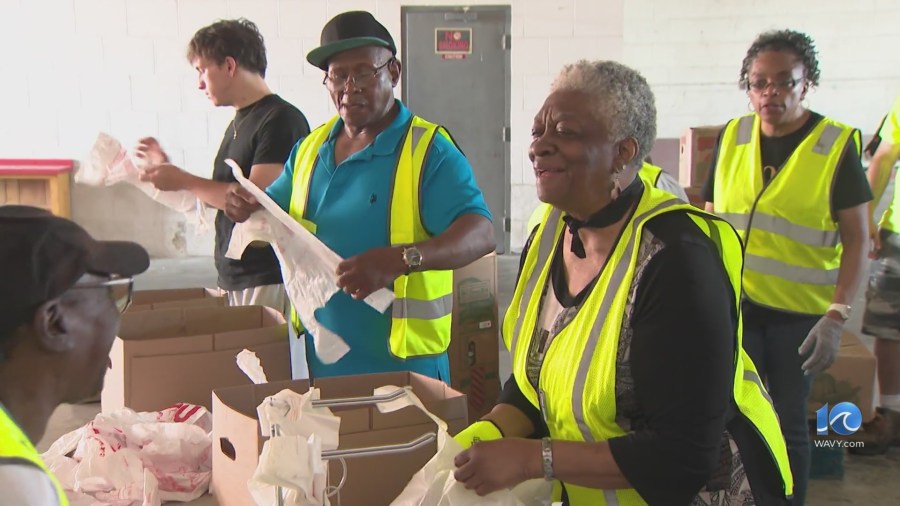
St. Mark’s food pantry, an endeavor usually framed as supplemental support, has ballooned into a frontline service. Volunteers, bless their weary souls, describe a clientele spanning not just the perpetually impoverished, but also the newly vulnerable—the working poor, the recently retired, and those whose modest paychecks simply haven’t kept pace with the relentless climb of household expenses. Pastor Emily Hawthorne, overseeing the logistical ballet of distribution, doesn’t mince words. “We don’t just see hungry people; we see neighbors caught in an economic current they didn’t create. It’s heartbreaking, — and frankly, it’s unacceptable that in a nation like ours, food security isn’t a given. We’re a stopgap, not a solution,” she told Policy Wire, her voice carrying the weariness of repeated pleas falling on deaf ears.
And those rising costs? They’re no myth. According to the USDA Economic Research Service, food prices rose 2.8% in 2023, following an 11.3% jump in 2022. That’s a two-year escalation particularly brutal for low-income families—it just rips away whatever meager purchasing power they might’ve once held. The dollar just doesn’t stretch like it used to. Don’t believe us? Check your grocery receipt. You’ll quickly recognize the stark numbers on your own.
Across town, City Councilman Arthur Jenkins, contacted for comment, offered a more sanitized assessment. “We’re aware of the squeeze on household budgets, — and we commend community organizations like St. Mark’s for their steadfast service. It’s a complex issue, requiring a multi-pronged approach that the city council is actively pursuing through various outreach programs.” A ‘multi-pronged approach’ that, from the looks of the lengthening queues, has yet to yield tangible relief for many. He sounds exactly like what he’s—a politician whose well-manicured words provide little caloric value. It’s often the same song and dance in nascent economies or conflict zones; think of the humanitarian relief efforts that often become the de facto governance in places like Gaza’s Fractured Grip, where civil society and religious bodies often fill voids left by systemic dysfunction or absent state capacity.
But the hunger isn’t just an American phenomenon, you know. Across the globe, particularly in nations like Pakistan, the challenges of food price inflation strike even deeper. In bustling Karachi or Lahore, rising costs for staples like flour, sugar, and cooking oil send shockwaves through millions of households already teetering on the edge. Local mosques and madrassas, much like churches here, frequently operate extensive soup kitchens and food distribution networks—not as charity, but as a necessary fabric of communal survival, rooted in the Islamic principles of Zakat and Sadaqah. It’s a striking parallel that underscores a global fragility: when official structures falter, faith-based organizations often become the last line of defense for human dignity.
What This Means
The burgeoning lines at places like St. Mark’s aren’t just snapshots of local benevolence; they’re canary-in-a-coal-mine signals for larger systemic anxieties. They expose a widening chasm between official economic narratives — and lived realities. Politicians might trumpet job growth and market highs, but these narratives ring hollow when a significant chunk of the workforce can’t reliably put food on the table.
The reliance on charitable food banks suggests a government infrastructure that’s either inadequate, improperly allocated, or perhaps intentionally minimalist when it comes to social safety nets. It implicitly shifts the burden of basic human needs from public responsibility to private altruism. And that’s a dangerous precedent. It allows for a tacit acceptance of chronic insecurity, softening the hard edges of policy failures with the comforting veneer of community spirit. It suggests that, in the wealthiest nation on earth, securing one’s next meal has become an inconvenient externality to be offloaded, rather than a fundamental right guaranteed by a functioning society. These scenes in Portsmouth, echoed everywhere, should make anyone—anyone with a functioning moral compass, anyway—stop and think.