


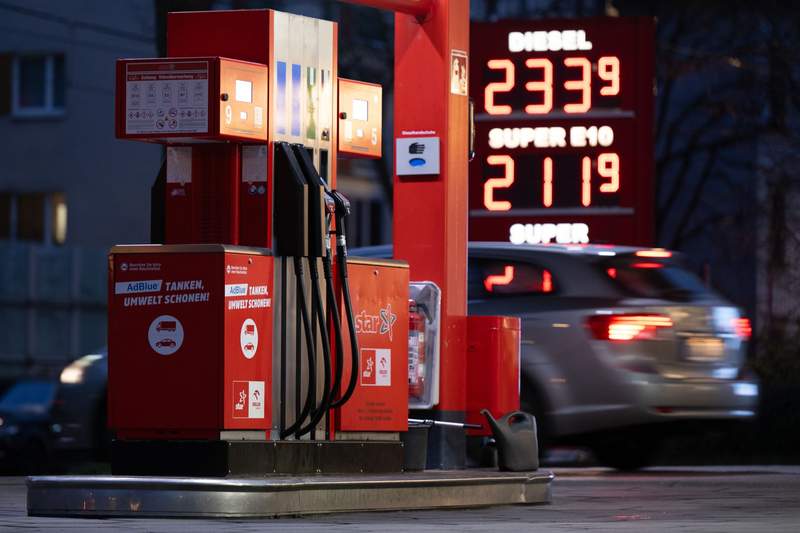
German Pump Squeeze: Widespread Fuel Price Manipulation Raises Alarms
POLICY WIRE — Berlin, Germany — You pull up to the pump, squint at the numbers, and sometimes, if you’re like most drivers these days, a little sigh escapes. It’s never just about the gas; it’s...

POLICY WIRE — Berlin, Germany — You pull up to the pump, squint at the numbers, and sometimes, if you’re like most drivers these days, a little sigh escapes. It’s never just about the gas; it’s about that quiet gnawing feeling that you’re being fleeced, just a little, every single time. And it turns out, for nearly one in five German motorists, that gut instinct was actually bang on, a damning revelation from the very government agency tasked with keeping markets honest.
It’s not some grand conspiracy ripped from a spy novel, mind you, but something far more insidious and, frankly, boringly predictable: corporate corner-cutting. Germany’s Federal Cartel Office (Bundeskartellamt), not known for its dramatic flair, quietly released figures showing that a staggering 19% of the nation’s filling stations have been playing fast and loose with pricing rules. They weren’t updating prices correctly, or worse, not at all, leaving drivers paying whatever price had stuck. And for the regular folk trying to make ends meet, that’s not just an oversight—that’s cash out of their pockets.
“We expect companies to adhere to the rules, plain and simple,” stated Robert Habeck, Germany’s Vice Chancellor and Federal Minister for Economic Affairs and Climate Action, in a measured tone typical of his Green party pragmatism. “Consumers are already grappling with inflated costs across the board. They don’t need the additional burden of price uncertainty at the fuel pump. Our market watchdogs aren’t just for show.” He’s right; nobody enjoys feeling like they’re driving into an opaque system, constantly trying to guess if they’re getting a fair shake or just another subtle squeeze.
Because, let’s face it, transparency in energy markets isn’t just an abstract economic principle; it’s the bedrock of consumer trust. Without it, you get public skepticism that borders on cynicism. Fuel costs, after all, ripple through everything, from the morning commute to the price of the lettuce you buy at the supermarket. Germany, a manufacturing powerhouse that runs on efficient logistics, knows this perhaps better than most. The mere hint of malfeasance can trigger a broader unease about the integrity of its consumer economy.
But this isn’t an isolated German issue. Consider the economic pressures simmering across continents. In nations like Pakistan, where fuel price hikes routinely spark nationwide protests and even governmental instability, the concept of a government watchdog ensuring accurate pricing would be a dream, often sidelined by broader fiscal emergencies and global commodity volatility. Asia’s airlines, for example, have been flirting with financial freefall precisely because soaring fuel bills impact them disproportionately. What seems like a minor breach in Germany can escalate to national crises elsewhere.
So, when Germany’s anti-trust chief, Andreas Mundt, the very head of the Bundeskartellamt, noted that the “number of infringements remains high,” it wasn’t just bureaucracy speaking. It was a frank assessment of a persistent problem—one where the sheer scale of the retail network makes comprehensive oversight a genuine headache. His office’s investigation sampled thousands of fuel prices — and found violations across a significant portion. And they’re not done, Mundt hinted, promising continued scrutiny, which tells you they don’t exactly trust everyone to play nice without a watchful eye.
“It’s a slap in the face,” chimed in Klaus Müller, a board member with the Federation of German Consumer Organisations (vzbv). “Drivers aren’t accountants; they can’t check every single price change on the government app, assuming they even know it exists, when they’re rushing to work. They rely on stations to be honest. This data simply confirms what many consumers already felt – that the system isn’t always working in their favour. It corrodes confidence.” His frustration is palpable, isn’t it?
This isn’t about shaming independent station owners. Often, the issues arise from outdated tech or hurried staff trying to manage dynamic pricing—that ballet where prices dance up and down several times a day. But still, the buck’s gotta stop somewhere. For a nation that prides itself on order and economic rigor, the sight of nearly one in five establishments failing a basic transparency test isn’t just an administrative glitch; it’s a symptom. And sometimes, inflation’s bitter harvest isn’t just about rising costs, but about eroding standards of business ethics under pressure.
What This Means
The Federal Cartel Office’s findings aren’t just a regulatory footnote; they’re a barometer for broader economic trust and market function within Germany. Economically, even minor discrepancies across nearly a fifth of petrol stations amount to significant sums siphoned from consumer wallets. This translates directly into reduced discretionary spending elsewhere in the economy, or simply more financial stress for households already contending with cost-of-living pressures. Politically, the revelation feeds into existing narratives about corporate greed versus consumer hardship, putting pressure on Habeck’s ministry to demonstrate tangible action. It raises questions about the efficacy of existing regulatory mechanisms—are they robust enough, or do they simply create a target that too many businesses comfortably miss? There’s an underlying societal friction exposed here: the expectation of fair play from the public juxtaposed with the seemingly intractable reality of widespread, albeit sometimes minor, commercial non-compliance. It’s a testament to the persistent challenge of ensuring market integrity, even in highly developed economies with strong rule-of-law traditions. Expect louder calls for increased enforcement, potential fines, and perhaps even updated pricing infrastructure to ensure real-time transparency—a subtle but potent ripple effect from what many might dismiss as mere technical infractions.