

New Mexico’s Inferno: A Tragic Spark Unveils a Deeper Ecological Crisis
POLICY WIRE — Capitan, N.M. — It wasn’t the roaring inferno that initially gripped the public’s attention—not entirely. No, the insidious horror began with a different, quieter tragedy: a...

POLICY WIRE — Capitan, N.M. — It wasn’t the roaring inferno that initially gripped the public’s attention—not entirely. No, the insidious horror began with a different, quieter tragedy: a medical plane, meant for healing, instead spiraled into the parched Capitan Mountains. Its devastating crash became the unlikely, yet brutally effective, detonator for the now-sprawling Seven Cabins Fire, an uncontrolled blaze that’s consumed over 12,000 acres of New Mexico’s brittle, high desert wilderness. And suddenly, a local disaster finds itself entangled with an environmental warning system screaming across continents.
The scale of destruction, managers confirmed Monday morning, currently stands at an estimated 12,549 acres. Zero percent contained. This isn’t just a brush fire, folks; it’s an ecological aneurysm. For days, the inferno’s unholy appetite has feasted on “dead fuels”—euphemism for forests choked with dry timber, waiting for a spark. And a plane crash, well, it’s more than a spark; it’s a bonfire starter.
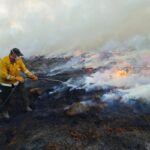
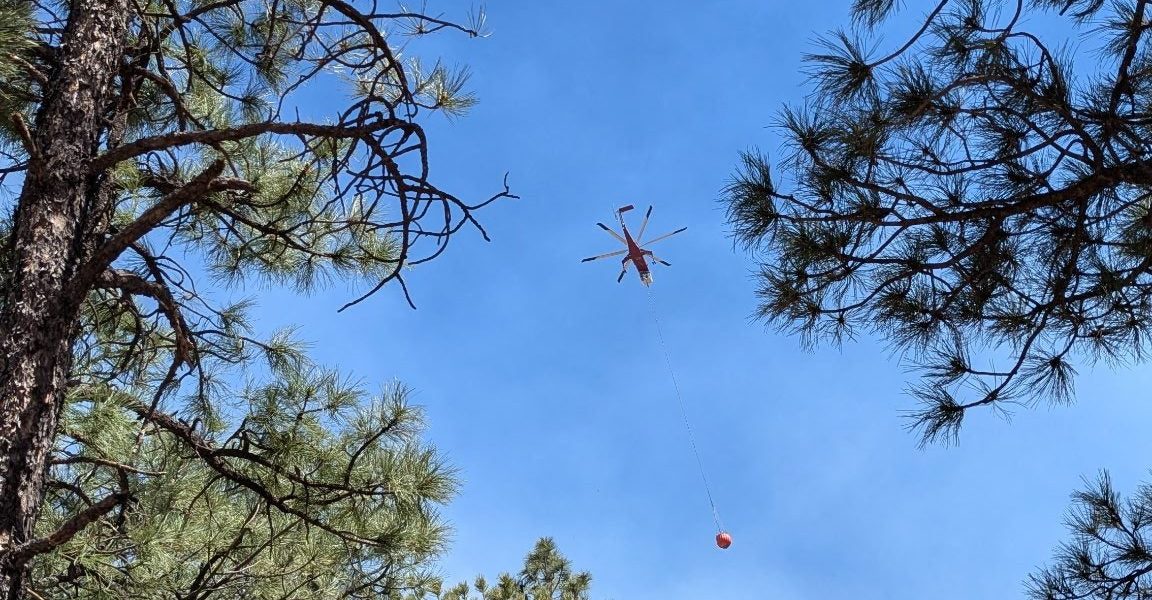
Roughly 600 souls are on the front lines, a veritable army against an enemy with no face but plenty of fury. We’re talking helicopters buzzing like angry bees, a dozen crews digging in, twenty engines standing by, and eleven water tenders — it’s an all-out siege. But what good are battalions against relentless, dry winds gusting up to 40 miles per hour? Not much, it seems, when coupled with humidity so low it could desiccate a cactus.
“We’re not just fighting a fire; we’re wrestling a dry, angry beast in a tinderbox,” declared Fire Chief Ramon ‘Ray’ Sanchez, Incident Commander for the Seven Cabins operation, his voice a gravelly testament to sleepless nights. “Every gust feels like it’s mocking us. But we’re not giving in. We’ve got lines to hold, communities to protect.” Their current gamble: keeping the monster south of Highway 246 and west of Arabella. Good luck with that.
Firefighters did score a minor victory Sunday, pushing control lines out of Harrison Canyon, a small, hard-won breath of air in an otherwise suffocating battle. But tomorrow, the winds, like an impatient tyrant, are expected to shift westward, threatening to herd the blaze into even denser fuels, into areas less accustomed to its hungry gnawing. Because, as everyone knows, wildfires don’t follow neat little maps.
This isn’t just bad luck, not entirely. “This isn’t just bad luck; it’s the climate’s invoice finally coming due. We need more than prayers; we need policy—and hell, more firefighters, faster,” argued State Senator Elena Rodriguez, (D-Lincoln County), during a brief, wind-whipped presser. Her exasperation was palpable, echoing the frustrations of constituents watching their hillsides turn to ash.
Communications towers at Summit Peak? They’re somehow still fully operational, a weird testament to misplaced priorities, perhaps—or simply, a last stand for modern connectivity amidst ancient devastation. Meanwhile, State Highway 246 is a ghost road, sealed off, as are all trails and access points to the Capitan Mountains wilderness. New Mexico’s relationship with its environment is a tough one, and fires like this rip open old wounds.
Evacuations remain firmly in place from Highway 246 to Boy Scout Mountain. These folks aren’t camping; they’re displaced, watching their lives smolder from afar. The raw statistics don’t lie: According to the National Interagency Fire Center, the number of acres burned annually in the U.S. has increased by an average of 1.4 million acres since 1980, a grim acceleration that makes fires like the Seven Cabins inferno feel less like anomalies and more like the chilling new normal. It’s a truth that hits harder when your own backyard’s ablaze.
What This Means
This fire isn’t just about New Mexico losing some acreage; it’s a harsh spotlight on how climate patterns—drought, increased winds, heat—are reshaping landscapes worldwide. Economically, we’re talking about direct costs in firefighting resources (hundreds of personnel, millions in equipment), indirect hits to tourism, property values, and the inevitable, brutal expense of rebuilding what might soon burn again. Politically, it puts immense pressure on state and federal agencies for improved fire management strategies, often leading to arguments about funding and land-use policies. Can you even imagine the insurance premiums?
The unforgiving landscape here—its bone-dry forests and wind-whipped canyons—echoes a stark warning to other drought-stricken regions across the globe. We’re seeing similar, increasingly common, scenes from California to the sun-baked plains of Sindh, Pakistan, where rising temperatures and erratic rainfall are turning traditional agricultural lands into prime kindling for similar infernos. The management of scarce water resources and increasing fire threats becomes a cross-continental conversation, connecting even Capitan, New Mexico, to global climate diplomacy. What happens here isn’t just local; it’s a grim postcard from a changing world. It’s a tough lesson to swallow, isn’t it?