

Rodgers’ Off-Field Mic: A Steel City Showdown for Public Persona Control
POLICY WIRE — Pittsburgh, USA — A coach’s greatest play isn’t always drawn on a whiteboard. Sometimes, it’s a silent command from a sideline—an invisible leash on a very visible quarterback....

POLICY WIRE — Pittsburgh, USA — A coach’s greatest play isn’t always drawn on a whiteboard. Sometimes, it’s a silent command from a sideline—an invisible leash on a very visible quarterback. And now, as Aaron Rodgers buckles up for another season in black and gold, that unspoken strategy is poised for a serious recalibration. It’s not just about passing yards or touchdown throws anymore; it’s about control. Control of the narrative, control of the microphone, and the fascinating power struggle that ensues when a sports icon re-enters the public sphere.
Rodgers is back in Pittsburgh. That much, we know. But the Steelers’ locker room feels different, charged with a new energy (or perhaps just a different kind of tension). Head Coach Mike McCarthy, an old familiar face from Green Bay, now steps into the gargantuan shoes left by Mike Tomlin. And that, sports scribes — and management consultants alike will tell you, changes everything.
Tomlin, a man known for running a ship tighter than a bank vault, famously—and effectively, one could argue—put the kibosh on Rodgers’ weekly gabfests on *The Pat McAfee Show* last season. It was an unofficial policy, perhaps, but a widely understood one. For Tomlin, unity meant suppressing anything that smacked of external distraction. He’s a wizard at it; look at guys like Antonio Brown or Chase Claypool who thrived under him, then, well, stumbled hard once out from under his eye. That focus, that singular voice, it was Tomlin’s superpower.
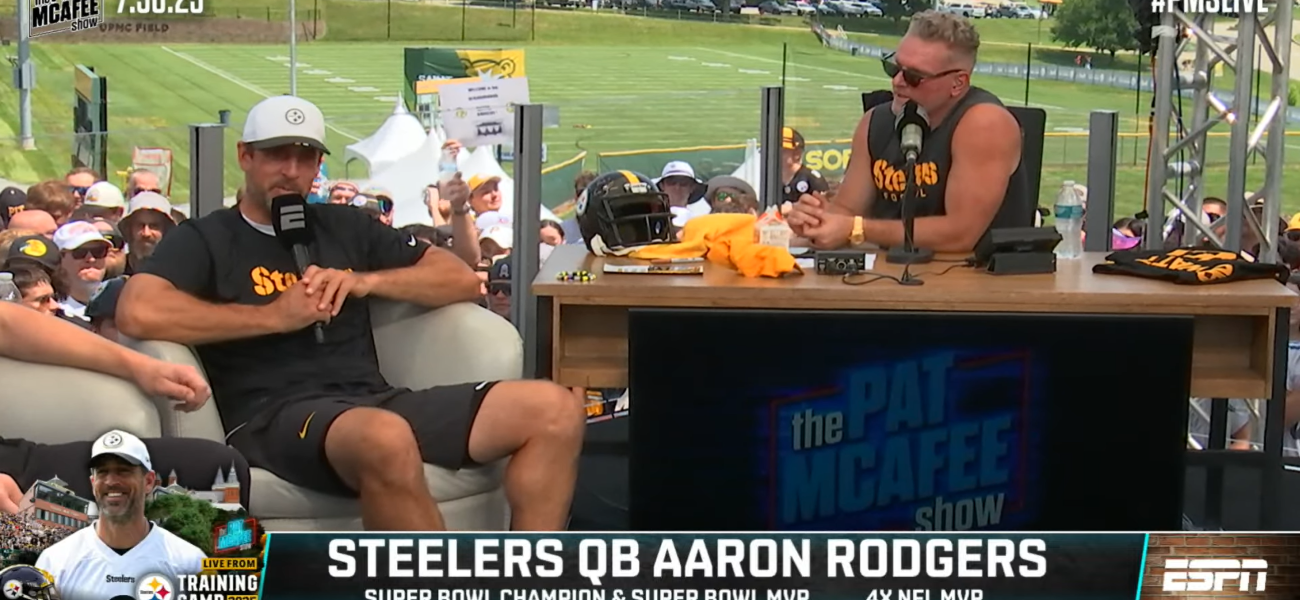
And because Rodgers is, shall we say, a man with a lot to say, he needed reining in. His pre-Tomlin McAfee appearances became a weekly, often wild, carnival. Remember the “immunized” comments, the Jimmy Kimmel spat, or when he used the platform to air laundry about his former team? All gold for ratings, certainly, but a PR headache for any team brass looking to minimize off-field noise. ESPN reportedly signed McAfee to a five-year deal worth north of $85 million in 2023, showcasing the immense financial pull of these celebrity-driven media vehicles. That kind of pull makes resisting a microphone tempting.
But will McCarthy adopt the same philosophy? He isn’t Tomlin. His coaching style, often described as more offensively-focused and less overtly managerial in terms of player personas, suggests a potential loosening of the reins. There’s chatter, real chatter, about Rodgers eyeing a return to that boisterous stage. You don’t have a star quarterback known for his outspokenness — and just expect him to stay quiet indefinitely, do you? No. You don’t.
“Our focus is the field, always,” Coach McCarthy recently offered in a measured tone during a press conference. “What happens off it, well, that’s often a conversation for men to have, to ensure everyone’s on the same page. We’re a team, first and foremost.” It’s classic coach-speak—vague enough to be interpreted by everyone but specific enough to sound like a guiding principle. But what does ‘on the same page’ truly mean for a personality as outsized as Rodgers’?
The underlying dynamic is far more intricate than simply whether a player gets to chat on a podcast. It’s a dance between a superstar’s brand equity — and a team’s institutional control. Players like Rodgers aren’t just athletes; they’re media moguls, influencers in their own right, and their reach extends far beyond the stadium. And that’s a phenomenon that leaders in diverse geopolitical landscapes, from Islamabad to London, grapple with daily—the fight for narrative control when figures of public interest hold their own megaphones.
📄 POLICY WIRE WHITEPAPER PUBLISHED: PAKISTAN'S NATIONAL SECURITY POLICY PRIORITIES
👉 READ BY CLICKING HERESteelers communications director Burt Lauten remains a fixture. Rodgers himself once name-checked Lauten as the gatekeeper for media availability. Is Lauten the final word? Or was Rodgers simply deflecting, conveniently placing the burden of silence on a non-coaching official while adhering to Tomlin’s unspoken edict? Because sometimes, you see, the smart move isn’t to say *anything* at all.
“My goal is simple: win,” Rodgers stated coolly last month, sidestepping a direct query about his media plans. “The noise, the chatter—it’s part of the game. But what matters is what happens inside that locker room — and between those white lines. And if that means keeping things a certain way, then that’s what I’ll do.” A nod to compliance, perhaps, or a subtle hint of conditions? One never quite knows with Rodgers, which is precisely why the drama around him is so captivating.
But the pressure to return to a high-profile media gig is real. Not just for Rodgers’ personal brand, but for McAfee’s ratings, for ESPN’s continued investment. It’s a symbiotic relationship, a beast fed by celebrity — and controversy.
What This Means
This isn’t merely a minor sports squabble; it’s a fascinating microcosm of power dynamics, public relations strategy, and economic leverage in the modern age. Politically speaking (in a sports context, naturally), the new McCarthy regime faces an early test of its authority versus individual player autonomy. Can a coach with a different philosophy effectively manage an athlete who wields significant independent media power, without alienating him? It’s a delicate balance. The team wants focus, but the player—and his network—thrives on personality. This tension is echoed across the globe; consider the intricate ways public figures in a nation like Pakistan must manage their external communications, balancing their personal brand with the often rigid expectations of their institutions and public opinion. The subtle art of public relations becomes an integral, almost geopolitical, act, determining loyalty, perception, and often, careers.
Economically, Rodgers’ presence on a show like McAfee’s generates substantial revenue not just for McAfee and ESPN, but also enhances Rodgers’ own brand, which in turn influences endorsement deals and future opportunities. If McCarthy or the Steelers organization explicitly forbid a return to the show, they’re effectively capping a revenue stream—a risky move when dealing with a high-value asset. The team values on-field performance; the player — and his media partners value engagement. Resolving this isn’t just about winning games; it’s about managing multi-million-dollar brands and the competing interests that drive them. This push-and-pull isn’t exclusive to the NFL. In competitive sports industries globally, from Formula 1’s mega-star drivers to tennis legends like those playing at Roland Garros, balancing personal brands with team or circuit demands is an eternal tightrope walk.