

Beijing’s Golden Goose: Cracks Appear in China’s Economic Façade
POLICY WIRE — Beijing, China — The quiet hum of China’s economic juggernaut? It’s gone a bit wheezy lately, hasn’t it? For decades, Beijing perfected the art of the economic...

POLICY WIRE — Beijing, China — The quiet hum of China’s economic juggernaut? It’s gone a bit wheezy lately, hasn’t it? For decades, Beijing perfected the art of the economic miracle, projecting an image of unstoppable ascent, a narrative deeply embedded in global consciousness. But the numbers filtering out now, — and the quiet murmurs from official corridors, tell a less triumphant story. The meticulously maintained golden goose, it seems, might be feeling the chill, forcing a reckoning not just within China’s borders, but across its vast network of influence.
It’s not just a wobble; it’s a full-blown reconsideration. Developers are teetering. Local governments are buried under debt, stretching fiscal muscles to their absolute breaking point. And don’t get us started on consumer confidence—it’s more deflated than a forgotten party balloon. What we’re watching unfold is the erosion of trust in the Party’s long-held social contract: unquestioning political loyalty exchanged for ever-increasing prosperity.
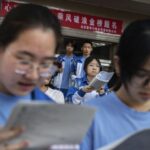
Many, especially in the West, fixate on property market woes. They’re substantial, for sure. But the problem runs deeper than speculative bubbles bursting. Take, for instance, China’s youth unemployment rate, excluding students. It climbed to a rather startling 21.3% in June 2023, according to official data before the National Bureau of Statistics quietly decided to pause reporting on the metric altogether. That’s a quarter of young people—potential innovators, consumers, and taxpayers—idle. It’s a ticking time bomb, socially and economically speaking, that even the most skillful propaganda machine can’t completely obscure. Because, ultimately, you can’t eat rhetoric.
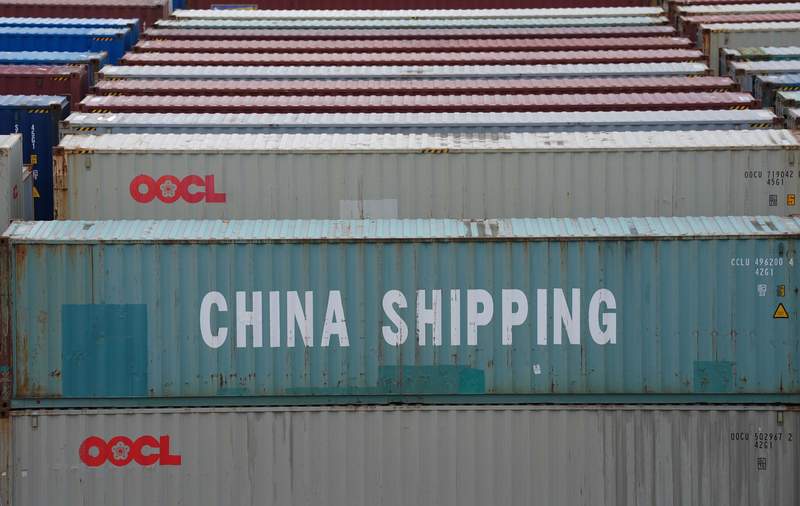
And these economic tremors aren’t contained by the Great Wall, either. They ripple outwards. Consider Pakistan, a linchpin of China’s grand Belt — and Road Initiative (BRI). The ambitious China-Pakistan Economic Corridor (CPEC) relies heavily on continued, robust Chinese investment. If Beijing’s domestic coffers tighten, what then for the promised highways, ports, — and power plants? Islamabad, already battling its own financial storms, won’t exactly be relishing the thought of delayed projects or, worse, stalled funds. It’s an economic dependency that suddenly feels a lot more exposed. What does a junior partner do when the senior partner gets a nasty cough?
Premier Li Qiang, never one to indulge in unhelpful pessimism, recently tried to soothe nerves, insisting the economy was undergoing a period of “structural adjustment” towards “high-quality development.” He suggested, with a knowing wink, that a little pain was a necessary part of growth—a standard line, honestly, when the growth isn’t quite measuring up. But Dr. Anya Sharma, Director of the Geopolitical Economy Institute, cuts through the official speak with far less circumspection. “Beijing’s pivot from an export-led, investment-heavy model is proving far rockier than anticipated,” she told Policy Wire. “The world always assumed China’s growth was guaranteed, a linear trajectory. It’s not. This isn’t a blip; it’s a systemic shift with profound global consequences.” Her point: denial isn’t a policy. The global community’s going to feel this for a long time.
📄 POLICY WIRE WHITEPAPER PUBLISHED: PAKISTAN'S NATIONAL SECURITY POLICY PRIORITIES
👉 READ BY CLICKING HEREThe old certainties? They’re fraying. Investors are pulling back; manufacturers are diversifying their supply chains—often quietly, often away from China. There’s a palpable sense of unease, a gnawing question about what happens next. This isn’t merely about slower GDP figures; it’s about confidence, about the perception of Chinese reliability and its ability to consistently deliver.
What This Means
Politically, the CCP faces a thorny dilemma. Its legitimacy has been intrinsically tied to delivering rising living standards. A slowdown, especially one felt by ordinary citizens through job insecurity or depreciating assets, threatens that bedrock bargain. It’s a test of internal cohesion and whether President Xi Jinping’s authority can navigate economic headwinds as effectively as it consolidates political power. Internationally, this economic fragility could spur more aggressive, nationalistic posturing from Beijing, an attempt to distract from domestic woes by projecting strength abroad. Taiwan’s defiant whispers might only get louder. On the other hand, a weakened China might be a less expansionist one, a potential paradox in the region’s complex geopolitical barometer. Economically, expect more volatility in commodity markets, continued efforts by multinational corporations to de-risk their China exposure, and potentially an uneven reshuffling of global supply chains. Nations heavily reliant on Chinese trade or investment, like many in the Muslim world, including resource-rich countries in the Middle East and Central Asia, will have to recalibrate their own growth strategies. Their economic futures, you see, are no longer a lock-step dance with Beijing’s every step. It’s all a bit messier, — and frankly, far less predictable, than we once believed. They’ve gotta manage those expectations.
This isn’t just an internal Chinese affair. It’s a seismic shift, requiring everyone—from Washington to Riyadh—to update their assumptions about the future of the global order. It’s a moment of truth for a system that banked heavily on perpetual Chinese expansion. And guess what? The bank seems to be running low on collateral.