


The Diamond Market: Phillies’ Bold Play A Reckless Wager or Savvy Geopolitics?
POLICY WIRE — Philadelphia, USA — For a city steeped in the echoes of revolutionary defiance, Philadelphia’s latest strategic move isn’t about cannon fire or founding documents....

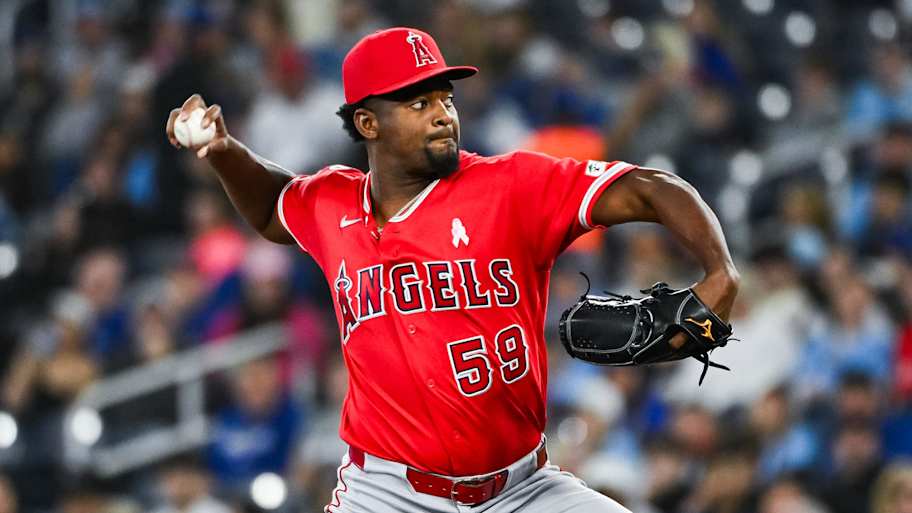
POLICY WIRE — Philadelphia, USA — For a city steeped in the echoes of revolutionary defiance, Philadelphia’s latest strategic move isn’t about cannon fire or founding documents. It’s about Jose Soriano, a young arm throwing heat for the Los Angeles Angels, suddenly donning Phillies red. This wasn’t some quiet roster shuffle; it was a brazen, mid-season raid, a declaration that in the cutthroat theater of American professional sports, desperation sometimes wears the disguise of brilliance—or, perhaps, sheer recklessness.
It’s early May, not October. Yet, the Phillies just shelled out their former number fourteen overall pick, Bryson Stott, plus a prospect, to snatch Soriano, a pitcher who’d been tearing up the league. Soriano’s stats? They’re impressive. He’s carved out nine starts, logging a 6-2 record with a sparkling 1.66 ERA — and 61 strikeouts over 54 innings. That kind of production screams ‘difference maker,’ but at what cost, especially this far from the season’s inevitable end?
Many a General Manager will tell you that true competitive advantage isn’t found by simply piling up assets. It’s about the equilibrium, the intricate dance of supply and demand for specialized talent, much like nations balance their alliances. This trade, analysts observe, wasn’t just a swap; it was a high-stakes, asymmetric exchange. The Angels, languishing with a 19-22 start, decided their immediate future wasn’t worth retaining a Cy Young contender. The Phillies, hovering at the edge of contender status, saw Soriano as the missing puzzle piece for a bullpen that’s—let’s be honest—been an exercise in anxiety for fans.
And that’s where the intrigue really begins, right? Dave Dombrowski, Philadelphia’s President of Baseball Operations, isn’t one for subtlety. He builds ‘win-now’ teams. But this move, so early, suggests a crack in confidence, a recognition that the current blend wasn’t quite potent enough. “We weren’t just looking for marginal improvements; we needed something transformative, a shock to the system,” Dombrowski reportedly confided to an inner circle, hinting at the immense pressure. “You don’t sit on your hands when opportunity knocks with an arm like that. Sometimes, you just have to bet big.”
But Perry Minasian, the Angels’ general manager, sees it through a different lens. For him, this wasn’t an act of surrender but a recalibration. “We’re thinking long-term stability, not just fleeting success,” Minasian was heard remarking, all but confirming the Angels’ pivot towards rebuilding. “It’s never easy letting go of a player of Jose’s caliber, but securing future assets—especially given Stott’s upside, despite his rough patch, and the prospect—is how you ensure sustained competitiveness. We can’t keep chasing yesterday.” Stott, it must be said, was struggling, batting a career-low .213 at the plate. That’s a clear marker of a player needing a fresh start, perhaps illustrating how quickly fortunes can shift in these pressure-cooker environments.
Consider the broader implications here, the echoes you hear in other arenas, in the geopolitics of talent or even national resources. Imagine a nation, struggling for internal stability, forced to cede a rising strategic asset for immediate financial relief or the promise of future growth. Pakistan, for instance, has often navigated complex geopolitical terrain, making tactical alliances and strategic concessions that might seem counterintuitive in the short run, all for a perceived long-term gain in security or economic opportunity. The choices mirror, in miniature, the complex balancing acts seen on the global stage. It’s not always about outright victory; it’s often about managing vulnerabilities. Just as baseball teams grapple with roster construction, governments wrestle with economic sustainability and security in an ever-shifting global landscape. Because, frankly, winning today doesn’t guarantee you tomorrow.
📄 POLICY WIRE WHITEPAPER PUBLISHED: PAKISTAN'S NATIONAL SECURITY POLICY PRIORITIES
👉 READ BY CLICKING HEREWhat This Means
This trade isn’t merely a line item in a box score; it’s a telling snapshot of modern economic and strategic behavior, compressed into the gladiatorial spectacle of professional sports. For the Phillies, it represents an almost frantic acceleration of their championship window. They’ve gone all-in, prioritizing an immediate shot at glory over the patient development of a highly-touted asset like Stott. This kind of ‘burn the boats’ mentality can energize a fan base, sure, but it also piles immense pressure on the new acquisition. Soriano now doesn’t just need to be good; he needs to be transcendental to justify the expenditure and the forfeited future. Economically, you’re looking at a huge upfront investment for a depreciating asset—player prime years—hoping for exponential short-term returns.
Conversely, the Angels’ move is a grim acknowledgment of present failure. They’re liquidating prime talent to restock their farm system, betting on future drafts — and prospects. It’s a painful but common strategic retreat, often seen in corporate mergers where struggling entities offload profitable divisions to strengthen their core. From a political perspective, it’s the difficult decision to step back from an unsustainable conflict or economic policy, despite immediate public outcry, for the hope of stability down the road. They’ve chosen the long, arduous road of rebuilding. But that road? It’s littered with the wreckage of failed promises, with teams that never quite emerge from the ‘retooling’ phase. And for fans, this trade just highlights the brutal, unsentimental reality that talent, like any commodity, gets bought, sold, and traded for perceived advantage in a relentless market.
One statistic, according to sources privy to team analytics, paints a stark picture: the projected championship probability for the Phillies, even with Soriano, only climbed by 1.7 percentage points immediately following the announcement. A marginal bump, many would argue, for a significant outlay. But perhaps, sometimes, you just need a jolt. The calculus is rarely simple.