


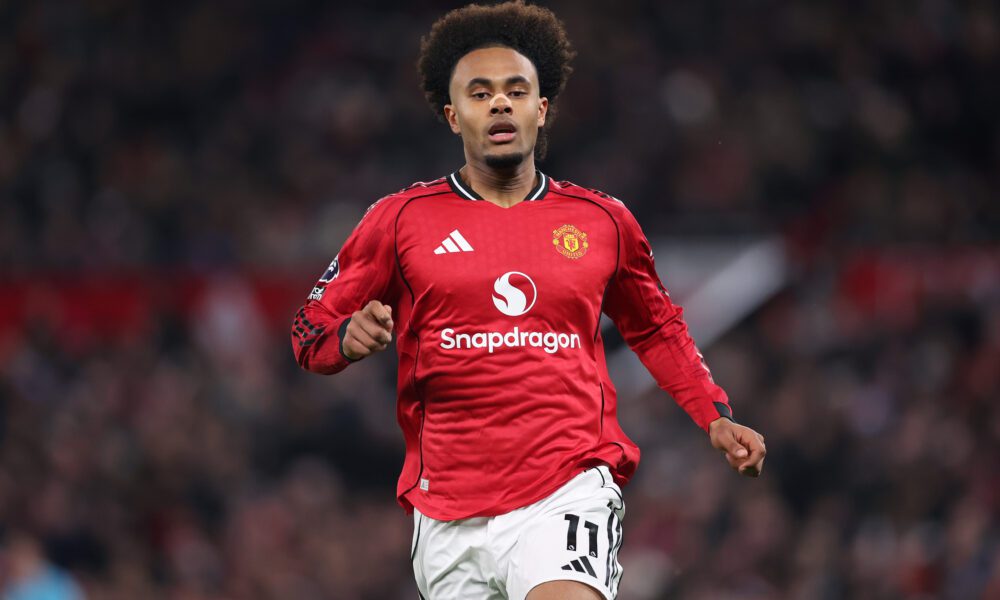
The Giallorossi Gamble: Zirkzee’s Uncertain Flight from Old Trafford to Rome’s Reckoning
POLICY WIRE — Rome, Italy — Another season, another whisper, and once again, the spectral figure of Joshua Zirkzee flits across the European transfer tableau. This isn’t just about a striker...

POLICY WIRE — Rome, Italy — Another season, another whisper, and once again, the spectral figure of Joshua Zirkzee flits across the European transfer tableau. This isn’t just about a striker looking for greener pastures; it’s a brutal economic dissection of potential versus profit, played out on the grandest, and most ruthless, stages of professional football. For clubs, like governments, it’s never just about who plays, but what the asset’s worth—today, tomorrow, and perhaps, the day after the market crashes.
See, last winter, Roma, bless their persistent hearts, got a cold, hard no. Manchester United, in a move that felt less like strategy and more like obstinacy, flatly refused to loan out the Dutchman. It’s a bit like an international lender denying a struggling nation a crucial bridge loan — the immediate implications sting, but the long-term game often overshadows short-term goodwill. Zirkzee himself was apparently ready to ink a four-year deal worth a tidy €3 million (net) annually, with some bonus clauses, which, let’s be frank, is no small change for a player still finding his feet. But United, they held the line.
Now, however, the summer winds are blowing different. Roma, despite snapping up Donyell Malen from Aston Villa (a move that certainly raised an eyebrow or two), still fancy Zirkzee. And you can see why. He’s not just a goal poacher; he’s got this knack for dropping deep, stitching play together, being a proper orchestrator upfront. That’s what made him stand out at Bologna, before the glitz and glamour — and relative lack of actual play — at Old Trafford, well, dulled his shine.
It’s the age-old story, isn’t it? Talent scouted, talent acquired for a speculative sum, talent failing to launch, then talent re-packaged for sale. But this time, it’s more intricate than just a straight swap. United values Zirkzee around £30.5 million, a figure that frankly, tells a whole story about how their initial investment has depreciated since he landed in 2024. And that’s what this often boils down to: balance sheets, not just highlight reels. It’s business, pure and simple. A ‘source close to the club’ remarked to Policy Wire, “Look, Joshua’s a fine lad, a promising talent. Sometimes it just doesn’t click. We’re running a business, though, — and we’ve got to recoup our investment. Simple as that.” No room for sentiment, not when you’re dealing with mega-millions — and demanding fans.
Roma’s sporting director, Frederic Massara, expressed it dryly in the past, confirming United had said “no quite clearly” then. But things, they evolve. And with Juventus breathing down their necks for that coveted Champions League spot—they’re currently just ahead on goal difference—Roma knows it can’t afford to merely cruise into the Europa League. A significant signing, someone like Zirkzee, could be that edge, that psychological push. Massara, speaking cautiously but optimistically to reporters recently, noted, “We’ve made our intentions known, but clubs, well, they play their own long game, don’t they? Patience is a virtue, particularly in the transfer market for talent we truly believe can elevate our squad.” It’s all very polite, very Italian, very much a velvet glove disguising an iron fist of negotiation.
📄 POLICY WIRE WHITEPAPER PUBLISHED: PAKISTAN'S NATIONAL SECURITY POLICY PRIORITIES
👉 READ BY CLICKING HEREBecause the money behind European football, it’s not confined to the continent. Think about it: a considerable slice of merchandise sales, broadcasting viewership, and indeed, direct investment from sovereign wealth funds, originates outside Europe’s traditional strongholds. In fact, reports by UEFA indicated that in 2023, over 40% of top-tier club revenues were indirectly influenced by markets in Asia and the Middle East, a colossal financial current flowing into the beautiful game. From Lahore’s bustling markets where young lads debate Serie A vs. Premier League, to Riyadh’s luxury boxes, the transfer sagas aren’t just sports news; they’re global narratives that dictate brand value, regional engagement, and the soft power projections of nations investing heavily in the sport. What seems like a localized deal in Europe sends ripples clear across to Karachi’s teeming streets, where loyalties run deep and passions ignite, sometimes over players they’ve never even seen in person.
What This Means
This Zirkzee situation isn’t merely another transfer story; it’s a microcosm of football’s contemporary economics. For United, it’s about asset management — and damage control. They paid for a future that hasn’t materialized, and now they need to mitigate losses, turning an underperforming player into capital that can be reinvested (presumably) more wisely. It’s the ultimate short-term market correction in human capital. For Roma, it represents a calculated gamble, balancing financial risk against the potentially enormous reward of Champions League football—a guaranteed surge in revenue, prestige, and player attractiveness. But more broadly, it shows how utterly interconnected global finance is with our perceived trivialities. These transfers—these multi-million euro transactions—are part of a massive, multi-faceted industry that touches everyone from superfans in Bangladesh, passionately supporting United from thousands of miles away, to corporate sponsors in Qatar weighing up advertising spend. It’s all part of the same intricate system of investment, returns, and, sometimes, the humbling truth of a failed experiment on the pitch. That £30.5 million isn’t just an arbitrary number; it’s a testament to the colossal, relentless churn of modern sport, where everyone’s trying to get their cut, their advantage, their moment in the sun. And sometimes, you know, it just means you’re trying to shift a guy who isn’t performing.