
Silence, Songs, and the Streets: Eurovision’s Glitzy Facade Cracks Under Weight of Global Discord
POLICY WIRE — Malmö, Sweden — The stage lights pulsed, a symphony of synthesizers thrummed, and confetti cannons stood at the ready. But for many, the actual show unfolded not inside Malmö Arena, but...

POLICY WIRE — Malmö, Sweden — The stage lights pulsed, a symphony of synthesizers thrummed, and confetti cannons stood at the ready. But for many, the actual show unfolded not inside Malmö Arena, but just beyond its polished thresholds. While Europe’s annual festival of glittering kitsch and questionable vocal prowess tried to carry on, a far grittier, deeply serious drama was playing out. Folks were getting pinched, bundled away, all because they wouldn’t just sit quiet — and watch the pop spectacle.
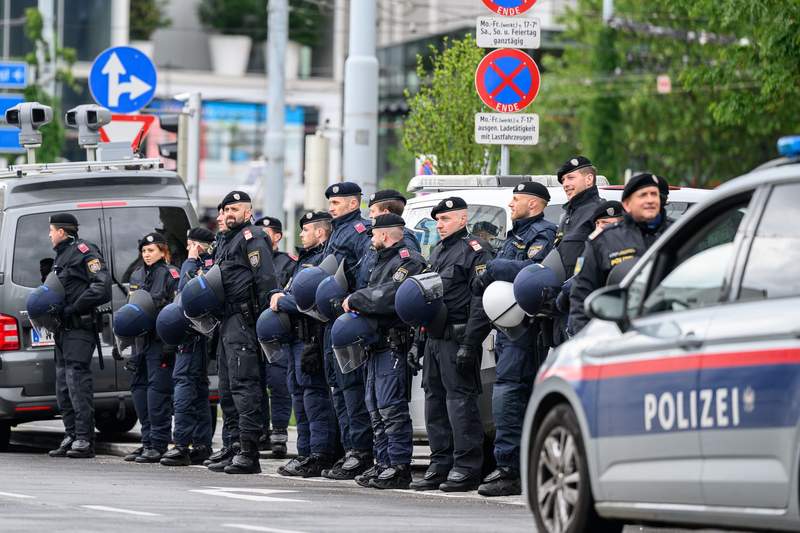
It’s always a bit strange, isn’t it? This annual collective delusion that art can somehow exist in a vacuum, entirely separate from the world’s rather insistent realities. Yet, each year, we try. We crown a new saccharine monarch of catchy tunes, hoping it’ll distract us from… well, everything. But recent events proved that delusion just won’t hold anymore. As the Grand Final geared up, authorities in the Swedish host city rounded up fourteen pro-Palestinian activists. They’d been out there, making noise, raising banners, doing exactly what protesters tend to do, challenging the supposed neutrality of such a massively public event. The juxtaposition was stark: glitter versus grit, escapism versus anguished advocacy.
Police reports were curt, formal. These weren’t violent agitators, mind you. Their crime, seemingly, was daring to bring real-world suffering to a party determined to ignore it. A local police spokesperson, who wouldn’t be named for attribution in these tense times, reiterated the official line: “Our primary concern is public safety and ensuring the event proceeds without undue disruption. These arrests were made to maintain order and adhere to specific permit regulations regarding public assembly.” Very tidy. Very by the book. It’s the kind of statement designed to pacify the event organizers more than the streets.
And that’s the rub, isn’t it? The politics of pop — they’re not some abstract theory debated in university halls; they’re getting hauled away by cops outside a sports arena. It isn’t just about Malmö. This little incident, just fourteen people, shines a light on a much larger, more troubling trend unfolding globally. Because these aren’t isolated outbursts; they’re symptoms. According to the CIVICUS Monitor, an independent research initiative, over two-thirds of the world’s population now lives in countries with repressed civic space, indicating a global decline in freedom of assembly. That’s a brutal statistic, and it makes Malmö’s tiny skirmishes feel less like anomalies and more like echoes of a broader struggle.
For activists, the message is chillingly clear. “They’re trying to silence us, trying to scrub any inconvenient truth from their glitzy party,” railed Hamza al-Mousa, a spokesperson for the local chapter of the Palestine Solidarity Network, his voice raw with frustration after a number of his group were detained. “But they can’t. Not when what’s happening to the Palestinian people is so obvious. This isn’t just about Eurovision; it’s about the West’s hypocritical commitment to human rights, filtering reality through a spectacle.” And he’s not wrong, you know. The international spotlight on Malmö offered a perfect, if fleeting, stage to demand accountability.
This suppression, however small in scale, ripples outward. In places like Pakistan, for instance, where solidarity with Palestine isn’t merely a political stance but a deeply held communal conviction, such arrests aren’t viewed as maintaining order. They’re perceived as blatant censorship, a Western double standard, a harsh reinforcement of a perceived global hierarchy where certain narratives are tolerated and others aggressively squashed. It certainly won’t help ease the already strained diplomatic relationships or shift perspectives in Islamabad, where many observe Western foreign policy through a critical, often cynical, lens.
📄 POLICY WIRE WHITEPAPER PUBLISHED: PAKISTAN'S NATIONAL SECURITY POLICY PRIORITIES
👉 READ BY CLICKING HEREDon’t kid yourself. This wasn’t just some benign public nuisance; it was an act of political theatre by both sides. One trying to deliver its message, the other desperate to erase it before it smeared the show’s pristine veneer. We’ve seen this script before, haven’t we? It’s never pretty. And it rarely achieves its intended goal of quiet. If anything, it usually makes the suppressed message scream that much louder.
What This Means
The arrests in Malmö, while numerically small, carry a disproportionately large symbolic weight. For one, they highlight the increasing tension between major international cultural events and the raw realities of geopolitical conflict. Organizations like the European Broadcasting Union (EBU), which produces Eurovision, consistently try to paint these gatherings as apolitical. They’ve even gone so far as to ban Palestinian flags, effectively attempting to engineer a false sense of neutrality. But the public, particularly youth activists, aren’t buying it. This deliberate act of scrubbing out dissent from the spectacle inadvertently amplifies the very concerns it seeks to suppress.
Economically, such incidents carry risks. Large-scale events are meant to generate revenue, tourism, — and positive PR. When they become sites of public unrest and debate, sponsors and host cities face reputational dilemmas and potential security cost overruns. It’s a calculated gamble to clamp down on protest: it might restore superficial order, but it often galvanizes critics and generates negative international press. The decision to enforce such strict separation of culture and politics is, in itself, a profoundly political act with clear repercussions. It alienates vast swaths of an increasingly interconnected global audience, many of whom, particularly in the Global South and the Muslim world, are already skeptical of Western institutional objectivity.
This event further underscores the declining appetite for unfettered free speech in public spaces when that speech directly challenges commercial or political interests. It’s a tricky balance: security versus fundamental rights. But more often than not, it seems, security, or at least the perception of it, wins out. And that, folks, doesn’t bode well for a truly open discourse. Because when you try to ban ideas, they tend to find other, often louder, ways to make themselves heard. The arenas might be full, but the air outside—it’s crackling.