


Modena’s Shattered Saturday: Unemployed Economics Graduate Ignites Italian Fears, Challenges Integration Narrative
POLICY WIRE — Modena, Italy — The anomaly is what really strikes you. Salim El Koudri, a 31-year-old, second-generation Italian with an economics degree tucked neatly into his past, didn’t...

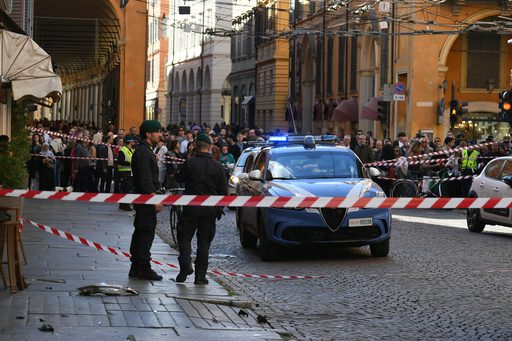
POLICY WIRE — Modena, Italy — The anomaly is what really strikes you. Salim El Koudri, a 31-year-old, second-generation Italian with an economics degree tucked neatly into his past, didn’t unleash some grand manifesto on Modena’s elegant streets this Saturday. Instead, he steered a vehicle—they say, deliberately—into a throng of pedestrians, injuring eight people, four of them critically. But it wasn’t a calculated act of terror, not on the surface anyway. It was something perhaps far messier: a collision of mental illness, unemployment, and an unwitting reflection of Italy’s perpetually strained social fabric.
Police grabbed El Koudri, born in Bergamo but living locally, right after the chaos. He’d attempted a clumsy escape after crashing into a shop window, having reportedly—and viciously—swept several people ‘flying’ with his car. One woman, pinned, lost both her legs; a visceral detail that speaks to the immediate horror of it all. And here’s the kicker: authorities confirmed he was already known to them, battling schizoid disorders. But an economics degree? That detail gnaws at the edges of the tidy narrative many might prefer. It adds a perplexing layer to a tragedy that locals, including the injured and their families, now have to piece together. This wasn’t some uneducated, radicalized outsider. This was one of their own, in a way.
“This tragic incident demands thorough, swift justice, even as we recognize its complex underpinnings,” stated Premier Giorgia Meloni, emphasizing—as she so often does—the sanctity of public order and accountability. “Italy won’t stand idly by when lives are shattered like this, regardless of the individual’s mental state. Our communities need protection, and victims deserve solace.” Her words, carefully chosen, point to the balancing act any government performs when facing such fraught incidents.
Investigators, while initially ruling out drugs or alcohol, have confirmed no links to extremist groups have materialized. But the act itself—a car becoming a weapon—resonates with a generation scarred by similar incidents across Europe. The only immediate, concrete data point they could offer beyond the driver’s mental health history was his unemployment. An inconvenient truth in a country still grappling with economic fragility. The incident throws a harsh light on societal fissures, including Italy’s stubborn youth unemployment rate, which hovered at around 21.6% in 2023, according to Eurostat data. One can’t help but wonder if the sheer frustration of a degree and no job, layered onto a diagnosed mental condition, creates a perfect storm.
Mayor Massimo Mezzetti, surveying the scarred street where paramedics worked amidst onlookers, grimly observed, “It’s a brutal reality check, this sort of thing. Our town, our citizens, now carry an indelible wound. What truly stings is the lasting scar left on our community, — and the unbearable injury to innocent people. We’ve seen a woman’s life irrevocably altered, simply because she was walking down the street. It’s an outrage, however it originated.” Mezzetti praised the citizens who initially intervened to stop El Koudri, showcasing a typical Italian grit when crisis strikes.
El Koudri’s identity—a second-generation Italian of North African descent, born in Bergamo—inescapably drags the wider conversation about integration and societal friction into the Modena daylight. Because even when the motive is tragically personal, these events inevitably fuel broader, sometimes fraught, public discussions about how effectively (or ineffectively) new communities are woven into the existing social fabric. It’s a conversation that can veer into ugly territory, even for incidents demonstrably unrelated to ideology. In countries like Italy, with long histories of migration, these discussions simmer just beneath the surface, often boiling over at the smallest provocation—and a tragedy like Modena’s provides a hefty one.
What This Means
This incident, on its face a local tragedy of individual pathology, immediately ripples outwards, complicating the already delicate dance between public safety and social cohesion in Italy. Politically, it grants further ammunition to nationalist voices advocating for stricter controls on immigration and more forceful responses to social disorder. Even without an extremist motive, the simple fact of the driver’s background—coupled with a deeply alarming act—becomes a proxy for deeper anxieties within the electorate. Economically, El Koudri’s unemployment, despite his qualifications, throws a stark light on the often-harsh realities faced by young Italians, particularly those from immigrant backgrounds who sometimes struggle more to find professional footing. It certainly won’t help Italy’s reputation as a secure, vibrant tourist destination, though the long-term impact on the country’s broader geopolitical standing remains relatively contained. But the cultural tremors could be more profound. It forces Europe, again, to wrestle with the uncomfortable truth that while much attention is paid to external threats, the threats festering from within—from isolation, mental health crises, and economic disillusionment—are often the ones that strike the most tragically close to home. See similar complexities in reporting surrounding localized European incidents and their wider echoes, or the socio-political context sometimes embedded in events like Europe’s cultural flashpoints.