

Concrete Chaos: North America’s Commuter Lifeline Stalls, Exposing a Raw Nerve of Power and Pay
POLICY WIRE — New York, USA — It wasn’t the Yankees’ playoff push, nor the Mets’ latest stumble, that gripped New York this past weekend. No. Instead, it was the eerie,...

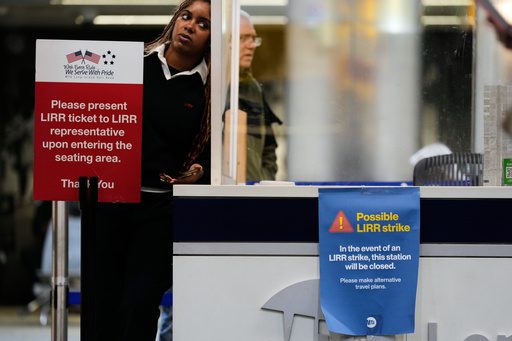
POLICY WIRE — New York, USA — It wasn’t the Yankees’ playoff push, nor the Mets’ latest stumble, that gripped New York this past weekend. No. Instead, it was the eerie, uncharacteristic quiet of Penn Station, a normally frenetic urban artery, now reduced to a ghostly monument of stalled ambition. The Long Island Rail Road (LIRR)—North America’s colossal commuter nervous system—collapsed into a complete shutdown, marooned by a labor strike, a stark tableau unfolding for the first time in nearly three decades. And just like that, the metropolitan pulse faltered, catching quarter of a million daily commuters flat-footed.
But this isn’t just about delayed trains or grumpy sports fans. It’s a grimy collision of political grandstanding, deeply entrenched labor disputes, and the brutal arithmetic of everyday living for millions who call Long Island home. At the heart of it, unions representing about half the LIRR’s workforce simply walked, after months of agonizing back-and-forth with the Metropolitan Transportation Authority (MTA) hit an impasse over—you guessed it—paychecks and healthcare.
Kevin Sexton, a national vice president for the Brotherhood of Locomotive Engineers and Trainmen, wasn’t exactly radiating optimism when he spoke early Saturday. “Look, we’re miles apart on this, aren’t we?” Sexton sighed, a weariness seeping into his voice. “We absolutely regret the disruption. Nobody wants this, but a working person’s got to draw a line somewhere.” His words cut through the corporate-speak, laying bare the workers’ frustration.
Conversely, MTA Chairman Janno Lieber—who doesn’t shy away from a good public scolding—fired back with equal force. “We put everything they supposedly asked for on the table, every single penny they cited as their ‘need,’” Lieber declared, practically bristling. “But to me, it’s just obvious, crystal clear really, that their intention was always to stage this walkout. It was never about good-faith negotiation, it was a power play.” Harsh, yes. But then again, this is New York; nobody expects soft tones when billions in infrastructure and livelihoods are at stake.
The immediate fallout was palpable: ghost trains, platforms barricaded with bicycle racks (yes, really), and MTA police directing bewildered passengers toward an ‘alternative transportation’ that simply doesn’t exist for the masses. But the real gnawing worry kicks in now, as the working week dawns. Approximately 250,000 commuters rely on that system daily; they don’t have endless ‘work-from-home’ options. People working construction, nurses hitting the night shift, kids making it to school – they can’t just phone it in, can they?
Because, as Lisa Daglian, who leads the Permanent Citizens Advisory Committee to the MTA, dryly put it, “You work in healthcare, you’re on a construction site, you’re teaching. Telecommuting simply isn’t a universal solution, — and frankly, people need to get where they’re going.” She’s not wrong. It’s a simple, undeniable truth in a city that prides itself on perpetual motion.
And speaking of motion, the political merry-go-round commenced with characteristic speed. Governor Kathy Hochul (D) immediately blamed the Trump administration for allegedly scuttling mediation. Trump (R), predictably, responded on Truth Social, claiming he’d never even heard of the strike until Saturday morning, before flipping the script back on Hochul. “No, Kathy, it’s your fault,” he typed, a digital finger-wag visible through the pixels, “you shouldn’t have let this happen.” He even used the moment to re-endorse Republican Bruce Blakeman, Hochul’s rival, effectively turning a transportation crisis into campaign fodder. Politics, it seems, never takes a holiday, even when the trains do.
📄 POLICY WIRE WHITEPAPER PUBLISHED: PAKISTAN'S NATIONAL SECURITY POLICY PRIORITIES
👉 READ BY CLICKING HEREThe cost-of-living argument, a constant hum beneath the surface of global economies, especially hits hard in pricey urban hubs. Long Island is no exception. Duane O’Connor, picketing resolutely despite the chill, voiced the workers’ universal plea: “I feel terrible, believe me. This is gonna hurt the Island, it’s gonna hurt the city… but all we’re asking for is fair wages.” That sentiment isn’t isolated; it echoes in countless major cities, from London to Karachi, where daily earners face the brutal realities of inflation against stagnant pay. The fight for dignified compensation and livable wages is a global narrative, often spearheaded by dedicated, though sometimes undervalued, workforces—many of whom trace their heritage to the very same South Asian and Muslim-majority countries now striving for robust infrastructure and labor protections.
This struggle for equitable pay often finds itself up against dire fiscal projections. If the unions get what they’re pushing for, “it will mean riders see next year’s 4% fare increase essentially doubled to 8%,” warned Gerard Bringmann, chair of the LIRR Commuter Council, citing internal MTA projections—a stark reality for an already burdened public.
What This Means
The LIRR’s unexpected shutdown isn’t just a blip; it’s a tremor along critical policy fault lines. Politically, Governor Hochul finds herself in a precarious spot. A protracted strike, especially one that leads to a significant fare hike, is poison for an incumbent in an election year. Long Island is a battleground, — and this disruption could seriously reshape voter sentiment. It certainly ratchets up pressure on the MTA to cut a deal, fast.
Economically, the impact is multi-layered. Beyond the immediate disruption for workers and businesses (lost productivity, reduced sales), there’s the psychological blow. When an essential public service, the very backbone of an urbanized region, ceases to function, it erodes trust. It tells residents, — and potential investors, that even the most fundamental elements of daily life are fragile. The higher fares looming, too, will act as a regressive tax on an already strained commuter base, disproportionately affecting lower-income workers who have fewer transportation alternatives. this strike—the first of its kind in a generation—sets a powerful precedent for future labor negotiations across critical infrastructure sectors. Every union in the transit ecosystem, every public service employee, is watching closely. And whatever deal is struck here won’t just end a strike; it will define the battlefield for years of labor disputes to come, shaping everything from collective bargaining strategies to the very solvency of major public transit agencies. It’s a costly lesson in urban resilience, or lack thereof.