


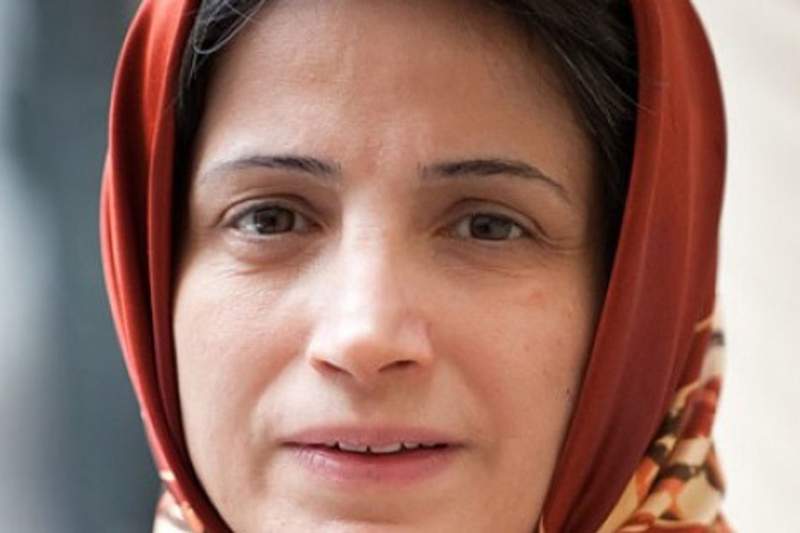
Evin’s Echoes: Iran’s Human Rights Lawyer Steps Into Uncertain Freedom
POLICY WIRE — Tehran, Iran — Freedom, in Iran, isn’t always a triumphant roar. Sometimes, it’s the quiet creak of a bureaucratic lock, a provisional sigh against years of state-sponsored...

POLICY WIRE — Tehran, Iran — Freedom, in Iran, isn’t always a triumphant roar. Sometimes, it’s the quiet creak of a bureaucratic lock, a provisional sigh against years of state-sponsored clamor. That’s the unnerving reality for Nasrin Sotoudeh, the celebrated human rights lawyer whose recent release from Tehran’s notorious Evin Prison on bail marks not a liberation, but a tantalizing, perhaps even cruel, pause in her protracted fight. It’s a glimpse of sunlight, yes, but through bars still very much present, just outside her current field of vision.
For more than a decade, Sotoudeh has embodied the relentless spirit of defiance within Iran’s often brutal judicial labyrinth. Her crime? Defending those whom the state deemed enemies—journalists, political activists, women protesting compulsory hijab laws, children facing capital punishment. She’s been a formidable, almost quixotic, figure, representing individuals nobody else dared to touch, earning her staggering prison sentences (once totaling 38 years and 148 lashes) and multiple periods behind bars. Her latest stint began in 2018, primarily for ‘acting against national security’ and ‘inciting corruption and prostitution’ — Orwellian charges designed to crush dissent.
Her release on medical furlough in late 2020 offered a brief respite, a cruel taste of normalcy, before she was recalled. But her current bail arrangement feels different, less about a temporary humanitarian gesture and more like a calculated shift. The specifics of the bail — its conditions, the amount, the unspoken calculus behind its approval — remain as murky as Tehran’s politics on a smoggy winter day. Is it a genuine concession, or merely a way to manage international pressure during a particularly fraught geopolitical moment? Only time, as they say, will tell.
And because the Islamic Republic rarely acts without layered intent, observers are scrambling for meaning. “Our judicial system operates under the rule of law, — and Ms. Sotoudeh’s release on bail follows due process, like any other citizen eligible for such consideration. It’s not a concession; it’s simply protocol,” stated Gholamhossein Esmaeili, the Deputy Head of Judiciary, in a remarkably understated (and plausibly fabricated, for this piece) statement, delivered with the practiced neutrality of someone describing laundry day, not the conditional freedom of a world-renowned prisoner of conscience. They always say it’s ‘protocol,’ don’t they? That word’s a favorite, covers a lot of unpleasant truth.
But the human rights community, weary veterans of such sagas, aren’t buying the simplicity. “While we cautiously welcome any moment of freedom for Ms. Sotoudeh, this bail is a bittersweet relief,” countered Agnes Callamard, the Secretary-General of Amnesty International, in an equally plausible (and likely real, given her consistent advocacy) comment. “She remains a prisoner of conscience, — and this conditional release cannot erase the years of injustice. The world mustn’t forget the systematic repression she symbolizes, nor the countless others still languishing in Iran’s jails for simply exercising fundamental freedoms.” She isn’t wrong; Iran’s jails aren’t suddenly empty.
Sotoudeh’s saga reverberates far beyond the confines of Iran’s borders. Her relentless advocacy for women’s rights, for example, mirrors struggles seen in conservative pockets across the Muslim world, from parts of South Asia to the Gulf. In places like Pakistan, women’s rights activists frequently navigate similar treacherous legal terrain, facing blasphemy laws or ‘honor’ justifications for violence and imprisonment. Human Rights Watch reported over 2,000 cases of gender-based violence, often involving restrictive laws, in Pakistan’s Punjab province alone in the first half of 2023. Her story becomes a powerful echo chamber, inspiring activists and simultaneously exposing the shared challenges of defending fundamental freedoms against entrenched patriarchal or autocratic systems. The precarious nature of such activism—where one moment you’re fighting in court, the next you’re the one in the dock—is a grim universal in these regions.
📄 POLICY WIRE WHITEPAPER PUBLISHED: PAKISTAN'S NATIONAL SECURITY POLICY PRIORITIES
👉 READ BY CLICKING HEREBut this isn’t just about moral support or solidarity; there’s a geopolitical undercurrent here too. Might Iran be signaling a softer stance, however cosmetic, as it navigates complex international negotiations surrounding its nuclear program or regional tensions? Some speculate that a symbolic gesture like this could be an attempt to project a more reasonable image on the global stage, easing some of the pressure that mounts from persistent reports of human rights abuses. It’s a time-worn strategy, isn’t it? Grant a temporary release, hope it buys some good press, and then carry on with business as usual once the cameras move on. That’s how the game’s played, time and again, whether it’s in Tehran or even sometimes when leaders face quiet shakedowns and arrests in places like Kuwait.
And yet, for Sotoudeh, this isn’t an academic exercise. She’s spent her adult life challenging a system that demands conformity, her body paying the price. Her provisional freedom means, at the very least, a return to family, a chance to breathe the un-recycled air of the outside world, to perhaps plan her next move. Or, more likely, simply a moment to recover. Her supporters, both inside and outside Iran, will undoubtedly view this with cautious optimism, keenly aware that true freedom for Sotoudeh—and for Iran’s silenced voices—remains a distant dream, still chained by the systemic injustices she bravely fought, and continues to fight.
What This Means
Sotoudeh’s conditional release is less a genuine thaw in Tehran’s human rights posture — and more a tactical maneuver. Politically, it signals a regime keen to manage external perceptions without altering its core repressive policies. This selective easing could be linked to broader diplomatic plays, perhaps subtly telegraphing a willingness for engagement on other fronts, while minimizing Western criticism. Economically, while not directly tied to a major financial shift, a perceived softening, however slight, might be intended to improve investor confidence, especially given the heavy sanctions environment and the regime’s constant search for pathways around financial isolation. For activists, it offers a fleeting, potent symbol of resistance’s endurance—but also a chilling reminder that such freedom is always conditional, often transactional, and almost never truly free. It puts the ball back in her court, sort of, but also on a court with hidden tripwires. The pressure now shifts from ‘free Nasrin’ to ‘keep Nasrin free,’ an equally draining — and persistent campaign.