

London’s Urban Pulse: Behind the Lines of a Strained Metropolis
POLICY WIRE — London, UK — The aroma of lukewarm coffee hung heavy in the pre-dawn air this morning, mingling with a distinctly metallic scent of anticipation. But it wasn’t the usual Monday...

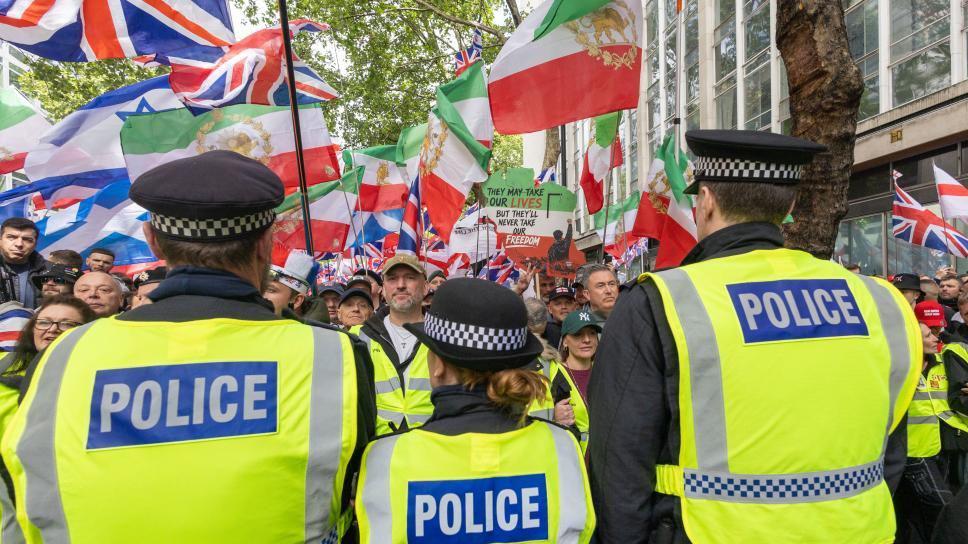
POLICY WIRE — London, UK — The aroma of lukewarm coffee hung heavy in the pre-dawn air this morning, mingling with a distinctly metallic scent of anticipation. But it wasn’t the usual Monday morning hustle beginning to stir; something more foundational was shifting across the sprawling British capital. Today, London was effectively bracing for impact, its ancient streets set to become a sprawling stage for public discontent, not just a thoroughfare. Police lines were already being drawn, silently, methodically, long before the first protest banner was unfurled.
It’s a peculiar tableau, isn’t it? One where the day-to-day rhythm of a global city – the rattling tubes, the early commutes, the hurried breakfasts – overlays the deeply unsettling prospect of thousands converging to voice grievances. Because they will, these thousands. And the authorities, always quick to project an image of measured control, weren’t leaving anything to chance. You see it in the sheer weight of uniforms hitting the pavements, the subtle blockade routes being planned, the public transport advisories that read like tactical dispatches.
Metropolitan Police Commander Melanie Saunders, her voice a study in practiced calm, summed it up for us this weekend: “Our duty is to facilitate peaceful protest, yes, but equally to ensure the safety of all Londoners and to prevent serious disruption. It’s a delicate balance; one we’re committed to upholding, even when resources are stretched quite thin, as they frequently are.” She wasn’t wrong. They’ve allocated upwards of 2,500 officers, an eyebrow-raising figure, to manage today’s gatherings across several key arteries, making this one of the larger security operations this year. The numbers, mind you, tell part of the story, but not the human strain.
The issues sparking this latest surge of public expression are, as ever, a patchwork of local angst and global heartbreak. You’ve got your cost-of-living stalwarts, your climate change activists, but it’s the international political friction, specifically related to ongoing events in the Middle East, that typically galvanizes the largest contingents. The sheer volume of people joining such demonstrations speaks to London’s diverse fabric, yes, but also to how deeply global conflicts reverberate through its local communities.
Consider the British-Pakistani community, for instance – a sizable — and influential demographic here. Many have family ties stretching back to the region; their engagement, their heartbreak over geopolitical complexities often manifest visibly in these streets. It’s not just a foreign policy abstraction; it’s intensely personal. The sheer energy you witness in these crowds – often disciplined, usually fervent – can seem disorienting to those just passing through. But it’s authentic. Dr. Imran Malik, a community organizer and speaker from East London, reflected this sentiment rather starkly: “People feel unseen, unheard by power brokers far away, and often by those much closer. Where else do we go to show the strength of our convictions? This city is our forum.”
But the practicalities of containing — or at least managing — this democratic fervor come with a hefty price tag. Last year alone, policing major public order events in London cost the taxpayer over £50 million, a figure released by the Mayor’s Office for Policing and Crime (MOPAC) that has done little to soothe budgetary woes. And we’re seeing similar outlays this time around, money that doesn’t just magically appear. It’s drawn from budgets that could otherwise mend potholes or fund social services – a constant, uncomfortable trade-off.
📄 POLICY WIRE WHITEPAPER PUBLISHED: PAKISTAN'S NATIONAL SECURITY POLICY PRIORITIES
👉 READ BY CLICKING HEREThis deployment isn’t just about controlling crowds; it’s a political performance, too. It signals strength, an unwavering hand in maintaining order, even as the government struggles with declining approval ratings and economic headwinds. Some say it’s an overreaction. Others claim it’s simply a necessary measure for a city accustomed to being a lightning rod for global issues. But what does it mean for a city when such large-scale security operations become, well, almost routine?
What This Means
The persistent need for thousands of officers to manage public dissent in London suggests a couple of rather prickly truths. First, it reflects a society grappling with significant internal — and external pressures. Citizens aren’t just registering displeasure; they’re demanding attention, often loudly, on issues that touch on their identities, beliefs, and economic well-being. It indicates a growing chasm between public sentiment — and policy implementation, or at least public perception of it. Second, these ongoing large-scale protests, while a democratic right, impose substantial economic and social costs.
Economically, the expense of policing, diverted emergency services, and the occasional disruption to business — whether actual or perceived — siphons funds and deters footfall. Think of how retail might suffer on days like these. But perhaps more interestingly, it also highlights the city’s role as a global conduit for political expression, a peculiar form of soft power. London’s ability to host such diverse, passionate movements, despite the obvious logistical nightmares, reinforces its international character, but also tests its resilience. It forces conversations that might otherwise remain suppressed, echoing far beyond the city’s boundaries into parliamentary chambers and even international fora, for better or worse. It’s a barometer, this regular surge of bodies onto the streets. It’s telling us something about the health of both global politics — and the body politic here at home. Sometimes it feels like the whole city is just one big pressure cooker, doesn’t it?