

Shadow Games: Israel’s Military Chief, Gulf Ties, and a Roaring Dilemma
POLICY WIRE — Dubai, UAE — The whispers grew louder than the drone strikes. Deep within the meticulously managed corridors of Gulf diplomacy, something audacious, almost heretical to a not-so-distant...

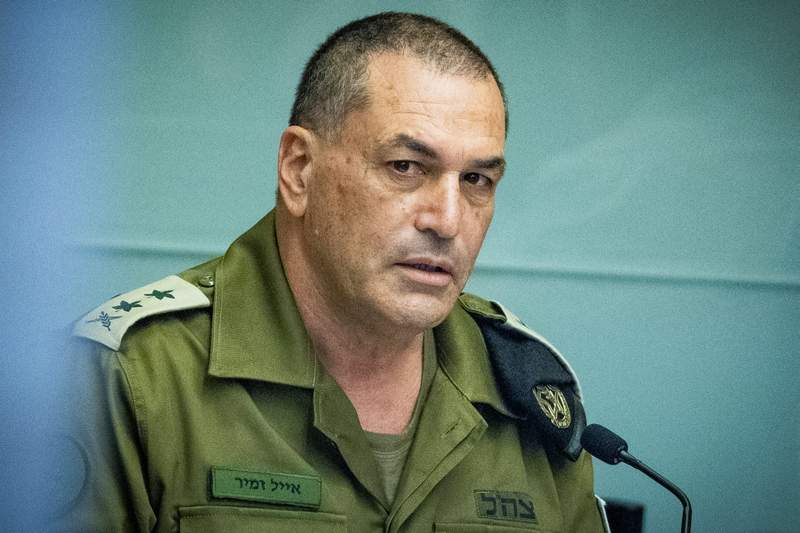
POLICY WIRE — Dubai, UAE — The whispers grew louder than the drone strikes. Deep within the meticulously managed corridors of Gulf diplomacy, something audacious, almost heretical to a not-so-distant past, took shape. It wasn’t the glitzy ribbon-cutting ceremony or the effusive statements of newfound fraternity that typically herald geopolitical shifts; this was far grittier. Sources close to the situation—sources who generally prefer shadows to spotlights—have confirmed that Lieutenant General Alon Zamir, the chief of staff for the Israeli Defense Forces (IDF), made an unannounced, operational visit to the United Arab Emirates, and he did so precisely when the controversial “Operation Roaring Lion” was hitting its most intense stride back home.
It’s the kind of information that sets the chattering classes alight, really. Because how do you reconcile open conflict with hushed high-level consultations? It seems yesterday’s enemies are perfectly capable of being today’s quiet strategists, doesn’t it? The visit, tucked away from the prying eyes of the press—and, one presumes, from certain corners of the Arab street—suggests a pragmatism in regional security arrangements that continues to confound conventional wisdom, much like watching a heavyweight boxer train with an arch-rival in secret. The operational codename itself, ‘Roaring Lion,’ feels a bit too on-the-nose now, doesn’t it? Because someone, clearly, was roaring something. Maybe it was a concession, or a warning.
General Zamir’s unheralded presence in Abu Dhabi, particularly during a period of heightened tension and military action, is less a bilateral nicety and more a raw data point in the evolving, frequently uncomfortable, equation of Middle East security. Because governments, no matter how ideologically opposed they seem on cable news, operate on self-interest. Always. And for both Israel and the UAE, perceived common threats, particularly from Tehran and its proxies, have become a far more potent catalyst for interaction than decades of historical enmity ever were for division.
“The geopolitical chessboard isn’t static; it’s a living, breathing entity,” General Zamir reportedly observed during one briefing, speaking only generally about regional defense priorities. “Our discussions with regional partners, both established and emerging, reflect a shared commitment to confronting destabilizing forces. Sometimes, that means engaging those with whom you’ve had… a complex past.” That’s as close to an admission you’ll get from someone in his position. He isn’t exactly sending out invitations to press conferences, you know?
This discreet rendezvous, far from the cameras, puts another strain on the narrative of absolute Arab solidarity that still holds sway in some quarters—especially in nations like Pakistan. Pakistan, with its historical anti-Israel stance, continues to grapple with its own relationship with the broader Muslim world, particularly as Saudi Arabia and other Gulf states inch closer to normalized ties. For a nation already navigating a complex regional identity and internal economic woes, these pragmatic shifts in Gulf foreign policy must sting, a bit like watching a close cousin embrace the school bully. How long can they afford to stick to principles that the economic heavyweights are quietly abandoning?
“Our sovereignty isn’t measured by who we refuse to speak to, but by our ability to protect our interests and secure our future in a volatile neighborhood,” a senior UAE foreign ministry official, Ahmed Al-Jaber, told us, referring to his nation’s broader diplomatic outreach strategy. “We engage where engagement serves our strategic aims, period. These aren’t personal conversations; they’re national imperatives.” It’s cold, hard strategy, plain — and simple. No room for sentiment when state survival’s on the line.
📄 POLICY WIRE WHITEPAPER PUBLISHED: PAKISTAN'S NATIONAL SECURITY POLICY PRIORITIES
👉 READ BY CLICKING HEREThe Abraham Accords, brokered under the previous US administration, famously normalized relations between Israel and the UAE, Bahrain, Sudan, and Morocco. But this isn’t just about economic pacts and direct flights—real geopolitical deals stir beneath grandstanding summits. The trade volume between Israel and the UAE, for example, soared to an estimated $2.5 billion in 2023, up from a mere $200 million in 2020, according to data from the Israel Central Bureau of Statistics. But behind the glint of burgeoning commerce, there’s a hard-nosed, military-intelligence undercurrent.
And it’s this security dimension that truly underpins Zamir’s visit. It tells us that for all the public condemnations and diplomatic maneuvering when hostilities flare, certain backchannels remain not just open, but active. It’s a relationship that thrives in the grey areas, isn’t it? A partnership perhaps even forged in the crucible of perceived shared threats, where public opinion is a luxury neither side can fully afford to antagonize, but where clandestine cooperation is a strategic necessity. It’s complicated, messy, — and deeply unromantic, which pretty much sums up modern geopolitics.
What This Means
General Zamir’s visit, particularly during a military operation, signifies a deepened level of trust and strategic alignment that goes far beyond the public face of the Abraham Accords. Politically, it grants both the UAE — and Israel a certain degree of leverage. For the UAE, it demonstrates their diplomatic agility and commitment to regional stability, projecting an image of a confident power broker rather than a passive observer. It’s about being in the room, setting the agenda—or at least influencing it—when big decisions are being made that impact their backyard. This sort of quiet alignment suggests that Gulf states are increasingly asserting strategic autonomy, charting their own course independent of traditional regional blocs.
Economically, this implicit security collaboration de-risks further investment — and cooperation between these nations. Knowing that high-level military channels exist for coordination and de-escalation, even amidst conflict, offers a layer of confidence for businesses looking to capitalize on new markets. But it’s also a tightrope walk for Gulf nations: balancing economic prosperity and security pragmatism with the sentiments of a broader Muslim populace, many of whom still view any form of cooperation with Israel as a betrayal. And that tension—that constant friction between the ideal and the practical—it’s gonna continue to make waves, especially as currents shift across wider geopolitical arenas. It just is.