


Shadow Play in the Chokepoint: Iran’s Modest Fleet Makes Waves in the Global Jugular
POLICY WIRE — Dubai, UAE — Every single day, supertankers — hulking behemoths of steel and crude oil — muscle their way through one of the planet’s most scrutinized waterways: the Strait of...

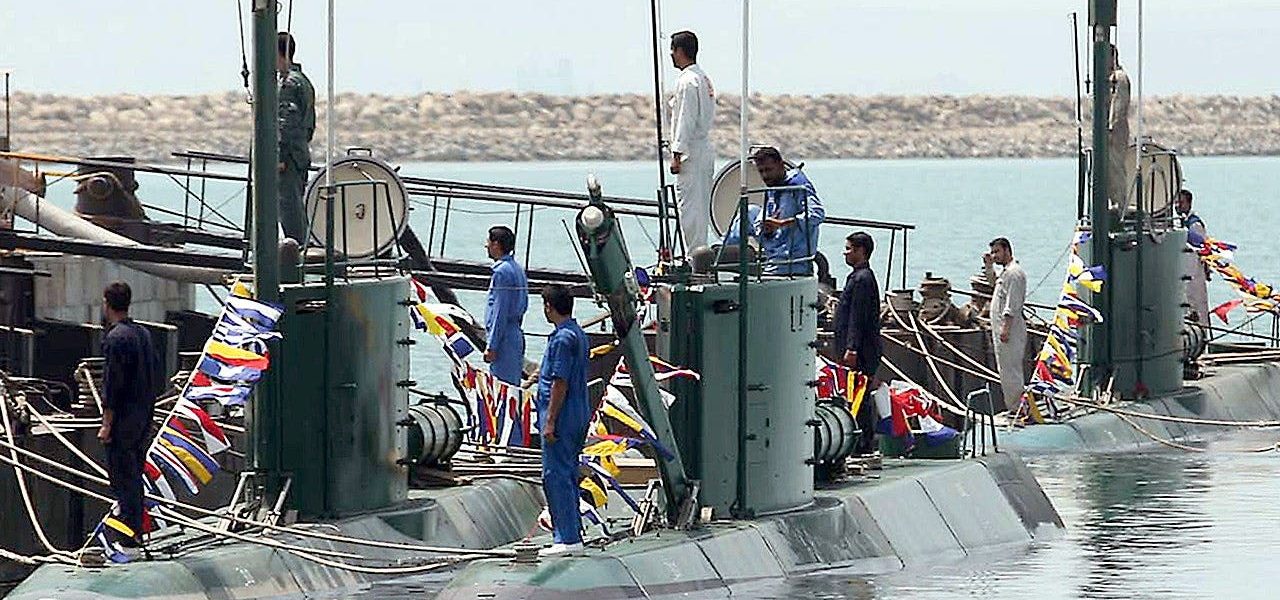
POLICY WIRE — Dubai, UAE — Every single day, supertankers — hulking behemoths of steel and crude oil — muscle their way through one of the planet’s most scrutinized waterways: the Strait of Hormuz. It’s less a thoroughfare and more a pulsating, oil-slicked artery, connecting the Persian Gulf’s vast energy reserves to the ravenous markets of the world. Then Iran, without much fanfare beyond their state media, declares they’ve deployed ‘small submarines’ to this chokepoint.
And just like that, the mundane yet colossal rhythm of global commerce takes a beat, even if it’s mostly a mental one. You see, the move, in the grand scheme of naval power projection, isn’t exactly sending shivers down the spines of the Pentagon. It’s a bit like someone bringing a particularly nasty squirt gun to a tank battle; it’ll certainly get your attention, might even irritate you, but it’s hardly going to turn the tide. But political messaging isn’t always about outright capability, is it? Often, it’s about making noise, making a point, even if that point is a thinly veiled ‘don’t mess with us’.
Iran isn’t boasting about some advanced, stealthy leviathans. We’re talking about midget submarines, ‘Ghadir’-class vessels mainly. They’re designed for coastal defense, minelaying, — and perhaps some special forces insertion. Their primary appeal? Being relatively cheap, easy to operate in shallow waters, and, crucially, not reliant on complex, Western-supplied parts. Brigadier General Alireza Tangsiri, commander of the IRGC Navy, minced no words on the symbolic weight. “Our defensive posture is unequivocal,” he declared recently, speaking from a more general vantage point on their capabilities. “These vessels aren’t just for show; they ensure no hostile power can underestimate our resolve to protect our maritime borders and, by extension, the economic lifelines of our people.” A classic assertion of self-reliance, even defiance, you might say.
But how ‘defensive’ are these subs, really, in such an internationally vital corridor? Not very, many analysts contend. Because while a tiny sub might be hard to spot in choppy waters, the Strait of Hormuz isn’t exactly a wide-open ocean. It’s a relatively narrow stretch, particularly at its thinnest point—less than 30 miles across. The sea traffic here is dense, — and maritime surveillance from myriad nations? Let’s just say it’s thorough. You’ve got everything from sophisticated airborne sensors to acoustic detection systems, not to mention a slew of surface combatants constantly monitoring the area.
“Let’s be clear, these are hardly ‘hunter-killers’,” scoffed Dr. Michael Eisenstadt, Director of the Military and Security Studies Program at The Washington Institute, in an interview I’d conducted a few years back about Iranian naval maneuvers, a sentiment that feels perfectly applicable here. “While a nuisance, their detectability in such a constrained, well-monitored waterway makes them less a strategic deterrent and more a performative declaration of defiance.” It’s hard to hide when everyone’s looking, especially when your hiding spot is also everyone else’s road. It’s like parking your bicycle in the middle of a freeway — and calling it a blockade.
And there’s the subtle irony: Iran’s insistence on projecting strength often exposes the actual limitations of its military hardware. The optics of ‘submarines in the Strait’ sound menacing on paper. But for seasoned observers, it reveals a nation leveraging perception over raw power. That’s not to say it’s entirely harmless. Anything that adds an unpredictable variable to an already volatile region is worth watching. These subs could, theoretically, be used for nuisance attacks, minelaying, or asymmetrical operations, escalating tensions unexpectedly. But the overall threat profile? Still relatively low.
📄 POLICY WIRE WHITEPAPER PUBLISHED: PAKISTAN'S NATIONAL SECURITY POLICY PRIORITIES
👉 READ BY CLICKING HEREThen consider Pakistan, a nation geographically distant yet intimately tied to the region’s stability. It relies heavily on oil imports from the Persian Gulf—a constant, unwavering flow of energy that underpins its fragile economy. Any serious disruption in Hormuz, any true hardening of the chokepoint, wouldn’t just spike global oil prices; it would throw Islamabad’s energy security into a complete tailspin. They’ve always navigated the tricky geopolitics of the Middle East with a delicate balance, avoiding overtly taking sides. Iran’s saber-rattling here means Pakistan’s diplomats have yet another layer of complexity to consider when discussing regional security and trade. It’s not just oil, but a lifeline.
What This Means
This deployment isn’t about sinking carriers; it’s about signaling. Politically, Tehran wants to project defiance against Western sanctions and perceived adversaries like Israel and the US. It’s a domestic message of strength to its own populace, showcasing continued sovereignty and technological ambition despite external pressures. And it serves as a mild warning to Gulf Arab states not to get too cozy with Iran’s enemies.
Economically, the impact is less about immediate disruption — and more about sustained jitters. Because even whispers of instability in the Strait of Hormuz can send ripples through global markets. Shipping insurance premiums for vessels traversing the Strait will likely creep up—it’s just a common-sense reaction to perceived, even if theatrical, increased risk. About 20% of the world’s total oil consumption and approximately 30% of all seaborne-traded crude oil pass through this waterway daily, according to the U.S. Energy Information Administration (EIA). That’s a staggering figure, and any action that even vaguely threatens that flow is immediately noted by traders and economists. Long-term, this constant state of low-grade tension may also influence investment decisions in regional energy projects, as firms weigh perceived political risk against potential returns. It’s all part of the broader Middle Eastern security environment, where political rhetoric and military posturing often intersect in confusing, unsettling ways.
This Iranian move then, isn’t about conquering the seas. It’s about carving out a space, however small, for its own narrative in an overwhelmingly dominant international maritime order. They don’t have a sophisticated fleet, but they’ve got conviction. And for Tehran, right now, that might be enough to keep the region — and the world — talking.