

The Cruise, the Contagion, and the Canary Islands: A Global Health Scramble
POLICY WIRE — Tenerife, Spain — The silence was arguably the most unsettling part. That, and the hazmat suits. You’d think the World Health Organization’s chief himself had just told everyone, quite...

POLICY WIRE — Tenerife, Spain — The silence was arguably the most unsettling part. That, and the hazmat suits. You’d think the World Health Organization’s chief himself had just told everyone, quite plainly, that this wasn’t the next big one. Yet, on the sun-baked docks of Granadilla in Tenerife, it was all antiseptic spray and grim-faced personnel swaddled head-to-toe in protective gear. Nobody was taking chances.
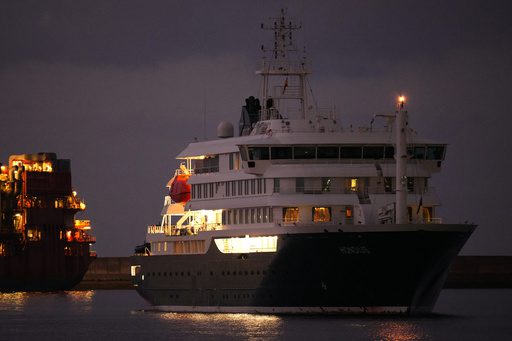
It was Sunday afternoon when the first flights, whisking passengers from the MV Hondius cruise ship, began their rapid dispersal across Europe. These weren’t your average holidaymakers with tales of picturesque sunsets; these were passengers from a vessel hit by hantavirus, disembarking into a world that, just a few short years ago, learned the hard way about containment. The Spanish, naturally, were first in line for repatriation, touching down in Madrid to military hospital quarantine.
Soon after, a French jet delivered its nervous cargo to Paris, where emergency vehicles lay in wait. But this wasn’t panic, the experts insisted. Perplexing, wasn’t it? The optics screamed danger, yet the official line was a whispered reassurance. But then, it’s always easier to say ‘don’t worry’ from a sterile podium than on a tarmac staring down a disinfectant fog.
Dr. Tedros Adhanom Ghebreyesus, WHO Director-General, wasn’t mincing words, not exactly. “We have been repeating the same answer many times,” he’d stated, a touch of weary exasperation in his tone. “This is not another COVID. And the risk to the public is low. So they shouldn’t be scared and they shouldn’t panic.” Try telling that to the teams spraying down suitcases—or what few items passengers were allowed to keep—with an abundance of caution usually reserved for alien pathogens.
The MV Hondius became an unwilling microcosm of global anxiety, drifting just off West Africa, holding passengers and crew of over two dozen nationalities. Planes from Canada, the Netherlands, — and eventually, the U.S., lined up for their turn. A plane to Turkey was also in the works, reflecting the ship’s truly international manifest. And it highlighted a point many in policy circles are quietly making: in an era of hyper-globalized travel, an outbreak on a single vessel can instantaneously activate an array of international health protocols and, perhaps more significantly, diplomatic maneuvers, testing the mettle of each nation’s ‘disease diplomacy.’
And so, as flight plans streamed across monitors, authorities worked with the chilling precision of a well-rehearsed emergency. Passengers could only take a small bag with essentials—cellphone, charger, documents. Everything else, they left behind to be disinfected, perhaps eventually incinerated. Five passengers who had previously disembarked were already confirmed infected with hantavirus. More sobering: the disease had claimed three lives since the larger outbreak. Not on the ship itself, they say, but part of the broader cluster that the cruise found itself tangled in.
The virus itself is a tricky beast, usually spread through rodent droppings. Not easily transmitted between humans, thankfully. But the Andes strain, the one identified in this instance, presents a nasty twist: rare human-to-human transmission is a possibility. And because of that possibility, countries were taking no chances, mandating observation and home quarantine for varying lengths. France, for instance, demanded 72 hours of hospitalization followed by 45 days at home. Nebraska awaited American passengers for specialized medical quarantine.
But the true absurdity of how far a few microbes can reach came into focus when British Army medics parachuted onto Tristan da Cunha—Britain’s remotest inhabited territory—to assist a suspected hantavirus patient who’d left the Hondius weeks prior. About 1,500 miles from the nearest populated landmass (that’s according to the Ministry of Defence, by the way), soldiers dropped in, armed with oxygen and medical gear, into a place usually only accessible by a six-day boat journey from Cape Town. It speaks volumes about the global reach of even a ‘low-risk’ contagion.
Because ultimately, when public health is on the line, ‘low risk’ often translates to ‘maximal precaution’—particularly in a world that’s been burnt once. Countries across the Muslim world, many with robust international travel for commerce and religious pilgrimage, would no doubt be watching such disembarkation protocols closely. Any incident, however contained, fuels the discussions around border health screenings and international coordination that have defined post-pandemic reality. It’s a complicated ballet of reassuring the masses while still treating every potential infection like it’s holding a live grenade.
Dr. Maria van Kerkhove, WHO’s top epidemiologist, framed it in stark policy terms. “We’re leaving this up to the countries themselves to actually develop their own policies,” she noted, acknowledging the varied national responses, “But our recommendations are very clear, and this is really a cautionary approach to make sure that we don’t have any opportunities for this virus to pass from others.” A cautionary tale, perhaps, wrapped in sterile plastic.
What This Means
The saga of the MV Hondius isn’t just about a cruise ship — and a scary-sounding virus. It’s a stark illustration of how contemporary global health security—and its associated diplomatic and logistical apparatus—has been utterly recalibrated post-pandemic. We’ve entered an era where ‘containment’ isn’t just a clinical term; it’s a frantic multinational operation, laden with political optics and substantial economic burdens.
While the WHO seeks to temper public anxiety, the overwhelming display of hazmat suits, military involvement, and immediate national quarantines projects a different message: prepare for the worst, even if you’re hoping for the best. This incident reveals a heightened readiness, certainly, but also the fragility of global supply chains (in terms of medical aid and evacuations) and the enduring inequalities in nations’ capacities to respond. Smaller, less wealthy nations might lack the air transport, the specialized medical facilities, or the diplomatic clout to manage such an exodus from afar. This reinforces the need for robust international cooperation — and shared resource pooling. The global north can’t merely repatriate its own and declare victory; the strength of the system is only as good as its weakest link.