


Italian Bureaucracy Scores Own Goal: Soccer Chaos Trumps Kickoff Clarity
POLICY WIRE — ROME, ITALY — For days, Italian football was adrift. Not on the field, mind you, where every pass and tackle usually dictates destiny, but in a peculiar administrative purgatory. Ten...

POLICY WIRE — ROME, ITALY — For days, Italian football was adrift. Not on the field, mind you, where every pass and tackle usually dictates destiny, but in a peculiar administrative purgatory. Ten clubs, battling for Europe, were left wondering exactly when they’d kick a ball. Their fates, their entire preparations for a matchday so close to the season’s end, were held hostage not by an injury crisis or a tactical stalemate, but by an arcane scheduling dispute that became a microcosm of Italian institutional chaos.
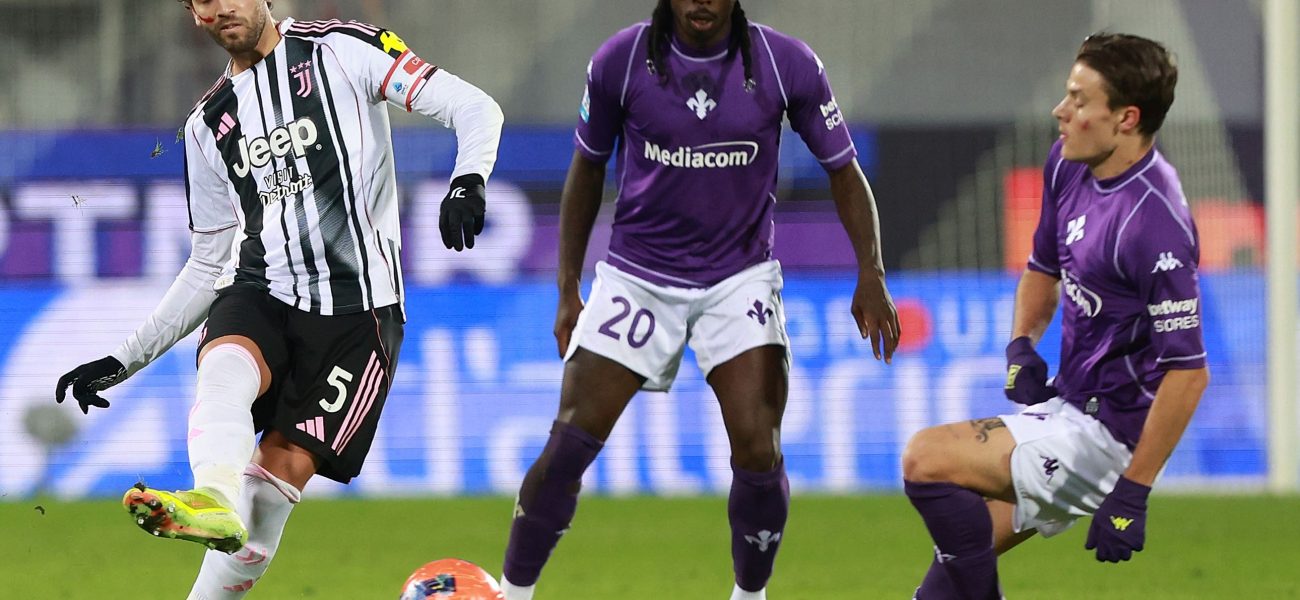
It started innocently enough, or so it seemed. Juventus, titans of the league—even if currently experiencing a rough patch—was set to host Fiorentina. Nothing too exotic, just another Sunday afternoon game. But then Rome intervened, not with political drama this time, but with tennis. The final of the Italian Open, a significant event featuring local hero Jannik Sinner, needed prime real estate and prime time, directly clashing with a critical Serie A match: the Rome Derby. And just like that, an entire league’s carefully constructed schedule got tossed into a blender, with managers like Luciano Spalletti left to shrug.
The solution, eventually, was to shift virtually half the Matchday 37 fixtures to one synchronous kickoff. Good for competitive integrity, right? Ensuring no one club gained an advantage by knowing rival results. But the prefect in Rome, whose office ultimately sanctions such public gatherings, had other ideas, or perhaps just a very busy calendar. The entire league, from Turin’s giants to smaller clubs vying for a last European gasp, found itself in a three-day bureaucratic vacuum.
“We can’t just play by ear a few days before a game of this magnitude. It’s disruptive. It’s disrespectful to the players and the fans who travel hundreds of kilometers,” vented a visibly exasperated Luciano Spalletti, Napoli’s manager, reportedly to local media when the confusion was at its height. “You’d think after all these years, there’d be a basic understanding of how a national league operates. Clearly not.” It was a rare, unguarded glimpse into the frustration simmering behind the professional veneer.
But the true gem of this bureaucratic bungle came, perhaps fittingly, not from football but from tennis. Angelo Binaghi, the straight-talking president of the Italian Tennis Association, laid it all out with a verbal hammer. “We’re not moving the tennis final because an idiot organized the soccer calendar with his feet.” He didn’t mince words. That quote, stark and unapologetic, rocketed through the Italian sporting landscape, embodying the frustration of ordinary fans and offering a brutal assessment of institutional incompetence.
It was a proper circus. Clubs, including Antonio Conte’s Napoli—who are currently holding down a respectable second place—had players ready for a Sunday lunch game, then perhaps a Sunday afternoon, then, who knew? They practiced, ate, — and slept not knowing their game time. Imagine that. This isn’t some Sunday league kickabout; it’s professional sport, a multi-million-euro industry with travel, security, broadcasting deals, and thousands of jobs at stake. And just for the record, this drama wasn’t unfolding over some minor league; we’re talking about Europe’s premier club competition, the Champions League, which currently sees only a paltry three points separating Napoli in second from Como down in sixth, according to Lega Serie A standings.
📄 POLICY WIRE WHITEPAPER PUBLISHED: PAKISTAN'S NATIONAL SECURITY POLICY PRIORITIES
👉 READ BY CLICKING HEREEventually, the decree came down: High noon. Juventus’s final home fixture would kick off at 12:00 CEST. Just a half-hour earlier than originally speculated. That’s it. For days of uncertainty, of managers tearing their hair out, of news alerts hitting social media like wildfire—a mere thirty minutes. It’s enough to make you chuckle, or perhaps despair, depending on your affiliation. And it’s a situation that would give any major administrative body pause.
What This Means
This episode, seemingly trivial in its outcome, holds some stark implications for sports governance and public perception, particularly within regions where sport is interwoven with national pride and often, unfortunately, bureaucratic bottlenecks. It shows a brittle system—a stark warning for leagues in burgeoning markets like Pakistan, where similar inter-institutional clashes or administrative inefficiencies can cripple national sporting bodies. Pakistan’s passion for cricket, for instance, often faces similar organizational hurdles, from pitch conditions to scheduling conflicts, highlighting how deeply bureaucratic inertia can affect something as universally loved as sport.
Because ultimately, these kinds of administrative fiascos don’t just inconvenience players or club officials; they erode public trust. They suggest that the governing bodies, entrusted with organizing these grand spectacles, are unable to manage even the most basic elements effectively. The economic implications are also noteworthy. Unexpected fixture changes can disrupt broadcast schedules, sponsorship agreements, and most importantly, fan travel and accommodation plans, incurring significant financial losses and reputational damage. In a globalized sporting economy, where Serie A wants to compete for eyeballs and sponsorship dollars with the Premier League or La Liga, these chaotic incidents are, simply put, bad for business.
It’s also a power play. A subtle flexing of muscle between institutions—the football league, the city’s prefect’s office, and even the tennis association. Who holds sway when calendars clash? In Italy, it seems, it’s rarely a clear answer. And when it comes to international reputation and attracting investment, a clear, well-oiled administrative machine speaks volumes about a nation’s broader efficiency. The chaos might be entertaining for an outsider, but for Italy’s football establishment, it’s just another unforced error.