


Berlin’s High Stakes Gamble: Germany Navigates Murky Hormuz Waters, Eyes Global Trade Lifelines
POLICY WIRE — Berlin, Germany — You know how some nations — for decades, mind you — have really preferred to just pay the bills, offer stern-faced statements from the sidelines, and let others get...

POLICY WIRE — Berlin, Germany — You know how some nations — for decades, mind you — have really preferred to just pay the bills, offer stern-faced statements from the sidelines, and let others get their hands dirty when the world’s maritime chokepoints start feeling a little… tight? Yeah. That was Germany. But not so much anymore. Or at least, they’re finally starting to admit they can’t stay off the pitch when the stakes involve the beating heart of global energy trade, a region perpetually simmering.
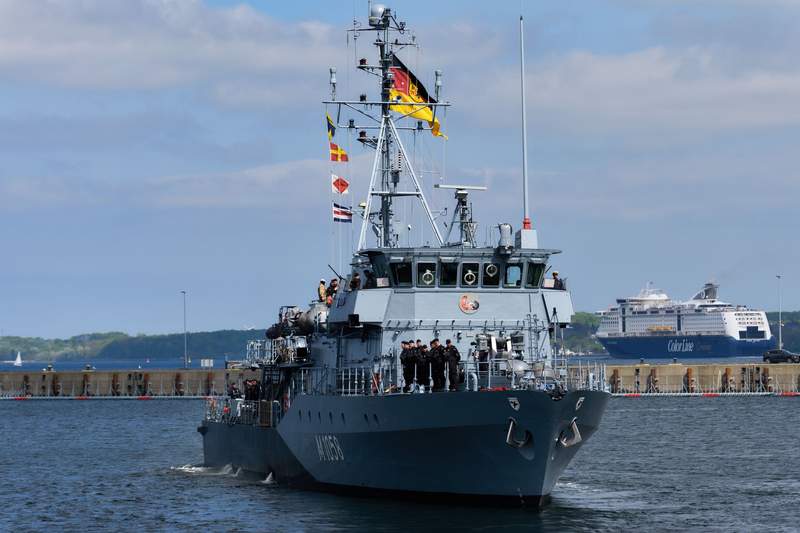
It’s not just a strategic repositioning; it’s a profound, if begrudging, re-evaluation of what a pacifist, export-driven powerhouse actually *does* when global commerce – its lifeblood, plain and simple – finds itself increasingly vulnerable. Germany’s recently expanded roster of assets potentially slated for a future European-led mission in the Strait of Hormuz isn’t just about showing solidarity. No, it’s far more fundamental than that. It’s about keeping the world, quite literally, moving.
The numbers don’t lie, they rarely do. Roughly one-fifth of the world’s total oil consumption, an astounding 20.7 million barrels per day according to 2018 figures from the U.S. Energy Information Administration (EIA), funnels right through the Strait of Hormuz. Think about that for a second. That’s a whole lot of economic output – and global stability – relying on one notoriously temperamental stretch of water. It’s a corridor that nations like Pakistan and India, with their soaring energy demands and fast-growing economies, watch with a hawkish intensity that we in the West often misunderstand. Stability there means steady fuel prices; instability, well, it’s a gut punch to development and consumer wallets across the Muslim world and beyond.
Defense Minister Boris Pistorius isn’t one for diplomatic fluff; he gets straight to it. “Our economic security isn’t some abstract concept,” he recently remarked to a select group of journalists, a subtle edge in his voice. “It’s about gas for our homes, oil for our factories, — and the free movement of goods that defines our prosperity. If we expect to benefit from a globalized world, then we don’t just get to sit back when its arteries are threatened. That’s not how responsibility works anymore.” And he’s got a point. You can’t be a global player — and a regional bystander simultaneously.
But the expansion of German contributions – the specifics of which are, as always, kept suitably opaque – reflects a growing frustration within European capitals. The continent’s leaders aren’t exactly thrilled by the geopolitical poker game playing out in the Gulf, particularly when Washington sometimes seems preoccupied elsewhere. That’s where Europe, or at least a significant part of it, feels compelled to step into a breach that’s becoming wider and wider. This isn’t just about stopping Iranian mischief, though that’s certainly part of the calculus. It’s about asserting European sovereignty over its own economic destiny.
📄 POLICY WIRE WHITEPAPER PUBLISHED: PAKISTAN'S NATIONAL SECURITY POLICY PRIORITIES
👉 READ BY CLICKING HERE“For too long, Germany has viewed its foreign policy through a lens of post-war atonement, an understandable but ultimately limiting perspective,” a veteran EU diplomat, speaking off the record but with distinct conviction, explained. “But the world has changed. They’ve woken up to the fact that their industrial might, companies like Volkswagen with their global footprints (and the intricate supply chains that support them), requires active protection, not just checkbook diplomacy. They’re playing catch-up, — and it won’t be easy.” He paused, a wry smile crossing his lips. “They’ll send ships eventually. It’s just the German way to deliberate every rivet first.”
Casual observers might think Germany’s moving fast. Anyone who’s watched Berlin’s ponderous decision-making on defense matters for the last two decades knows this is, by their standards, breakneck speed. It’s an almost imperceptible acceleration, but it signals a deeper transformation – a Germany no longer content to outsource its security entirely.
What This Means
This subtle shift by Berlin, pushing more military assets into play for Hormuz missions, carries significant geopolitical weight. Economically, it offers a tentative reassurance to jittery markets that Europe isn’t just idly watching disruptions brew. Expect a slight firming of global commodity prices, if only on sentiment. It also puts further pressure on other European powers, particularly France and the UK, to coordinate their own naval strategies in the region. Politically, it signals a deeper German commitment to international security responsibilities, a departure from its traditionally constrained military posture. This won’t happen overnight, but it marks an observable inflection point. Regionally, for countries in the Gulf — and across South Asia, it adds another player to a crowded security landscape. It complicates Iran’s calculus slightly, demonstrating broader international resolve, but don’t expect Tehran to abandon its brinkmanship. It means more Western eyes – and hardware – monitoring Iran’s maneuvers, making miscalculation a tad riskier, at least in theory. The region’s fragile stability, and its knock-on effects on nations like Pakistan whose own energy and trade routes often intersect with Gulf affairs, could either find a stronger buffer or simply more international jostling. Time, as always, will tell.