


Catherine’s Italian Charm Offensive: Royal PR Meets Geopolitical Undercurrents
POLICY WIRE — London/Rome — You don’t often find Europe’s established monarchies competing directly with Silicon Valley for screen time. But sometimes, an appearance—even a brief,...

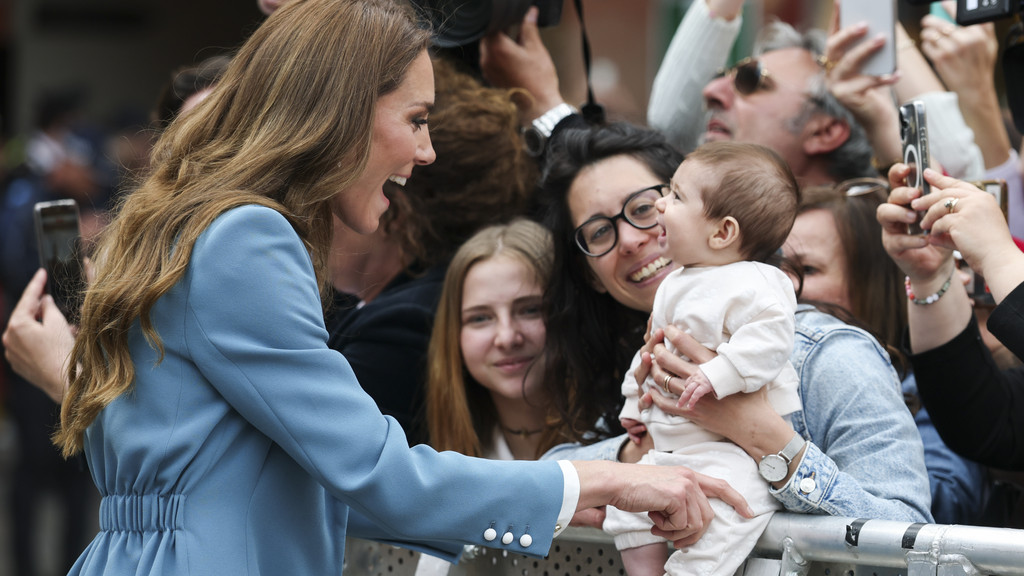
POLICY WIRE — London/Rome — You don’t often find Europe’s established monarchies competing directly with Silicon Valley for screen time. But sometimes, an appearance—even a brief, well-orchestrated one—becomes a full-blown production, designed for maximum political wattage. Take the Princess of Wales’s recent jaunt to Italy. It wasn’t just a royal visit, was it? No, this was a carefully calibrated re-entry onto the global stage, less about the princess herself and more about the delicate, ongoing dance of British soft power. Because in the anodyne world of statecraft, perception is policy, and smiles, however genuine, often carry diplomatic weight.
She’s been out of the spotlight for a bit, healing, recovering, as we’re told. So, her appearance in Italy felt almost staged in its effervescence. Cheerful crowds, naturally. And the picture-perfect shots of her interacting with local officials? That’s not happenstance; that’s the Foreign Office working overtime. This trip, ostensibly a return to duties after a spell of convalescence, doubled as a quiet reassertion of Britain’s cultural diplomacy—especially as the UK grapples with a post-Brexit identity that’s… still very much a work in progress.
“Her Royal Highness understands the unique symbolism she carries,” explained Sir Giles Prentiss, a former UK Ambassador to Rome, speaking exclusively to Policy Wire. “These engagements aren’t merely photo ops; they’re reaffirmations of shared European values and historical bonds that formal diplomacy alone simply can’t forge. It’s the human face of British influence, subtle yet profoundly effective.” And he’s right, isn’t he? They play a different game.
But let’s be frank, it’s also an elaborate, hugely expensive PR exercise. Britain’s a savvy operator; it knows its royals generate clicks, positive headlines, and that elusive ‘goodwill’ money can’t buy. Yet, that goodwill sometimes feels like it’s increasingly spent in certain quarters, especially outside of the West. While Kensington Palace touts its global reach, one might wonder how much these Italian accolades truly resonate in, say, Islamabad or Dhaka. Their focus is—and quite rightly should be—on different matters, like inflation, internal politics, or indeed, the complexities of their own regional influence, much like Delhi’s delicate dance when balancing international pressures.
“This ‘comeback tour’ narrative feels a bit quaint in 2024, frankly,” observed Dr. Zara Malik, a political analyst specializing in Commonwealth relations, offering a counter-perspective. “While domestically it’s a feel-good story, for nations like Pakistan, for instance, the Royal Family represents a very different, very colonial, historical legacy. They’re more concerned with present-day trade relationships or the price of cross-continental airfare than royal pleasantries in Florence. The utility of such soft power is demonstrably diminishing outside of traditional European or Commonwealth nations of settler descent.” She makes a brutal, but salient, point. These days, influence is rarely just inherited.
📄 POLICY WIRE WHITEPAPER PUBLISHED: PAKISTAN'S NATIONAL SECURITY POLICY PRIORITIES
👉 READ BY CLICKING HEREFor the UK economy, royal events do offer tangible benefits. For instance, royal visits, though not specifically quantified for this Italy trip, typically boost local tourism significantly; one analysis by Brand Finance in 2017 estimated the Royal Family’s contribution to the UK economy through tourism, media, and trade at around £1.7 billion annually. That’s real money, don’t forget it.
What This Means
This Italian sojourn, whether termed a ‘comeback’ or just another day at the office for a working royal, isn’t simply about Catherine smiling for the cameras. It’s a finely tuned exercise in post-imperial statecraft. For Britain, maintaining—or rebuilding—relationships in Europe after its EU departure is more important than ever. Royal tours provide a low-stakes, high-impact method to achieve this, circumventing much of the political baggage often associated with government ministers.
The stakes are deceptively high. The monarchy, for all its pomp — and pageantry, remains a potent, if archaic, symbol of the British brand. In an increasingly fragmented geopolitical landscape, where influence is fluid and alliances shift with startling speed, the soft power exerted by a globally recognized, widely-photographed royal has its own distinct, quiet currency. It smooths rough edges. It signals stability, however superficially. And yes, it brings tourists in. The message isn’t always overt; it’s subtle, it’s understated, but it’s absolutely there: Britain is still open for business, for friendship, for influence. Even if, for some, that influence feels like an echo from a bygone era.