


Delhi’s Delicate Dance: Iran’s Anti-US Rhetoric Jolts BRICS Summit, Tests India’s Tightrope
POLICY WIRE — New Delhi, India — The jasmine-scented air hanging heavy over Delhi’s diplomatic district usually carries whispers of strategic partnerships, perhaps the low hum of deals being...

POLICY WIRE — New Delhi, India — The jasmine-scented air hanging heavy over Delhi’s diplomatic district usually carries whispers of strategic partnerships, perhaps the low hum of deals being quietly brokered. Not this time. Instead, the upcoming BRICS foreign ministers’ pow-wow feels more like a hastily assembled amphitheater for a rather direct geopolitical boxing match—one where the host, India, would much prefer to be selling popcorn from the cheap seats.
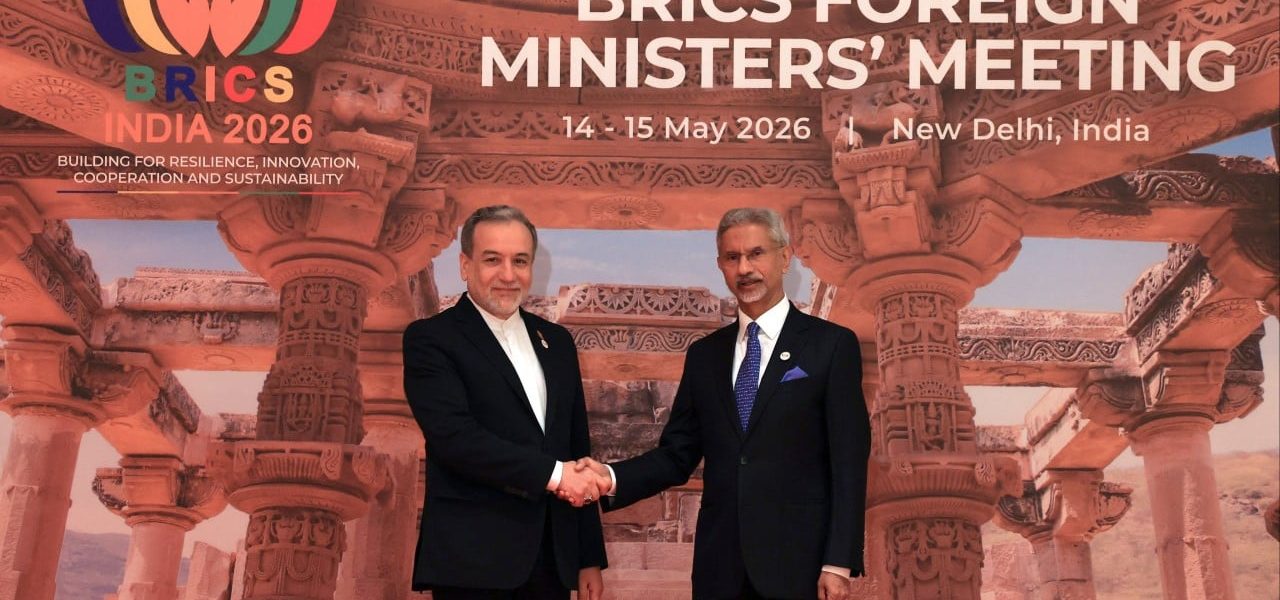
It’s an awkward show, this. India, currently holding the BRICS chairmanship, finds itself stage managing a gathering that features Iran’s top diplomat, Hossein Amir-Abdollahian, fresh off the geopolitical battlefield. He’s here, everyone knows it, to rally what Tehran likes to call a “front against American hegemony.” Think of it: a country that spends considerable political capital trying to deepen its strategic ties with Washington, now hosting an unvarnished broadside against the very same ally. You don’t have to be a seasoned Kremlinologist to spot the profound irony, or the profound discomfort.
Because, really, this isn’t just about diplomatic niceties; it’s about hard economic — and security calculations. India’s External Affairs Minister, S. Jaishankar, always adept at diplomatic sleight of hand, offered a familiar refrain. “India champions multipolarity, not partisanship,” he’d remarked just days prior in a separate context. “Our commitment is to dialogue, not dictated narratives.” A classic Indian dodge, but can it hold up against such a direct challenge?
The expanded BRICS bloc, now including Iran and the United Arab Emirates, amongst others, was supposed to be a triumph for the Global South, a counterbalance to G7 dominance. Instead, it often feels more like a collection of desperate allies and opportunistic partners, all with their own axes to grind. This isn’t a unified front. It’s a bazaar, teeming with conflicting interests—some of them violently opposed.
And then there’s Iran, walking right into Delhi with its well-worn playbook. “The West’s era of unilateral dominance, particularly Washington’s, is crumbling,” declared Iranian Foreign Minister Hossein Amir-Abdollahian in a press briefing from Tehran earlier this week, setting the stage. “Nations seeking true sovereignty, economic justice, and a genuinely multipolar world won’t be silenced by threats or sanctions. This gathering in Delhi isn’t just a meeting; it’s a declaration.” There’s no subtle language here. Tehran isn’t shy about its motivations.
But the expansion itself presents a logistical nightmare. The UAE and Iran, for instance, are rarely on the same page regarding regional power plays, even if both resent Western interference in various forms. Then you’ve got Russia’s Sergey Lavrov—a man who doesn’t do subtlety—also in attendance. India’s delicate balance of engaging with Moscow and Tehran, while not overtly alienating Washington and its European partners, is perpetually on the brink. This summit? It’s applying the pressure like a vise.
📄 POLICY WIRE WHITEPAPER PUBLISHED: PAKISTAN'S NATIONAL SECURITY POLICY PRIORITIES
👉 READ BY CLICKING HEREThe South Asian angle? Pakistan, Delhi’s perennial shadow, watches these developments closely. An emboldened Iran within BRICS, pushing an anti-Western narrative, indirectly bolsters a non-Western bloc where Islamabad, often aligning with China, might see its own strategic leverage increase. The optics of India hosting such a meeting—facilitating a platform for Tehran’s grievances—won’t be lost on Washington. Or Riyadh, for that matter, a powerful player in the Muslim world, usually aligned against Iran.
The numbers don’t lie, either. The U.N. Conference on Trade and Development (UNCTAD) reported last year that sanctions-hit Iran saw its overall foreign trade decrease by 11% in 2022 compared to the previous year, despite efforts to pivot towards Eastern partners. You don’t have to be a genius to figure out why they’re so eager for new economic lifelines, new alliances—any port in a storm, frankly.
What This Means
This BRICS meeting in New Delhi isn’t just another diplomatic calendar filler; it’s a telling snapshot of a rapidly fracturing global order. For India, it’s a tightrope walk of astonishing complexity. Economically, Delhi craves stable trade relations with everyone from Washington to Tehran, desperately needing cheap oil from the latter and sophisticated technology and investment from the former. But hosting Iran’s pointed rhetoric risks raising uncomfortable questions in Western capitals about where India’s true allegiances lie. It won’t break anything immediately—India’s strategic autonomy is pretty well-established—but it certainly adds friction. Politically, this whole episode highlights the inherent fragility of the expanded BRICS. It’s a bloc defined more by what it’s against (Western dominance) than what it’s truly for, struggling to forge common economic or political platforms beyond mere grievance. Can it become a credible alternative to existing world powers if its internal squabbles are constantly on display? The answer, at least for now, remains an emphatic maybe, tilting towards no.
For players like Pakistan and other states in the Muslim world, the development signals an increasingly fractured diplomatic landscape where traditional alignments are up for grabs. Regional power dynamics shift. Delhi, with its hosting duties, has just solidified its image, for better or worse, as a power that won’t pick a side, but will allow all sides to state their case, even if it sets off tremors on the international stage. But it’s messy. Very messy. This particular dance isn’t ending any time soon. For a deeper look at the interplay of global economics and shifting geopolitical alliances, check out how Jakarta’s Green Dreams Meet Beijing’s Investment Jitters, or perhaps the story of Messi’s MLS Mastery and the Unseen Diplomatic Play—because often, the most important negotiations happen off the field, or away from the formal conference table.