


Australia’s ‘Ghost Citizenship’ Policy Provokes National Soul-Searching
POLICY WIRE — Canberra, Australia — The ground under an Australian passport holder isn’t as solid as it once felt. Not when a government agency, armed with flimsy legal pretexts, decides you...

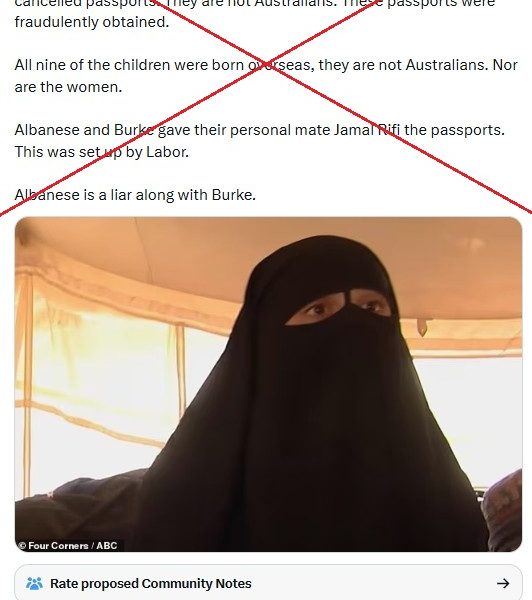
POLICY WIRE — Canberra, Australia — The ground under an Australian passport holder isn’t as solid as it once felt. Not when a government agency, armed with flimsy legal pretexts, decides you might have a spare citizenship tucked away somewhere — a phantom birthright, conjured to justify revocation. This bureaucratic sleight-of-hand, largely aimed at women with perceived links to the Islamic State group, hasn’t just stirred public anger; it’s pulled at the very threads of Australia’s national identity, forcing a grim inventory of who belongs and why.
It’s a peculiar brand of legal gymnastics. Canberra, facing the unenviable task of managing citizens who left to join a designated terror outfit, leaned heavily into powers allowing the revocation of Australian citizenship if a person also held (or was deemed eligible for) citizenship elsewhere. The idea? Good riddance, you’re someone else’s problem. But the practical application has been less than clean, frequently resting on dubious assessments of an individual’s entitlement to a second country’s nationality — nations like Pakistan or Egypt, countries these women sometimes have no actual connection to beyond a grandparent’s birth certificate. That’s the rub, isn’t it?
The initial premise, rooted in national security and an understandable desire to project strength, quickly curdled into something far more troubling. Critics point to the arbitrary nature of identifying who counts as having ‘dual citizenship,’ often ignoring established legal protocols of other sovereign nations. Many targeted individuals, trapped in displaced persons camps in northern Syria, possess no legal documents from these alleged ‘other’ countries. Their situations are complex. And frankly, the optics are just bad.
Attorney-General Mark Dreyfus isn’t about to give the process an easy ride. He’s been quoted saying, and I’m paraphrasing a well-known stance, that “any action concerning citizenship revocation must absolutely uphold the rule of law. It’s not a decision to be made lightly, — and it demands verifiable evidence, not just assumption. The national interest is served by upholding our legal frameworks, not by undermining them through shortcuts.” You see, he understands the nuance, but others—well, not so much.
Yet, the political instinct to appear tough persists. Claire O’Neil, Minister for Home Affairs, previously articulated a position many in government hold dear: “Our government’s absolute priority is the safety and security of Australians. When individuals actively engage with and support terrorist organisations that threaten our nation, we will use every legal tool at our disposal to protect our community. This isn’t about denying due process; it’s about holding people accountable for their choices.” It’s a tough line to walk, between legal integrity and public demand for retribution.
The numbers aren’t huge, but the implications sure are. Government figures, widely reported, suggest that since 2015, approximately 17 individuals have had their Australian citizenship stripped under these specific counter-terrorism provisions. Each case represents a human being, a family, — and a legal challenge. But more importantly, it casts a long shadow over Australian foreign policy.
📄 POLICY WIRE WHITEPAPER PUBLISHED: PAKISTAN'S NATIONAL SECURITY POLICY PRIORITIES
👉 READ BY CLICKING HEREConsider the Pakistan angle. The Australian government might unilaterally declare an individual has ‘Pakistani citizenship’ based on an ancestor, even if Pakistan doesn’t recognize that claim without active application or registration. This isn’t just bureaucratic sloppiness; it’s a diplomatic hand grenade. It implicitly attempts to outsource Australia’s national security problem, often to nations that haven’t been consulted and may very well reject the premise. Imagine Pakistan suddenly being expected to accept individuals they don’t even consider their citizens, purely because Canberra needs a convenient out. It fosters resentment, fueling perceptions in the broader Muslim world that Western nations are keen to shed problematic citizens who happen to be Muslim, shifting responsibility onto countries in the global South.
Because ultimately, this controversy isn’t just about the fate of a few women in Syrian camps; it’s a stark revelation of the deep discomfort Australians feel when confronting the complexities of modern citizenship, global terrorism, and their own sense of justice. It’s a question of legal ethics, human rights, — and what kind of nation Australia truly aims to be on the world stage.
What This Means
The fallout from this ‘ghost citizenship’ debacle will echo through Canberra’s corridors for years, I’d wager. Politically, it signals a deeper rift within the government itself—between pragmatists advocating for strict adherence to international and domestic law, and those driven by a more hawkish security agenda, responding to often simplistic public demands for retribution. Economically, while not directly impactful on Australia’s balance sheet, the controversy erodes soft power. It chips away at Australia’s reputation as a fair, rules-based actor, making diplomatic negotiations in sensitive regions — particularly those in South Asia or the Middle East — perhaps a touch harder. When a country tries to wash its hands of its own citizens, others notice. This whole charade — this legal gymnastics — doesn’t make Australia safer; it arguably complicates future counter-terrorism efforts and weakens international trust, particularly with nations whose citizens or ethnic groups are implicitly targeted. It’s a misstep, one born from anxiety, that carries consequences far beyond its immediate scope. Just like FIFA’s calculated gambles often backfire, Australia’s moves here risk much more than a lost game; they risk losing a bit of its soul.