


Dodgers’ Prospect Carousel: River Ryan’s Return Signals Deep Bench Strategy Amidst Fragile Roster
POLICY WIRE — Los Angeles, CA — The quiet thud of a fastball hitting leather on a Friday night in Albuquerque won’t register on most national newsfeeds. But for the behemoth Los Angeles...

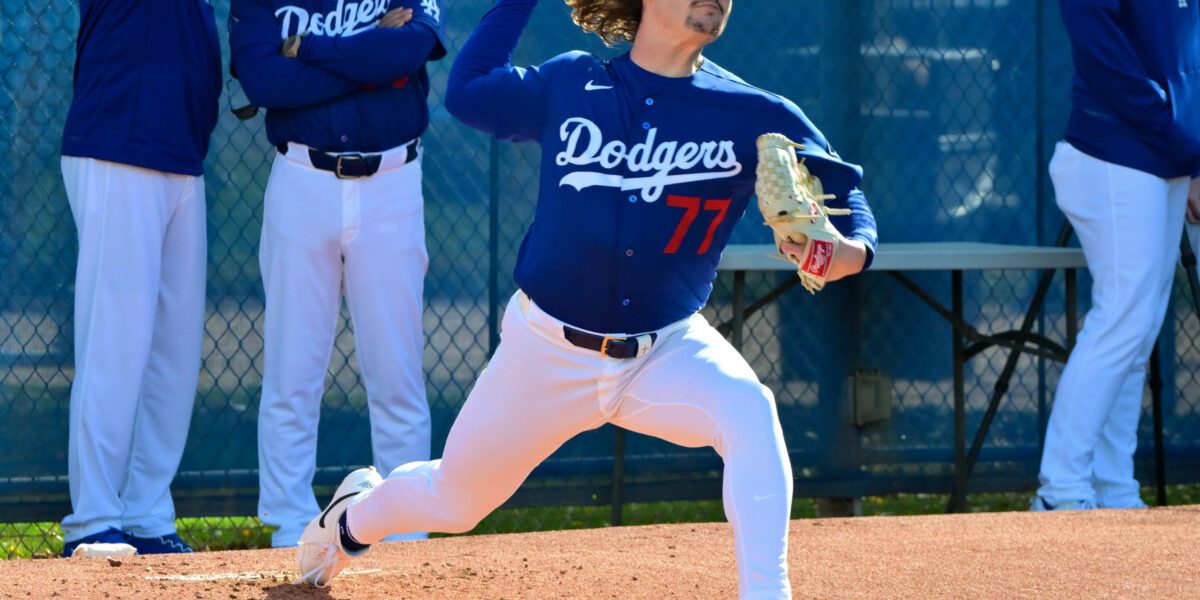
POLICY WIRE — Los Angeles, CA — The quiet thud of a fastball hitting leather on a Friday night in Albuquerque won’t register on most national newsfeeds. But for the behemoth Los Angeles Dodgers, it’s another careful turn of the gears in their high-stakes player development machine. River Ryan, a pitching prospect whose career has, so far, been a study in interrupted momentum, is scheduled to step back onto the mound this week. This isn’t just about a kid throwing a baseball; it’s a testament to the brutal, economic calculus underpinning professional sports.
After a hamstring injury sidelined him for over a month—a period feeling much longer when you’re scraping for innings in Oklahoma City—Ryan returns. Before this latest setback, he’d missed all of 2025 recovering from Tommy John surgery, a stark reminder of the physical fragility inherent in modern pitching. This minor league re-debut for the Dodgers’ Triple-A affiliate, the Oklahoma City Comets, marks not an end to his struggles, but rather a hopeful, if guarded, new chapter in a long, often thankless, climb.
It’s an assembly line, this business of producing future stars, especially pitchers. They’re often seen as investments, — and frankly, risky ones. Every injured arm, every rehabbing shoulder, costs money—and lots of it. “Player development ain’t a charity,” one long-serving Dodgers scout, who requested anonymity to speak candidly about organizational philosophies, told Policy Wire. “It’s an assembly line. Every prospect’s a line item on a balance sheet, and River, he’s just gotta prove his ROI, return on investment, same as anyone. Injuries just hike the carrying cost.”
Ryan did show flashes of that ROI in 2024, logging an impressive 1.33 ERA over 20.1 innings across four starts with the big league club, according to team statistical records. That’s a tantalizing glimpse, a promissory note for future dividends. But then the hamstring flared. And before that, the elbow. Baseball, you see, isn’t always kind to its gladiators. They invest years, — and teams invest millions, in the hope of that rare diamond emerging.
This return isn’t just about Ryan’s personal journey. It also speaks to the precariousness within the Dodgers’ big league rotation. Injuries to established arms like Tyler Glasnow, inconsistent performances from others, and the general grinding wear-and-tear of a 162-game season mean the call-up pipeline has to flow, constantly. Even with generational talents like Shohei Ohtani and Yoshinobu Yamamoto at the top, the bullpen, the taxi squad, and the minor league affiliates are always on standby. Dave Roberts, the Dodgers’ manager, didn’t mince words about managing Ryan’s future workload. “You look at the history of guys that have had those types of injuries to think he’s going to take down 30 starts is unrealistic,” Roberts observed, dampening any overly optimistic projections for a full-time, immediate return to the bigs.
It’s a stark contrast to how athletes are developed—and monetized—in many parts of the world, say, across South Asia, where sporting infrastructure is often decentralized or even non-existent for niche sports like baseball. There, athletic prowess often exists in a raw, unrefined state, far from the sophisticated medical and performance science empires that govern MLB player pathways. Major League Baseball, for all its immense financial might, is perpetually casting a wider net for talent, including attempts to build academies in regions less traditionally associated with the sport, occasionally encountering local policy challenges and cultural resistances.
📄 POLICY WIRE WHITEPAPER PUBLISHED: PAKISTAN'S NATIONAL SECURITY POLICY PRIORITIES
👉 READ BY CLICKING HEREBut back in the States, for players like Ryan, the minor league circuit remains a grueling, existential proving ground. His unimpressive 5.14 ERA over seven innings across two starts this season for Oklahoma City—likely exacerbated by the underlying hamstring issue—serves as a brutal performance metric. It’s a commercial enterprise, really, all of it, disguised by uniforms — and stadium lights.
What This Means
Ryan’s return isn’t just good news for him; it’s a strategic chess move for the Dodgers, an organization built on managing risk and maximizing player value. The team’s robust development system, featuring high-upside prospects often hampered by injury, reflects a larger economic model in modern professional sports: invest broadly, diversify assets, and pray for healthy returns. Should Ryan return to form, he provides valuable, cost-controlled depth—a fiscal imperative given the multi-million dollar contracts at the top of the roster. But if not? Well, then he’s another write-off, another promising investment that didn’t pan out. And because players are humans, not commodities, these frequent physical setbacks can ripple beyond individual careers, impacting a team’s financial forecasts and fan confidence—a situation that plagues many organizations grappling with persistent underperformance and fiscal strain. It illustrates the inherent fragility in sports business; one wrong pitch, one bad landing, can unravel months of strategic planning and millions in capital. The global hunt for talent also intensifies competition, impacting everything from signing bonuses to local economic ripple effects as cities vie for minor league affiliates—sometimes feeling like a paradox in small communities balancing dreams with dollars. This relentless cycle of investment, injury, and hoped-for triumph is, in many ways, the unglamorous core of how elite athletic enterprises manage their portfolios.