


Drone Democracy: How Ukraine’s FPV Fury Spurs Israel’s Shifting Alliances
POLICY WIRE — WASHINGTON, D.C. — The quiet whir of a miniature propeller, followed by an explosion that rips through a multi-million-dollar tank—it’s become the soundtrack of...

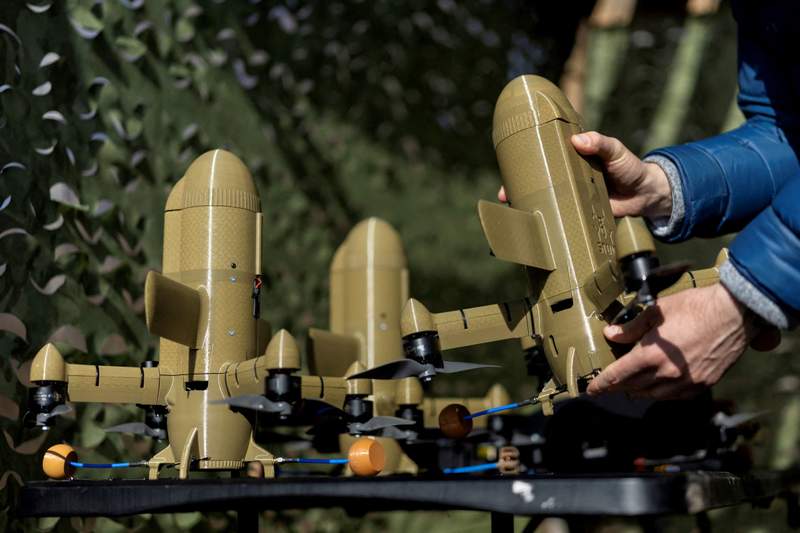
POLICY WIRE — WASHINGTON, D.C. — The quiet whir of a miniature propeller, followed by an explosion that rips through a multi-million-dollar tank—it’s become the soundtrack of modern war. Nobody’s talking about grand strategic maneuvers anymore. No, they’re muttering about sub-$1,000 drones, packed with explosives, piloted by twitchy youngsters from hundreds of meters away. It’s the ultimate democratizer of combat, and it’s sending shivers down the spines of military strategists from Kyiv to Qalqilya.
Because while the world watches the harrowing fight in Eastern Europe, a similar, unsettling pattern emerges in the Levant. Ukraine isn’t just fending off a larger foe; it’s showcasing a gritty, distributed form of warfare, turning commercial tech into deadly armaments. And Israel, locked in its own relentless skirmishes, can’t help but take notes. That’s why we’re starting to hear whispers — not of friendship, but of necessity — a possible tacit understanding, or even outright cooperation, born from the urgent need to understand, counter, and perhaps weaponize, the very drones redefining conflict.
It’s not about idealism; it’s cold, hard pragmatism. What Moscow perfected — using these cheap, suicidal eyes in the sky — Kyiv has weaponized on an unprecedented scale, transforming the battlefield. A typical FPV drone costs under $1,000 to assemble, according to open-source defense analyses, starkly contrasting with the millions required for the armored vehicles or sophisticated artillery pieces they can cripple. This grotesque imbalance forces established powers to reassess everything, from infantry tactics to supply chains.
“We’ve learned brutal lessons in real-time,” acknowledged Oleksandr Symonenko, a senior defense adviser in Kyiv, in a recent online briefing. “These aren’t just tools; they’re extensions of the soldier, cheap, expendable, — and relentlessly effective. We need every possible advantage against a much larger aggressor, and that means pushing boundaries, embracing whatever works.” And this, precisely, is where Jerusalem’s eyes perk up. Israel’s security establishment faces an increasingly sophisticated array of airborne threats, not just from state actors but from non-state groups like Hezbollah and Hamas, all eager to mimic Russia’s and Ukraine’s low-cost, high-impact strategies.
The parallels are stark, frankly. Both nations operate in hostile environments, routinely challenged by asymmetrical threats. But they’ve always existed in distinct geopolitical spheres, Israel maintaining a delicate — some would say cynical — neutrality regarding the Ukraine conflict to preserve its freedom of action against Iran in Syria. But principles often bend under the weight of shared existential threats. “Our enemies are watching. They’re adapting faster than we’re,” an anonymous senior Israeli defense official confided to Policy Wire recently. “The battlefield dynamics in Ukraine aren’t an academic exercise for us. They’re a preview of coming attractions on our own borders. Anyone with effective counter-measures, or innovative offensive applications, we need to talk to them. And yes, that includes Ukraine, regardless of past postures.”
📄 POLICY WIRE WHITEPAPER PUBLISHED: PAKISTAN'S NATIONAL SECURITY POLICY PRIORITIES
👉 READ BY CLICKING HEREThis is where the broader implications stretch across the global south — and indeed, the Muslim world. Iran, a key proliferator of drone technology, has for years exported its Shahed drones and associated expertise to proxies across the Middle East, from Yemen’s Houthis to Hezbollah in Lebanon. But FPV technology isn’t just about factory-produced Shaheds; it’s about localized, grassroots innovation — a cottage industry of death. Because when simple, off-the-shelf components can deliver decisive blows, it lowers the entry barrier for groups from Baloch separatists operating on the Afghanistan-Pakistan border to various factions in Somalia, destabilizing already fragile regions and challenging Pakistan’s own internal security calculus. These readily available drones — capable of surveillance or attack — are a menace that ignores international borders and conventional military might. They force nations like Pakistan, too, to grapple with adapting to this ubiquitous threat, facing down insurgencies often equipped by such readily accessible and evolving technologies.
What This Means
The FPV drone — cheap, deadly, ubiquitous — isn’t merely a new weapon; it’s a paradigm shift. Its rise forces a complete re-evaluation of military doctrines, procurement strategies, — and even defense budgets. Politically, this signals a potential, albeit cautious, re-alignment of security interests. If shared threats are potent enough, they can indeed overcome historical diplomatic distance. Israel’s historical reticence to overtly support Ukraine militarily stemmed from complex calculations involving Russia’s presence in Syria and maintaining backchannels. But with its northern border bleeding from continuous attacks, and Iranian-backed groups — many of whom are becoming increasingly adept at drone warfare — getting bolder, pragmatic necessity often trumps established diplomatic niceties.
Economically, this propels an arms race in a very specific niche: counter-drone technologies (C-UAS). We’re talking electronic warfare, specialized sensors, interceptor drones, — and sophisticated AI-driven defense systems. Expect a boom in this sector, with smaller, agile tech firms often outpacing lumbering defense giants. But the challenge remains immense: how do you stop a swarm of $500 drones from hitting its target? This particular tango between two historically unaligned nations isn’t just about exchanging tips on avoiding incoming rockets. It’s about adapting, or potentially dying — a raw lesson from a cruel conflict, shaping the security landscapes far beyond the steppes of Ukraine and the deserts of Judea. And for nations facing similar dilemmas, like Pakistan, the imperative to learn — and adapt becomes acutely pronounced.