


South Asia’s Dry Diplomacy: How Water Woes Fuel Regional Friction Amid Scorching Forecasts
POLICY WIRE — Islamabad, Pakistan — The parched earth cracks, reflecting an unrelenting sun. Fields lie fallow, reservoirs yawn empty, and city dwellers—they’re facing another summer defined by...

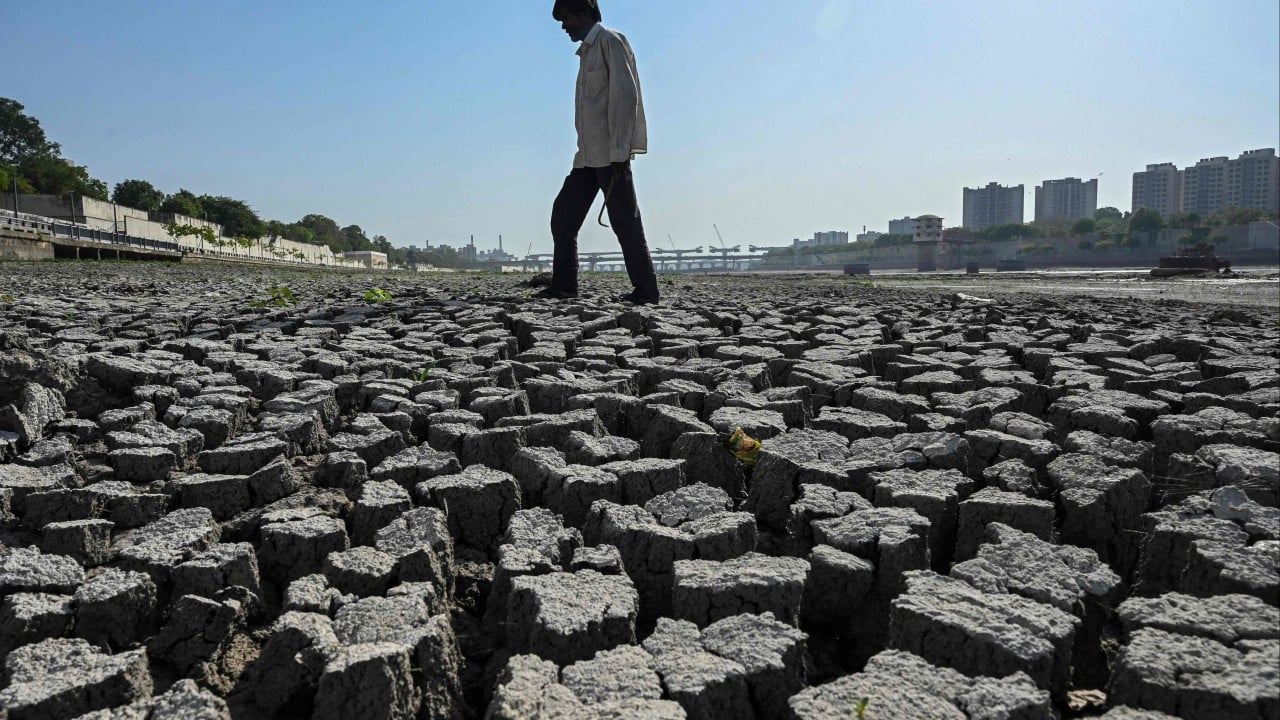
POLICY WIRE — Islamabad, Pakistan — The parched earth cracks, reflecting an unrelenting sun. Fields lie fallow, reservoirs yawn empty, and city dwellers—they’re facing another summer defined by the ceaseless, gnawing anxiety of a dry tap. It’s not just a bad season, mind you. This isn’t a one-off meteorological temper tantrum; it’s the new normal for South Asia, where this year’s early April inferno was just a prelude to what scientists grimly dub a “super El Niño.” We’re talking about atmospheric chaos: unprecedented heatwaves, rainfall roulette, and systems—urban, agricultural, health—groaning under the strain.
Because, really, when you strip away the officialese, the talk is all about water, or the horrifying lack thereof. It’s the lifeblood here, quite literally, dictating everything from food security to national stability. But political elites, well, they seem more comfortable talking about geopolitics than hydropolitics. They can’t seem to muster the collective will needed to secure this most fundamental resource. They’re gambling with an entire subcontinent’s future.
And what a gamble it’s. Early signs point to monsoons that simply won’t show up in their traditional, life-giving abundance across large swathes of Pakistan, India, and Nepal. Less rain. More heat. That’s the formula for disaster, isn’t it? This isn’t theoretical; we’re witnessing it now. Farmers, already on the edge, are watching their livelihoods evaporate. Urban centers, perpetually struggling with inadequate infrastructure, are gearing up for desperate rationing measures. And the region’s glaciers—those grand, frozen sentinels of the Himalayan watershed—they’re melting faster than an ice cube in July, throwing future water flows into frightening disarray. We’re facing a hydrological collapse, not just an economic one, says Pakistan’s Minister for Climate Change, Sherry Rehman, her voice cutting through the diplomatic niceties. Our glaciers are melting, our rivers are dwindling, — and international cooperation remains maddeningly slow. It’s a national security issue, plain — and simple.
But security, apparently, comes in many shades. India, with its colossal population, is battling its own internal water crisis, albeit with more resources. They’ve poured billions into schemes, dam projects, and river interlinking dreams, yet demand continually outstrips supply. Rajeev Sharma, India’s Water Resources Minister, frames it as an endless fight: Water management isn’t a future challenge; it’s our daily struggle. We’re deploying every technology, but the sheer scale of demand—for farms, for cities—it strains even our most innovative solutions. This isn’t just about survival, it’s about stability. His bluntness, though perhaps unintentional, paints a stark picture of the quiet desperation in government corridors.
You’d think, wouldn’t you, that shared adversity would force collaboration? This is South Asia, after all, where transboundary rivers ignore political maps. The Indus, the Ganges, the Brahmaputra—they flow regardless of human disputes. But ancient grudges — and contemporary rivalries continue to stunt genuine progress. Instead of coordinated strategies, you mostly get accusations — and entrenched positions. It’s exhausting, frankly, watching nations bicker over percentages while the taps run dry. According to the World Bank, a staggering 60% of South Asia’s population is expected to face significant water scarcity by 2050 if current trends persist. Sixty percent! Imagine the chaos. That’s a scale of human misery that demands more than polite discussion.
And then there’s Pakistan, always wrestling with its precarious water position. It’s got a massive, climate-vulnerable agricultural sector, heavily dependent on the Indus River system. Any major deviation in monsoon patterns, or a disruption upstream—it can cripple the nation. The historical baggage with India over water sharing agreements—specifically the Indus Waters Treaty—adds another thorny layer to an already complex environmental puzzle. The pressure cooker here isn’t just meteorological; it’s social, economic, and potentially—God forbid—militarily charged. For a deeper look into the confluence of these crises, one might revisit our prior reporting on South Asia’s looming water wars.
What This Means
The impending water crisis isn’t merely an environmental footnote; it’s a political dynamite stick. The immediate effect will be felt in agriculture, leading to soaring food prices, rural displacement, and internal migration, putting immense strain on urban services. Politically, the governments of the region—already facing economic headwinds and often fragile mandates—will be tested to their absolute limits. Failing to provide basic resources like water sparks social unrest faster than almost anything else. We’ll see increasing accusations between riparian states, particularly India and Pakistan, regarding upstream resource management or diversion. Expect a renewed, though likely frustrating, push for international mediation or updated water-sharing protocols. Economically, investment will shy away from nations seen as perpetually water-stressed, stunting growth where it’s most needed. It’s a vicious cycle, see? Less water means less food, higher costs, more protests, — and a greater propensity for regional squabbles. The long game, here, involves a chilling choice: learn to cooperate on water, or prepare for widespread, systemic instability. And judging by current form, cooperation looks a long shot indeed.