


Yankees’ Carousel of Prospects Spins Again: Hype Collides With Hardball Reality
POLICY WIRE — New York City, USA — The Yankees organization, a storied machine perpetually grinding through promising youngsters like grist for its insatiable winning mill, has once more pulled a new...

POLICY WIRE — New York City, USA — The Yankees organization, a storied machine perpetually grinding through promising youngsters like grist for its insatiable winning mill, has once more pulled a new name from its farm system to the Bronx spotlight. No, this isn’t some fresh tactical brilliance; it’s the inevitable consequence of yesterday’s grim reality: Jasson Dominguez, the much-touted ‘Martian’ – once himself the shiny new object – went down hard, nursing a shoulder sprain after a jarring collision with a wall during their 9-2 trouncing of the Texas Rangers. Such is life in baseball’s relentless pursuit of glory, a game where one athlete’s injury is, quite literally, another’s shot at the big time.
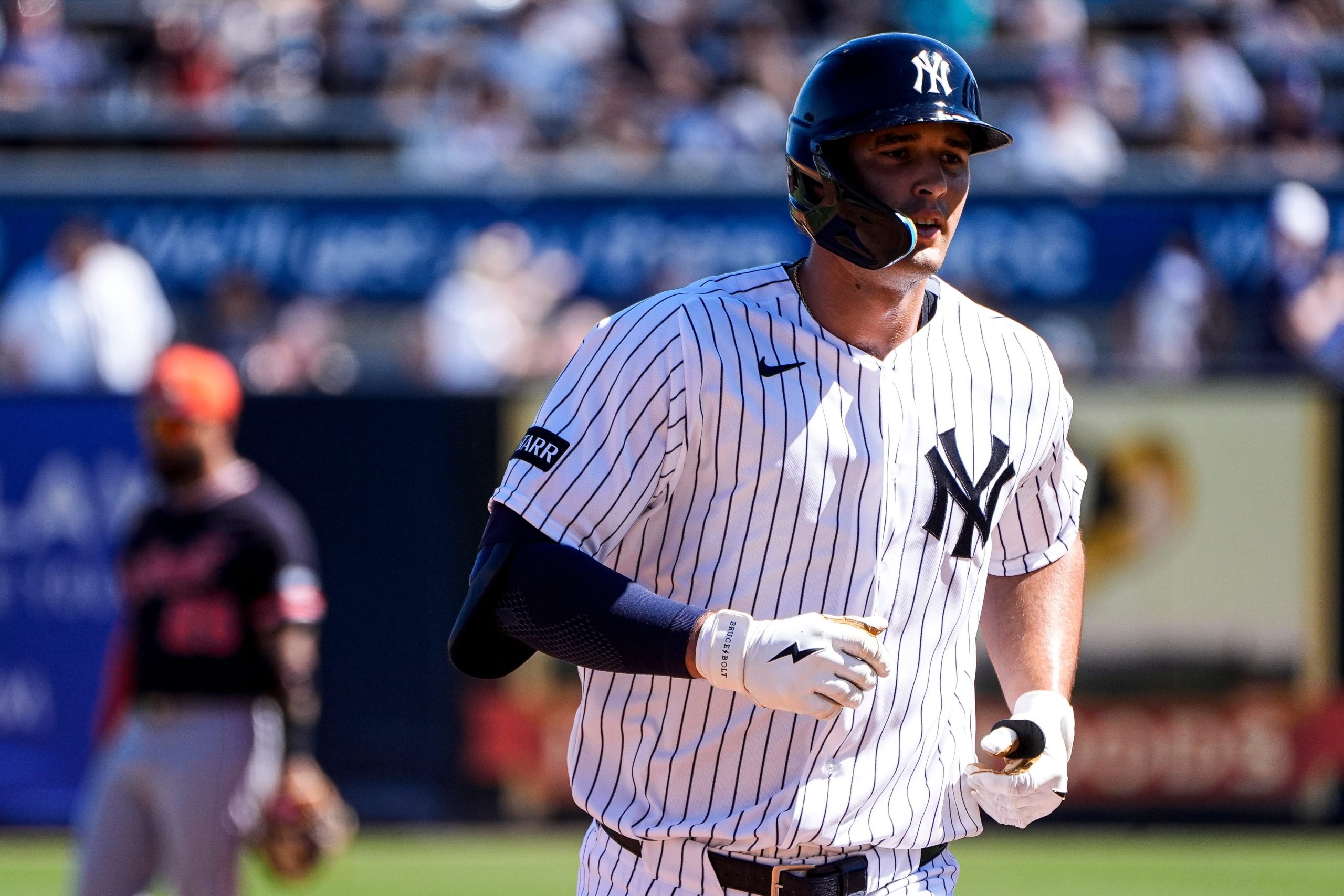
And so, into this high-stakes, highly scrutinized vacuum steps Spencer Jones, the 6-foot-7 behemoth with a swing that promises moonshots and strikeouts in equal, baffling measure. He’s been the talk of Triple-A Scranton/Wilkes-Barre, but not without the usual caveats attached to any Yankee prospect destined for instant myth-making. His ascent, first reported by the New York Post, follows Dominguez’s ill-fated catch that saw him exit Yankee Stadium in visible discomfort. Manager Aaron Boone, ever the picture of tempered optimism, didn’t mince words post-game: “It’s never what you want to see, especially with a guy like Jasson who’s fought his way back. But this game moves on. You’ve always gotta have someone ready in the wings. It’s the nature of the beast, isn’t it?” A pragmatic, if somewhat unromantic, assessment.
Jones, drafted 25th overall out of Vanderbilt in 2022, isn’t exactly an unknown quantity. The kid mashes. His career OPS in the minors hovers around .848, peppered with 83 homers in 415 games. This spring, for Class AAA Somerset, he put up a gaudy .958 OPS with 11 bombs. But here’s the kicker, the dirty secret lurking beneath those impressive power numbers: he swings through more air than a politician’s promises. His strikeout rate this season? A dizzying 32.4% in 142 plate appearances. That’s almost exactly his career average. But his raw power? Legit. Baseball Savant data shows his maximum exit velocity clocks in at a blistering 117.4 mph, the top mark in Class AAA this season. So you’ve got this incredible raw talent, this immense physicality, battling an equally immense hole in his swing. It’s an old tale, repeated endlessly in baseball’s upper echelons.
His athleticism isn’t just confined to hitting baseballs to the moon, though. Jones stole 43 bases in 55 attempts last year. He can run. He’s got speed. He projects as a legitimate five-tool threat if – — and it’s a colossal if – he can cut down on that swing-and-miss. He was once a consensus top-50 prospect; now he’s considered the Yankees’ No. 6. Such is the brutal evaluation cycle of young talent. You’re hot until you’re not.
But back to Dominguez. He’d barely returned from Tommy John surgery, only to get slammed again, quite literally. An AC joint sprain. No concussion, thank heavens, but another detour on his path to cementing a major league career. It’s a harsh reminder that prospects, no matter how much fanfare surrounds them – how many millions are invested – are still just human bodies on a collision course with destiny and occasionally, outfield walls.
“We constantly evaluate our organizational depth, both on and off the field,” a source within the Yankees’ front office, who declined to be named publicly but is familiar with the team’s strategic thinking, remarked to Policy Wire. “These decisions aren’t just about the immediate need; they’re about seeing where a player fits long-term. You invest in these athletes, often from a very young age, understanding that attrition is part of the game. Sometimes it’s development, sometimes it’s injury. It’s always a business decision for the club, even if it feels very personal to the player.” It’s a sobering perspective on what many fans see as mere athletic competition.
What This Means
This perpetual shuffling of talent, while a cornerstone of American sports, isn’t merely about filling roster spots. It’s a mirror reflecting the hyper-commodification of human potential, particularly in the unforgiving market of professional sports. Every new face is another stock option, another gamble, priced by potential earnings, projected statistics, and fan appeal. The almost desperate hype surrounding each ‘next big thing’—before reality often intervenes—highlights the enormous financial pressures teams like the Yankees face to deliver immediate results and consistent star power. It’s not unlike the global market for any scarce resource, except here, the commodity is raw athletic talent, painstakingly nurtured, evaluated, and then exposed to the brutal glare of public expectation.
This dynamic isn’t exclusive to baseball in North America, of course. Across South Asia, we see similar fervent investment and media spectacle surrounding cricket phenoms, particularly in leagues like the Indian Premier League. The expectations, the media crush, the potential for meteoric rise or tragic fall—it all echoes the narratives we’re witnessing here. As an earlier Policy Wire piece on the IPL highlighted, the financial ecosystems underpinning these sporting enterprises are global, intense, and often demand a ruthless cycle of talent acquisition and disposal. For the Yankees, Jones’ call-up isn’t just about a potential offensive boost; it’s another rotation in the sophisticated, high-stakes casino of professional baseball.
His story, for now, represents another flicker of hope in a franchise built on mythology. It’s what keeps the turnstiles clicking, what keeps the narrative alive. Will he break through the strikeout woes — and unleash his prodigious power? Or will he, like so many before him, eventually become just another name in the exhaustive registry of what-ifs?